Owner’s manual
 View engine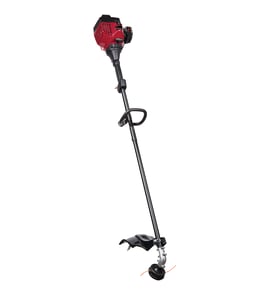


What type of oil and gas for Craftsman 2 cycle 25cc 17 trimmer?
For a Craftsman 917773745 2-cycle trimmer, we use fresh unleaded gasoline mixed with 2-stroke (air-cooled) engine oil at a 40:1 ratio (about 3.2 oz oil per 1 gallon of gas). Mix in an approved fuel can before filling the tank; do not mix in the trimmer’s tank.
- Gas: fresh, clean unleaded (avoid old fuel)
- Oil: 2-stroke oil for air-cooled engines (not automotive 4-cycle oil)
- Mix ratio: 40:1
- Mix only what you will use in 30 days
- Use a fuel can with volume markings for accurate measuring
| Gasoline amount | 2-stroke oil to add |
|---|---|
| 1 gallon | 3.2 fl oz |
| 1/2 gallon | 1.6 fl oz |
| 1 quart | 0.8 fl oz |
- Add about half the gasoline to an approved fuel container.
- Add the measured 2-stroke oil.
- Cap and shake to blend.
- Add the remaining gasoline and shake again.
- Fill the tank; wipe up spills and move the trimmer away from the fueling area before starting.
A correct 40:1 mix protects the 25cc 2-cycle engine from overheating and premature wear. Too little oil can score the cylinder and piston; too much oil can cause heavy smoke, plug fouling, and poor acceleration.
For any model-specific fuel cautions (storage steps, approved oil types, and starting procedure), follow the 917773745 owner’s manual.
Last updated: February 2026
Which is better, .080 or .095 trimmer line?
For a Craftsman wheeled weed trimmer like model 917773745, .095-inch line is better for thick weeds and longer runtime between line changes, while .080-inch line is better for lighter trimming and cleaner edging. Choose based on what you cut most often; the “best” line is the one that matches your workload.
- Choose .095 if you cut tall grass, thick weeds, or rough fence lines
- Choose .080 if you mostly edge sidewalks and trim light grass
- If your trimmer bogs down or the head struggles, step down to .080
- If line breaks constantly, step up to .095
- Always confirm the maximum line size your head supports in the 917773745 owner’s manual
The main difference is diameter, which affects durability and cutting load.
| Line size | Best for | Tradeoff |
|---|---|---|
| .080 in | Light trimming, edging, detail work | Wears faster in heavy weeds |
| .095 in | Heavy trimming, thicker weeds, longer wear | More drag; can reduce RPM on smaller engines |
Use this simple rule:
- Mostly light grass and edging: start with .080
- Mixed yard with weeds: start with .095 (if your head is rated for it)
If you are replacing worn drive components that affect cutting performance (slipping, inconsistent head speed), inspect the belt and related hardware. On this model, common wear items include the line trimmer belt 532185476 and the high-wheel trimmer spindle assembly 596878501.
Correct line diameter helps your 917773745 cut efficiently without excessive vibration, stalling, or constant re-feeding. It also reduces wear on the cutting head and drive system.
Last updated: February 2026
Why does my Craftsman trimmer die when I give gas?
When your Craftsman wheeled weed trimmer model 917773745 dies as you squeeze the throttle, the engine is usually running too rich or too lean under load. The most common causes are restricted airflow (dirty air filter), fuel delivery problems, or a carburetor that needs cleaning and adjustment; confirm the correct procedure in the 917773745 owner's manual.
- Clean or replace the air filter: a clogged filter reduces airflow and can make the engine bog and stall.
- Use fresh fuel: drain old gas and refill with fresh fuel mixed at the correct ratio (if your engine requires mix).
- Check the fuel cap vent: a plugged vent can create vacuum in the tank and starve fuel at higher throttle.
- Inspect the fuel line and filter: cracks, soft spots, or a restricted filter can limit fuel flow.
- Look for choke issues: if it only runs with choke partly on, the carburetor is typically restricted.
- Check the spark plug: a fouled plug can misfire when you accelerate.
- Start with airflow: service the air filter first.
- Move to fuel: replace old fuel, then verify steady fuel flow from the tank.
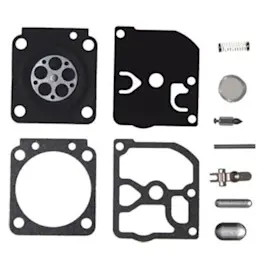
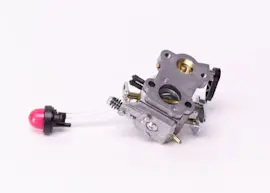
- Carburetor service: if it still stalls on throttle, clean the carburetor and replace gaskets/diaphragms if equipped.
- Verify throttle linkage: make sure the throttle cable moves smoothly and returns fully; a sticking cable can cause erratic fueling.
| What you notice | Most likely cause | Best first step |
|---|---|---|
| Idles OK, dies when accelerating | Restricted fuel flow or dirty carburetor | Fresh fuel, check cap vent, clean carb |
| Runs better with choke on | Lean condition (carb restriction or air leak) | Clean carb, inspect intake seals |
| Black smoke, strong fuel smell | Rich condition (air filter clogged, choke stuck) | Service air filter, check choke |
| Surges then stalls | Fuel restriction or carb issue | Check fuel line/filter, clean carb |
Stalling on acceleration usually means the engine cannot maintain the correct air-fuel mixture when demand increases. Fixing airflow and fuel delivery early prevents hard starting, plug fouling, and poor cutting performance.
Last updated: February 2026
How to replace line on Craftsman gas trimmer?
To replace trimmer line on your Craftsman 917773745 wheeled weed trimmer, we remove the spark plug wire for safety, open the cutting head, load the correct diameter line in equal lengths, then wind it evenly so it feeds smoothly when you bump the head. For model-specific line size and head style, use the 917773745 owner's manual.
- Shut the engine off and let it cool completely.
- Disconnect the spark plug wire so the trimmer cannot start.
- Clean grass and debris from the cutting head area.
- Wear gloves and eye protection.
- Cut two equal lengths of new line (most heads feed best when both sides match).
- Remove the spool cover (tabs or a knob, depending on the head).
- Pull out the spool and note the line routing path.
- Insert the line ends into the spool anchor holes or slots.
- Wind the line in the direction of the arrows on the spool; keep tension so it lays in neat rows.
- Feed the line ends through the eyelets in the head housing.
- Reinstall the spool and cover; pull both line ends to confirm they move freely.
| Symptom | Most common cause | What we do |
|---|---|---|
| Line jams | Overwound or crossed wraps | Rewind neatly with steady tension |
| Line breaks fast | Line too thin or brittle | Use the manual-specified diameter; replace old line |
| Uneven cutting | One side longer | Trim ends to equal length |
If the head spins poorly, wobbles, or makes noise, inspect the drive components. On this model, common wear items include the line trimmer belt 532185476 and the high-wheel trimmer spindle assembly 596878501.
Correct winding and the right line diameter prevent tangles inside the spool, improve bump-feed performance, and reduce strain on the spindle and belt drive.
Last updated: February 2026
Why is my Craftsman Weedeater not starting?
If your Craftsman wheeled weed trimmer model 917773745 will not start, the most common causes are stale fuel, a dirty air filter, a fouled spark plug, or a fuel delivery issue. We recommend checking the simple maintenance items first, then moving to ignition and carburetion.
- Confirm the engine stop switch is in the RUN/ON position.
- Use fresh fuel (old gas can prevent starting); refill with the correct fuel mix if your engine is 2-cycle.
- Set choke correctly for a cold start, then open it as the engine tries to fire.
- Check the air filter; a clogged filter can flood the engine (too much fuel, not enough air).
- Inspect the spark plug for heavy carbon, wet fuel, or a cracked insulator.
- Make sure the throttle cable moves the throttle smoothly (binding can keep the engine from getting the right air/fuel).
A no-start often comes from fuel that is old, contaminated, or flooding the cylinder.
- Drain old fuel and refill.
- If the plug is wet, let the engine sit a few minutes, then try starting with less choke.
Use this simple decision guide:
| What you see | Likely issue | What to do next |
|---|---|---|
| Plug is wet with fuel | Flooding or no spark | Dry/replace plug; verify spark |
| Plug is dry | Fuel not reaching cylinder | Check fuel line, primer, carb |
| Filter is dirty/oily | Restricted airflow | Clean or replace air filter |
On a wheeled trimmer, a starting problem is usually engine-related, not belt-driven. Save belt and spindle checks for after the engine runs.
These parts are commonly related to starting or control symptoms on this model:
- Line trimmer throttle cable assembly 586861201 (if the throttle does not respond)
- Drive control 532181699 (if controls bind or do not return normally)
Starting problems usually get worse over time. Fixing fuel quality, airflow, and ignition early helps prevent repeated flooding, hard starting, and carburetor varnish.
For model-specific starting and control procedures, follow the 917773745 owner's manual.
Last updated: February 2026
What size is the fuel line on a Craftsman trimmer?
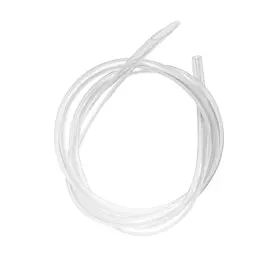
For the Craftsman 917773745 wheeled weed trimmer, fuel line size is chosen by matching the tubing’s inside diameter (ID) and outside diameter (OD) to the tank grommet and carburetor or primer fittings. Use the sizing and routing shown in the 917773745 owner's manual and match the old line for a leak-free fit.
We size small-engine fuel hose by ID and OD, not just “small” or “large.” The goal is a snug seal on every barb fitting.
- Remove the old line and measure ID (hole size) and OD (outside width)
- Match the ID to the carburetor, primer bulb, and fuel filter barbs so it grips tightly
- Match the OD so it passes through the tank grommet without pinching
- Replace the grommet or filter if the hose feels loose or pulls off easily
- Cut the hose ends square and push fully onto each barb to prevent air leaks
These are common sizes you may see at small-engine shops; use them as a starting point, then confirm by measurement on your 917773745.
| Common listing | Approx. OD | Approx. ID | Where it’s often used |
|---|---|---|---|
| 9/64 in | 0.140 in | 0.080 in | Many trimmer feed/return lines |
| 3/16 in | 0.187 in | 0.093 in | Primer/return circuits on some setups |
| 1/4 in | 0.250 in | 0.125 in | Larger grommets or higher-flow lines |
- Primer bulb will not fill or won’t stay full
- Starts, then dies when you open the throttle
- Fuel seepage at the tank grommet or at a fitting
A correctly sized fuel line keeps the fuel system sealed. On a Craftsman wheeled trimmer, even a small air leak can cause hard starting, stalling, and poor throttle response.
Last updated: February 2026