Installation guide
 Owner’s manual
 Error Codes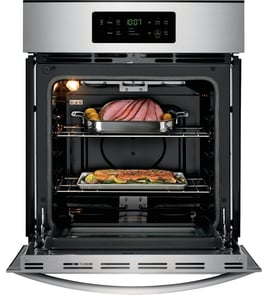




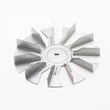
Can I air fry in my KitchenAid convection oven?
Yes. On the KitchenAid KEBS279BSS00 convection wall oven, we can use convection baking or convection roasting to mimic air frying by moving hot air quickly around the food for browning and crisping. For the exact convection settings and rack positions, follow the KEBS279BSS00 owner's manual.
Best settings to mimic air frying
Use these starting points, then adjust time and temperature based on results:
- Use convection bake for most foods; use convection roast for thicker items
- Preheat fully; crisping improves when the oven and rack are hot
- Start 25°F lower than a standard (non-convection) recipe temperature
- Check early; convection often finishes 10% to 20% faster
- Use a sheet pan with a wire rack so air can circulate under the food
- Avoid overcrowding; leave space between pieces
Rack placement and cookware tips
Air frying works best when airflow is not blocked.
| Food type | Recommended setup | What to avoid |
|---|---|---|
| Fries, nuggets, wings | Sheet pan plus wire rack, middle rack | Foil covering the rack (blocks airflow) |
| Vegetables | Shallow pan, single layer | Deep roasting pans |
| Breaded items | Light oil spray, flip halfway | Heavy batter (can drip and smoke) |
Quick “air fry style” time guide
These are common starting ranges for a convection wall oven:
- Frozen fries: 400°F, 15 to 25 minutes
- Chicken wings: 400°F, 30 to 45 minutes
- Breaded cutlets: 375°F, 18 to 30 minutes
Why it matters
A countertop air fryer is essentially a small, high-speed convection oven. Your KEBS279BSS00 has more space, so good results depend on preheating, airflow, and not crowding the pan.
If you see temperature-related errors while using convection, use our KitchenAid wall oven error codes reference to pinpoint the issue.
Last updated: February 2026
How do I find my KitchenAid range model number?
For KitchenAid appliances, the model number is printed on the appliance’s rating label; on a built-in wall oven like KEBS279BSS00, it’s typically found around the oven door frame or just inside the door. Use that exact model number to match the correct parts and installation information.
Where to look on a KitchenAid wall oven
Check these common label locations first (power off is not required just to read the label):
- Left or right side of the oven frame when you open the door
- Along the bottom edge of the oven frame (near the door hinge area)
- On the front frame behind the storage or lower access area (if your unit has one)
- On the side trim area visible when the door is open
For diagrams and model-specific references, use the KEBS279BSS00 owner's manual.
What the model number looks like (and what to write down)
We recommend recording both the model and serial number exactly as shown.
| Label item | Example format | Why you need it |
|---|---|---|
| Model number | KEBS279BSS00 | Ensures correct KitchenAid wall oven parts fit |
| Serial number | Letters and numbers | Helps confirm production series for some parts |
Why it matters for parts and troubleshooting
Using the exact model number prevents ordering the wrong bake element, door glass, or electrical parts.
- Parts can look similar across KitchenAid wall ovens but mount differently
- Electrical parts (like a thermal fuse or terminal block) must match ratings and connectors
- DIY help such as KitchenAid wall oven error codes is organized by brand and product type
Quick tip before you order parts
If you are troubleshooting a no-heat or overheating issue, confirm the model number first, then compare symptoms to common heat-related components:
- Thermal fuse (opens if the oven overheats)
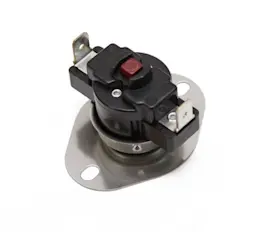
- High-limit thermostat (opens on excessive temperature)
- Bake element (fails and stops heating)
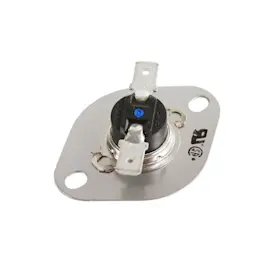
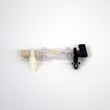
If you already have the model number and need a likely part match, the thermal fuse WPW10545255 is one of the common safety components used on this model family.
Last updated: February 2026
Is a 27 inch wall oven too small?
A 27-inch wall oven is not too small for most homes; it is a common size that fits many standard cabinets and still handles everyday baking and roasting. For KitchenAid model KEBS279BSS00, the best choice depends on your cabinet cutout, cookware size, and how often you cook for a crowd (check the KEBS279BSS00 installation guide).
When a 27-inch wall oven is the right size
A 27-inch electric wall oven typically works well when you want built-in cooking without giving up too much cabinet space.
- You cook for 1 to 4 people most of the time
- You bake on one or two racks, not three at once
- Your kitchen already has a 27-inch cabinet cutout (avoids cabinet modifications)
- You use standard 9x13 pans and most cookie sheets
- You want a built-in look in a smaller or mid-size kitchen
When 27 inches can feel too small
If you regularly cook large meals, the extra width of a 30-inch wall oven can be noticeable.
- You often roast large turkeys, big hams, or oversized sheet pans
- You host holidays and need more rack space for multiple dishes
- You want more flexibility for wide cookware (large roasting pans, extra-wide pizza stones)
Quick comparison: 27-inch vs 30-inch wall oven
| Feature | 27-inch wall oven | 30-inch wall oven |
|---|---|---|
| Cabinet space needed | Less | More |
| Fit in existing cutout | Often easier | May require cabinet changes |
| Best for | Everyday cooking | Frequent entertaining |
| Cookware flexibility | Good | Better |
Why it matters
Wall ovens are sized around the cabinet cutout; choosing the wrong width can turn a simple replacement into a carpentry and electrical project. We recommend confirming the cutout requirements and electrical specs in the KEBS279BSS00 owner’s manual before you commit to a size.
Last updated: February 2026
What is the average cost to install a wall oven?
For a KitchenAid wall oven like model KEBS279BSS00, professional installation typically runs about $550 to $4,700, with many single wall-oven installs landing around $1,200 to $2,500 depending on electrical work, cabinet modifications, and whether it is a single or double oven. Use the KEBS279BSS00 installation guide to confirm cutout, wiring, and mounting requirements before scheduling.
What drives the installation price
- Single vs. double wall oven (double units usually cost more to handle and wire)
- Electrical updates (new circuit, breaker, junction box, or wire gauge changes)
- Cabinet/cutout work (widening, reinforcing, trim adjustments)
- Old oven removal and disposal
- Accessibility (tight fit, stairs, long carry distance)
- Permit/inspection requirements (varies by area)
Typical cost breakdown (what you are paying for)
| Line item | Typical range | Notes |
|---|---|---|
| Basic install labor | $300 to $900 | Set unit, secure, test functions |
| Electrical labor/materials | $0 to $1,500+ | Higher if a new circuit is needed |
| Cabinet modifications | $0 to $1,500+ | Depends on cutout and support framing |
| Haul-away/disposal | $0 to $150 | Sometimes included |
Before you book the installer
- Verify the cutout dimensions and required clearances in the KEBS279BSS00 installation guide.
- Confirm the home has the correct voltage and dedicated circuit for an electric wall oven.
- Ask whether the quote includes removal/haul-away and any carpentry.
- If the oven is dead and you are replacing it due to a no-heat issue, check common causes first (for example a blown thermal fuse WPW10545255 or a failed oven bake element W11545804).
Why it matters
Wall ovens are heavy, hard-wired appliances; the biggest cost swings come from electrical compliance and cabinet fit. Getting the cutout and wiring requirements right prevents delays, return trips, and damage during mounting.
Last updated: February 2026
What is the life expectancy of a KitchenAid oven?
A KitchenAid wall oven typically lasts 10 to 15 years. For your KitchenAid KEBS279BSS00, lifespan depends most on cooking frequency, heat exposure from self-clean cycles, and how quickly heating or cooling problems are corrected using the care guidance in the KEBS279BSS00 owner's manual.
Typical lifespan and what affects it
Most wall ovens reach the 10 to 15 year range when the heating system and cooling airflow stay healthy.
- Heavy daily use shortens life compared to light weekly use
- Frequent self-clean cycles add extreme heat stress to wiring and controls
- Poor ventilation or blocked vents can overheat internal components
- Power surges can damage electronic controls and relays
- Worn door seals or hinges let heat escape and force longer heat times
What usually fails first (and what it looks like)
These are common wear items and heat-protection parts that can end an oven’s service life early if they fail.
| Symptom | Common cause | Example part for KEBS279BSS00 |
|---|---|---|
| Oven dead, no heat, no display | Open thermal protection device | Thermal fuse WPW10545255 |
| Oven overheats or shuts down during/after high heat | High-limit thermostat trips or fails | Range high-limit thermostat WP4449751 |
| Bake is weak or uneven | Bake element damaged | Oven bake element W11545804 |
| Door won’t close tightly, heat leaks | Hinge wear or misalignment | Door hinge W11642291 |
How to help your oven reach the full lifespan
These steps reduce heat stress and prevent overheating related failures.
- Keep the oven vent area clear and do not block airflow
- Use self-clean only when needed; wipe spills sooner instead
- Avoid slamming the door; it strains hinges and glass mounts
- If preheat times suddenly increase, troubleshoot promptly
- Use a surge protector rated for the oven circuit if your electrician recommends it
Why it matters
A wall oven that is running hot, heating slowly, or shutting down is often stressing safety devices and wiring. Fixing those symptoms early helps protect major components (controls, harnesses, transformer) and extends the usable life of the KEBS279BSS00.
Last updated: February 2026
What to do before using a KitchenAid oven for the first time?
Before using your KitchenAid KEBS279BSS00 wall oven for the first time, we recommend removing all packing materials, washing the racks and oven interior, then running a short empty heat cycle to burn off light manufacturing residues (expect a mild odor). Confirm basic setup steps in the KEBS279BSS00 owner's manual.
First-time setup checklist
- Remove all tape, cardboard, plastic film, and any items stored inside the oven cavity.
- Wash oven racks and any accessories with warm water and mild dish soap; dry completely.
- Wipe the oven interior with a damp cloth (avoid harsh cleaners before the first heat cycle).
- Verify the oven racks are fully seated on the rack supports and slide smoothly.
- Set the clock and review key control features (Bake, Broil, Convection, Timer).
- Turn on ventilation (range hood or nearby exhaust fan) and open a window if possible.
Do a “burn-in” heat cycle (recommended)
A first heat cycle helps remove light oils from manufacturing and shipping.
| Step | Setting | Typical time |
|---|---|---|
| 1 | Bake | 350°F |
| 2 | Off, door closed | Cool down |
If you notice light smoke or a “new oven” smell during this cycle, that is normal. Keep airflow moving until the odor clears.
What to avoid on day one
- Do not line the oven bottom with foil; it can restrict airflow and cause overheating.
- Do not use abrasive cleaners or steel wool on the interior surfaces.
- Do not run Self-Clean as your first cycle; use normal baking first.
Why it matters
A clean start and a short burn-in cycle help your KEBS279BSS00 heat more evenly, reduce odors, and prevent residue from transferring to food during your first bake.
Last updated: February 2026