Installation guide
 Owner’s manual
 Error Codes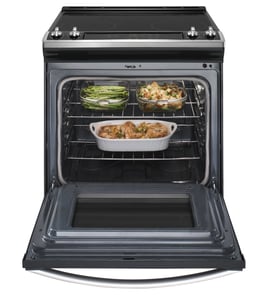
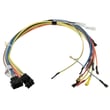
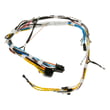

How do I reset the error code on my GE oven?
On the GE JB850EF2ES electric range, you can usually clear a flashing “F” error by pressing Cancel/Off to stop the function, then doing a quick power reset (turn the range breaker off for at least 30 seconds, then back on). If the code returns, it points to a condition that needs troubleshooting.
Step-by-step reset (safe, first checks)
- Press Cancel/Off once to cancel cooking or cleaning (the clock and timer stay on).
- Wait for the oven to cool if it was hot.
- Turn OFF the range circuit breaker for 30 seconds.
- Turn the breaker ON and set the clock if needed.
- Start a simple Bake cycle to confirm normal operation.
For the exact control-pad behavior on your model, use the JB850EF2ES owner’s manual.
If the error code comes back
A repeating “F” code typically means the control is detecting a real fault, not a one-time glitch. Common causes on electric ranges include:
- Oven temperature sensor circuit issue (sensor out of range or wiring problem)
- Stuck or unresponsive keypad/control panel input
- Relay/control board problem
- Heat-related issue after self-clean (high temps can trigger faults)
- Power supply problem (tripped breaker, loose connection)
Quick triage guide
| What you see | What it usually means | What to do next |
|---|---|---|
| Code clears and stays gone | Temporary control glitch | Keep using; monitor for return |
| Code repeats after reset | Active fault detected | Troubleshoot sensor, keypad, or control |
| Display blank or intermittent | Power issue | Check breaker and terminal connections |
Why it matters
Resetting clears the control so you can confirm whether the problem was a momentary electronic hiccup or an ongoing failure that can affect baking temperature, preheat time, or safe operation.
Helpful model-specific resources
- Use the GE freestanding range error codes guide to identify the exact “F” code and the most likely failed part.
- If you suspect temperature regulation problems, the oven sensor is a common starting point; see wall oven temperature sensor WB23T10015.
Last updated: February 2026
What are the different types of electric ranges?
Electric ranges generally come in three main types: freestanding, slide-in, and drop-in. Your GE JB850EF2ES is a free-standing electric range, which means it has finished sides and typically installs between cabinets with a backguard/control panel.
Types of electric ranges (what changes)
- Freestanding: Finished sides; can stand alone or fit between cabinets; most common style.
- Slide-in: Designed to “slide in” between cabinets with a more built-in look; controls are often front-mounted.
- Drop-in: Sits in a base cabinet/cutout; usually requires a cabinet platform and specific cutout dimensions.
- Single oven vs. double oven: Some electric ranges have one oven cavity; others have two (installation and wiring requirements can differ).
- Cooktop style: Radiant smooth-top, halogen, or coil elements (varies by model).
Quick comparison
| Type | Typical look | Installation notes | Best for |
|---|---|---|---|
| Freestanding | Visible backguard; finished sides | Most flexible fit | Replacements, rentals, standard kitchens |
| Slide-in | Flush with counters; built-in look | Needs tighter cabinet fit | Remodels, seamless countertop line |
| Drop-in | Built-in appearance | Requires cabinet cutout/support | Custom kitchens, planned cabinetry |
What to check before you buy or replace
Use your existing opening and electrical setup to choose the right style.
- Measure opening width and countertop height
- Confirm power supply: typically 120/240V or 120/208V, 60 Hz
- Verify the branch circuit is properly grounded and sized (commonly 40-amp minimum for many electric ranges)
- Match the cord type required (3-conductor vs. 4-conductor depends on installation rules)
- Compare cooktop element layout if you rely on specific burner sizes
Why it matters
Range type affects fit, countertop alignment, and electrical hookup. Choosing the correct style helps avoid gaps, uneven counter lines, and wiring issues. For model-specific installation and electrical requirements for the GE JB850EF2ES, follow the JB850EF2ES installation guide.
Last updated: February 2026
What does F2 mean on my electric stove?
On the GE JB850EF2ES electric range, an F2 error code means the oven control is sensing an overheat or runaway heat condition. This typically points to a temperature-sensing problem (sensor circuit) or a control/relay issue that is allowing the oven to heat too much.
What to do right away
- Press Cancel/Off to stop the heating cycle.
- Keep the oven door closed until the oven cools down.
- If the code returns after cooling, turn off power at the breaker for 1 minute, then restore power.
- If the oven begins heating on its own or the code returns quickly, leave power off and proceed to checks below.
Most common causes on electric ranges
In many GE electric ranges, F2 is triggered when the control reads an unsafe temperature.
- Oven temperature sensor out of range (open/shorted sensor or wiring)
- Loose or damaged sensor harness connection
- Stuck relay on the relay board sending power to the bake circuit
- Control board problem misreading temperature or driving heat incorrectly
A key part to check for overheating symptoms is the oven temperature sensor: wall oven temperature sensor WB23T10015.
Quick checks you can do (power off)
Turn off the circuit breaker before inspecting anything.
- Verify the oven is not in a special mode (for example, Sabbath Mode) per the JB850EF2ES owner’s manual.
- Inspect the sensor connector and wiring for heat damage or looseness.
- If the oven overheats mostly during baking, watch for signs the bake circuit is being powered too long.
What the fix usually looks like
| Symptom | Most likely issue | Typical next step |
|---|---|---|
| F2 appears during normal baking | Sensor circuit reading too hot | Test/replace sensor, check wiring |
| F2 appears and oven keeps heating | Relay stuck closed | Inspect/replace relay board |
| F2 appears after a power surge | Control logic fault | Power reset; if repeats, diagnose control/relay |
For model-specific error code behavior and reset steps, use our GE freestanding range error codes guide.
Why it matters
An F2 code is the range telling you it cannot reliably control oven temperature. Addressing it protects baking performance and helps prevent damage to wiring, insulation, and electronic controls.
Last updated: February 2026