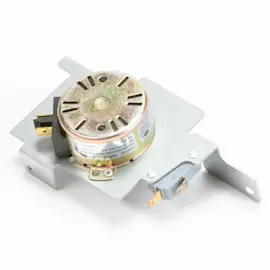
Installation guide
 Owner’s manual
 Error Codes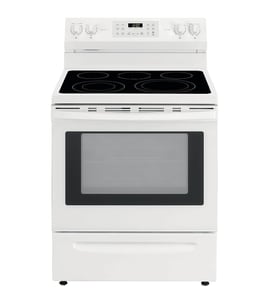

How old is my KitchenAid oven by serial number?
For a KitchenAid KDRS483VSS03 range, the serial number contains a date code that tells you when the unit was manufactured; once you decode it, you can calculate the appliance’s age from that manufacture date to today.
KitchenAid serial formats vary, but these patterns are commonly used:
- 9-character serial number: the 2nd character is the date code
- 10-character serial number: the 3rd character is the date code
- Day and year format (common on many Whirlpool-family products):
- the first 3 digits = day of the year (001 to 365)
- the last 2 digits = year (for example, 14 = 2014)
For model-specific labeling locations and examples, use the KDRS483VSS03 owner’s manual.
Use this quick method:
- Convert the serial’s day-of-year to a calendar date (example: day 032 = February 1 in a non-leap year)
- Convert the 2-digit year to a 4-digit year (example: 14 = 2014)
- Subtract that manufacture date from today’s date to get the age in years and months
| Serial clue | What it usually means | What you do next |
|---|---|---|
| 9 characters | 2nd character is a date code | Decode date code, then calculate age |
| 10 characters | 3rd character is a date code | Decode date code, then calculate age |
| First 3 digits + last 2 digits | Day-of-year + year | Convert to calendar date |
On most KitchenAid commercial-style ranges, the model and serial tag is typically found:
- On the oven frame behind the door (open the oven door and check the front frame)
- On a side frame area near the door hinge zone
- On a rating plate area that is visible when a door or drawer is opened
Knowing the manufacture date helps us match the correct replacement parts (like an oven sensor, control board, or door hardware) and avoid ordering a similar-looking part that fits a different production run.
Last updated: January 2026
What is the life expectancy of a KitchenAid oven?
A KitchenAid oven typically lasts 15 to 20 years with normal home use and basic maintenance. For the KitchenAid KDRS483VSS03 commercial-style range, keeping the oven clean, protecting electrical components from overheating, and addressing ignition or temperature issues early helps you reach that lifespan.
Most ovens fall into a predictable range; heavy daily cooking and high-heat cycles shorten life, while routine cleaning and prompt repairs extend it.
- Usage frequency: daily baking and broiling wear components faster
- Heat stress: repeated high-heat cooking and self-clean cycles increase strain
- Cleaning habits: grease buildup can affect airflow and cooling
- Power and wiring condition: loose connections can damage controls
- Part replacement history: replacing wear items can extend service life
Follow the cleaning and safety guidance in the KDRS483VSS03 owner’s manual.
- Remove pans and utensils before self-clean; wipe heavy spills first
- Keep the area around the range ventilated; avoid blocking airflow
- Clean the hood and filters often so grease does not accumulate
- Use gentle cleaners on stainless surfaces (avoid harsh abrasives)
- If temperatures seem off, test the sensor and calibration settings
When performance changes, these parts often determine whether the oven can be restored to like-new operation.
| Symptom | Common cause | Example part for KDRS483VSS03 |
|---|---|---|
| Oven temperature swings | Sensor drifting out of spec | Wall oven temperature sensor WPW10131825 |
| Oven shuts down or overheats | Safety thermostat opening | Range high-limit thermostat WP4449751 |
| No heat or erratic operation | Control issue | Range oven control board WPW10298120 |
Knowing the expected 15 to 20 year lifespan helps you decide whether to repair or replace. On a premium 48-inch KitchenAid range like the KDRS483VSS03, replacing a sensor, thermostat, or control can be a cost-effective way to restore reliable baking and broiling.
Last updated: January 2026
How do I troubleshoot my KDRS483VSS03?
For your KitchenAid KDRS483VSS03 range, start troubleshooting by checking power and gas basics, then match the symptom to the built-in troubleshooting chart. Many issues are caused by a tripped breaker, air in the gas line, clogged burner ports, or a locked control panel. See the KDRS483VSS03 owner's manual for the model-specific steps.
- Reset the household circuit breaker or replace a blown fuse if nothing operates.
- Confirm gas supply is on; on first use, turn a surface burner knob on briefly to purge air from the gas line.
- Push in the burner knob before turning to a setting (improper knob operation can prevent ignition).
- Clean clogged burner ports with a straight pin if flames are uneven, yellow, or noisy.
- If the screen or buttons do not respond, unlock the control (slide the on-screen bar up) and confirm Sabbath Mode is not enabled.
| Symptom | Likely cause | What to do |
|---|---|---|
| Nothing will operate | Breaker tripped or fuse blown | Reset breaker or replace fuse; if it trips again, have an electrician check the circuit |
| Surface burners will not operate | Air in gas line, knob not set correctly | Turn on a burner to purge air; push in knob before turning |
| Flames uneven/yellow/noisy | Clogged ports or cap misaligned | Clean ports; reseat burner cap so alignment pins line up |
| Oven temp too high/low | Calibration offset needed | Adjust temperature offset up to +35°F |
| Self-clean will not start | Door not fully closed, delay start set, other oven self-cleaning | Close door fully; cancel delay; on 48-inch models only one oven can self-clean at a time |
If cleaning and settings do not resolve the issue, these parts commonly relate to the symptoms:
- No spark or intermittent ignition: range spark module WPW10475147
- Oven temperature swings or inaccurate baking: wall oven temperature sensor WPW10131825
- Oven overheats or shuts down on high heat: range high-limit thermostat WP4449751
Correct troubleshooting protects the control board and ignition system, prevents repeated breaker trips, and helps you replace only the part that actually failed.
Last updated: March 2026