View engine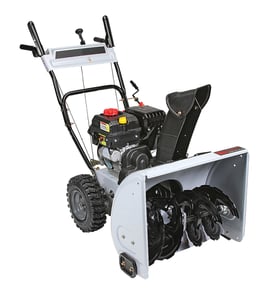




Is it worth fixing a snowblower?
Yes, it’s usually worth fixing a Craftsman snow thrower like model 536885473 when the problem is a normal wear item (belt, scraper blade, chute hardware) and the engine still runs well. Most repairs cost far less than replacing the whole machine, especially if you do the work yourself.
Use this checklist to make a fast, practical call:
- Engine health: it starts, runs smoothly, and doesn’t smoke heavily.
- Problem type: drive or auger won’t move, chute won’t rotate, poor scraping, or slipping.
- Parts availability: common parts like belts and scraper blades are in stock.
- Overall condition: no major rust-through on the housing or severe gearbox damage.
- Your usage: you rely on it often enough that downtime matters.
These are typical repairs that restore performance quickly:
- Replace a slipping ground drive belt: snowblower drive belt 1733324SM
- Replace a worn auger belt that won’t spin the auger/impeller reliably: auger belt 37X120MA
- Replace a worn scraper blade that leaves snow behind: blade 1740909BMYP
- Service and lubrication tasks that prevent bigger failures: how to lubricate a snowblower drive hex shaft video
| Situation | Typical outcome | Usually worth fixing? |
|---|---|---|
| Belts slipping or broken | Restores drive/throwing power | Yes |
| Chute won’t stay seated or binds | Restores aiming control | Yes |
| Machine won’t move but engine runs | Often belt, cable, or friction drive related | Yes |
| Major internal drivetrain damage | Higher parts and labor | Sometimes |
A snowblower that won’t drive or throw snow is often one worn belt away from working like it should. Fixing wear parts early also reduces strain on pulleys, bearings, and the auger/impeller system, which helps the machine last longer.
Last updated: January 2026
How many quarts of oil does my snowblower take?
Most Craftsman snow throwers like model 536885473 take about 0.6 to 1.0 quart (roughly 20 to 32 oz) of engine oil; the correct fill level is always the “FULL” mark on the dipstick, not a fixed number. Fill slowly, recheck, and stop as soon as the dipstick reads full.
- Park the snowblower on a level surface and let the engine cool.
- Remove the dipstick, wipe it clean, then reinstall it fully.
- Remove it again and read the level; add oil only if it is below “FULL.”
- Add oil in small amounts (a few ounces at a time), then recheck.
- Do not overfill; too much oil can cause smoking, hard starting, and leaks.
For most 4-cycle snowblower engines, SAE 5W-30 is the common cold-weather choice; some engines also allow synthetic 5W-30 for easier starting in very low temperatures.
- Change oil at least once per season (or about every 25 hours of use).
- Check oil before each use during heavy snow periods.
- If the oil looks milky, smells like fuel, or is very dark, change it.
| What you need | Typical value for this type of snowblower | What to follow on your machine |
|---|---|---|
| Oil capacity | 0.6 to 1.0 quart | Dipstick “FULL” mark |
| Common oil viscosity | SAE 5W-30 | Engine label and temperature range |
| Change interval | Seasonal or ~25 hours | Condition of oil and usage |
Running low on oil can quickly damage the engine, and overfilling can cause performance problems. Using the dipstick level check keeps your Craftsman 536885473 protected even if the exact capacity varies by engine version.
If you are due for maintenance, follow how to change snowblower oil video for a step-by-step walkthrough.
Last updated: January 2026
Where is Craftsman Snowblower model number?
On a Craftsman snow thrower like model 536885473, the model number is printed on the model and serial number label attached to the machine’s frame. We most often see it on the rear of the unit near the handles, or on the side of the main housing.
Look for a sticker or metal tag that includes the model number and serial number. Check these spots first:
- Rear frame crossbar below the handles
- Side of the engine mounting plate or frame rail
- Back of the auger housing (behind the chute area)
- Near the wheel axle area on the frame
- Under a service cover or belt cover (if your unit has one)
The label typically includes a few key fields. Use this as a quick guide when you find it:
| Label field | What it means | Example you might see |
|---|---|---|
| Model | Identifies the exact snowblower version | 536885473 |
| Serial | Unique ID for your specific unit | (varies) |
| Engine info | Engine model/type (if listed) | (varies) |
We use the model number to match the correct Craftsman parts for your snowblower, especially wear items like belts, chute hardware, and drive components. Using the wrong model number is the most common reason customers order a belt that does not fit.
Use these practical workarounds:
- Check for an imprinted number on the frame near the label location
- Look for a second tag near the engine or axle area
- Match key wear parts by application, for example the snowblower drive belt 1733324SM or auger belt 37X120MA (belt size and routing must match your unit)
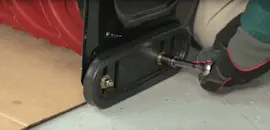
- Use our DIY guidance to confirm belt routing and access panels: how to replace a snowblower belt video
Last updated: January 2026
What is the most common problem with snow blowers?
The most common snowblower problem is a no-start or hard-start condition, usually caused by old fuel, a dirty carburetor, or ignition issues like a worn spark plug. On Craftsman model 536885473, basic fuel and tune-up checks solve many “won’t start” complaints.
- Drain old gas and refill with fresh fuel (use fuel stabilizer for storage).
- Make sure the fuel shutoff is ON (if equipped) and the choke is set correctly for a cold start.
- Inspect the spark plug condition and gap; replace if fouled.
- Confirm the safety key is fully inserted and controls move freely.
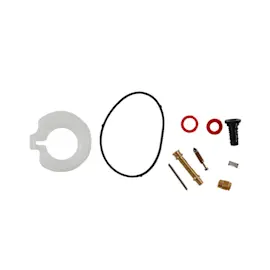
- If it starts then dies, clean the carburetor bowl and jets (common after storage).
A running engine with poor performance usually points to belts, drive engagement, or packed snow/ice.
| Symptom | Most likely area | What to check |
|---|---|---|
| Wheels do not drive | Ground drive system | Belt wear, pulley alignment, drive control adjustment |
| Auger does not spin | Auger drive system | Belt wear, auger engagement, shear pins/obstructions |
| Weak throwing distance | Impeller/chute | Ice buildup, impeller condition, chute restriction |
- Snowblower drive belt 1733324SM (for loss of forward/reverse drive)
- Auger belt 37X120MA (for auger not engaging)
Most snowblower failures happen after off-season storage. Fixing fuel quality and belt wear early prevents mid-storm breakdowns and reduces strain on pulleys, bearings, and the impeller system.
Last updated: January 2026