 Installation guide
 Owner’s manual
 Error Codes





Do GE dishwashers use hot water or heat their own?
GE dishwashers like model GDT720SSF4SS use your home’s hot water supply, and they also heat water internally during certain parts of the cycle to improve cleaning and drying. For best performance, set incoming hot water to 120°F to 140°F as shown in the installation guide.
How the water heating works
Most GE dishwashers are designed to start with hot water from the sink supply line, then use an internal heater to maintain or boost temperature as needed.
Key points we follow for GDT720SSF4SS installations:
- The dishwasher connects to a hot water line (not cold).
- Incoming water temperature should be 120°F to 140°F.
- 120°F minimum is required for best wash performance.
- Heating during the cycle supports better soil removal and helps drying.
- If water is too cool, cycles can run longer and drying can suffer.
Quick checks if cleaning or drying is weak
These steps confirm you are giving the dishwasher the hot water it expects.
- Run the kitchen hot water until it is fully hot before starting a cycle.
- Verify the water heater is set so the tap delivers 120°F to 140°F.
- Make sure the shut-off valve under the sink is fully open.
- Check the supply line for kinks or restrictions.
- If the unit is not drying well, confirm heated dry options are enabled (see the owner's manual).
What to expect (typical behavior)
| Situation | What you’ll notice | What it usually means |
|---|---|---|
| Hot water is 120°F to 140°F | Normal cycle time and better drying | System is operating as designed |
| Hot water below 120°F | Longer cycles, poorer cleaning | Dishwasher is compensating for cool inlet water |
| No heat during cycle | Wet dishes, poor results | Possible heater or control issue |
Why it matters
Dishwashers are engineered around a target wash temperature. Starting with properly heated incoming water reduces cycle time, improves detergent performance, and helps the heater focus on maintaining temperature instead of trying to recover from cold fills.
Last updated: February 2026
Can a clogged drain cause an FTD error?
Yes. On the GE GDT720SSF4SS dishwasher, an FTD (drain-related) error can be triggered when the unit cannot pump water out fast enough, and a clogged drain path is a common cause. Focus first on the filter area, drain hose routing, and the disposer or air gap connection; then move to drain components if needed.
What to check first (fast, no-parts steps)
- Cancel the cycle and let the dishwasher drain; confirm the tub actually empties.
- Check the sink/disposer connection; make sure the disposer drain plug was removed (a left-in plug causes a no-drain condition).
- Inspect the air gap (if installed) for blockage.
- Look behind/under the dishwasher for a kinked or crushed drain hose.
- Confirm the drain setup matches the installation requirements (high loop or air gap as required by code).
Drain setup requirements that affect FTD
Your installation matters because poor drain routing can mimic a clog.
| Item | Requirement | Why it matters |
|---|---|---|
| Total drain hose length | Must not exceed 12 ft | Too long reduces drain performance |
| Drain connection height | Must not exceed 72 in above bottom of dishwasher | Too high can prevent proper draining |
| Air gap vs high loop | Air gap required in some installs (for example, low waste tee/disposer connection) | Prevents siphoning and drain backflow |
For the exact method and measurements, follow the installation guide.
When a part is likely involved
If the hose and connections are clear and correctly routed but the dishwasher still will not drain, the drain pump or a restriction inside the pump area is the next most common cause.
- If you hear the drain motor hum but little or no water moves, suspect a blockage at the pump or a weak pump.
- If the unit drains slowly and leaves standing water, check for partial clogs in the hose and at the sink connection.
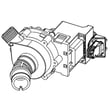
A common replacement for drain problems on this model is the dishwasher drain pump WD19X25187.
Why it matters
FTD is usually the dishwasher protecting itself; if water cannot leave the tub, the cycle can stop early, dishes stay dirty, and standing water can lead to odors and leaks.
Last updated: February 2026
What is the most common problem with a GE dishwasher?
The most common issue we see with GE dishwashers like model GDT720SSF4SS is a no-start or won’t-run complaint. In many cases, the dishwasher is not fully latched, power is interrupted, or the control is not getting the “door closed” signal needed to begin a cycle (see the installation guide).
Quick checks that fix many “won’t start” calls
- Confirm the door is pushed fully closed and latched; the dishwasher should not start unless the door is latched.
- Restore power at the breaker (or reset a tripped breaker) and try again.
- Start a cycle, then press Start with the door latched (the install wet test notes the unit should start when a cycle is selected and the door is latched).
- Cancel and reset: press and hold Start for about 3 seconds to cancel, then reselect a cycle.
- Verify the dishwasher is level; if the door rubs the tub or cabinet, it may not latch consistently.
Parts that commonly cause a no-start condition
If the door won’t latch securely or the unit acts like the door is open, these parts are frequent fixes for this model:
| Symptom | What it usually points to | What to check first |
|---|---|---|
| No lights or totally dead | Power supply issue | Breaker, wiring connection, control power |
| Lights on, won’t start | Door not sensed as latched | Latch engagement, strike alignment |
| Starts then stops quickly | Door switch/latch intermittent or control issue | Latch, strike, then control diagnostics |
Why it matters
A dishwasher that is not latched or is out of level can prevent the safety interlock from closing. That stops the wash motor and fill from running, and it can also lead to leaks if the door alignment is off.
When to use diagnostics
If the door latches correctly and power is good but the dishwasher still will not run, pull any stored error information and follow the troubleshooting steps in our GE electronic dishwasher error codes guide.
Last updated: February 2026
What is the average lifespan of a GE dishwasher?
A GE dishwasher like model GDT720SSF4SS typically lasts about 10 years with normal household use. Consistent cleaning, correct detergent use, and fixing small issues early (drain problems, leaks, door not latching) helps you reach or beat that average.
Typical lifespan and what affects it
Most built-in dishwashers fall into a similar range, but these factors move the needle:
- Water quality (hard water speeds up scale buildup on the heating system)
- How often you run it (daily use wears pumps, seals, and racks faster)
- Routine maintenance (filter and spray arm cleaning)
- Proper installation (leveling, drain routing, and enclosure fit)
- Early repair of wear items (latch, gasket, drain hose)
Maintenance that extends life
We recommend these habits for the GDT720SSF4SS:
- Clean the filter area and remove debris that can strain the drain pump
- Run a dishwasher cleaner periodically to reduce grease and mineral buildup
- Check the door seal area for food residue and wipe it clean
- Confirm the unit stays level and stable (all legs firmly on the floor)
- Keep the drain hose routed correctly and not pinched
For model-specific care and cycle guidance, use the GDT720SSF4SS owner's manual.
Parts that commonly shorten lifespan when they fail
When these parts start acting up, performance drops quickly and the dishwasher works harder:
| Symptom | Common cause | Example part for this model |
|---|---|---|
| Won’t start or stops mid-cycle | Door not latching securely | GE dishwasher door latch lock WD21X10490 |
| Poor drying or lukewarm water | Heater not heating | Dishwasher heating element WD05X30818 |
| Standing water in tub | Drain pump or drain path issue | Dishwasher drain pump WD19X25187 |
| Leaks at the door/tub edge | Worn tub gasket | Dishwasher tub gasket WD08X23477 |
Why it matters
A dishwasher near the 10-year mark can still be a strong performer, but small failures (like a weak latch, worn gasket, or restricted drain hose) can cause repeat cycle issues, leaks, or poor cleaning. Addressing those early prevents bigger damage to the tub, wiring, and control components.
Last updated: February 2026
Is it worth repairing a GE dishwasher?
Yes, repairing a GE dishwasher like model GDT720SSF4SS is worth it when the unit is under about 10 years old and the fix is a common, mid-cost part (latch, drain hose, inlet valve, gasket, pump). Replacement makes more sense when multiple major components are failing or the tub is damaged.
Quick decision checklist
- The dishwasher is under ~10 years old.
- The problem is one clear failure (won’t start, won’t drain, leaks, not heating).
- The repair is one to two parts, not a chain of symptoms.
- The tub and door are in good shape (no cracks, severe rust, or warping).
- You can confirm the issue with basic checks and error codes.
Common repairs that are usually worth it
These are frequent, straightforward fixes on built-in dishwashers and typically restore normal operation:
- Door won’t latch or start: GE dishwasher door latch lock WD21X10490 and/or dishwasher door latch strike WD13X10071
- Leaks at the door or tub edge: dishwasher tub gasket WD08X23477 or dishwasher door vent seal WD08X10092
- Not draining: dishwasher drain hose WD24X10062 or dishwasher drain pump WD19X25187
- Not filling: dishwasher water inlet valve WD15X22948
- Poor drying or no heat: dishwasher heating element WD05X30818
When replacement is the better call
| Situation | What it usually means |
|---|---|
| Multiple symptoms at once | More than one component is failing |
| Repeated leaks after seal replacements | Alignment, tub damage, or multiple leak points |
| High-cost electronic failures plus other issues | Repair cost stacks quickly |
| Major structural damage | Reliability and leak risk stay high |
Why it matters
A dishwasher repair is most cost-effective when it restores safe operation (no leaks), proper wash performance (circulation and heating), and reliable starting (latch and controls) without turning into a multi-part rebuild.
Helpful model-specific resources
- Use the installation guide wet test steps to confirm basics after a repair: verify the door latches, water enters, and there are no leaks under the unit.
- If you’re seeing a fault code or blinking pattern, use GE electronic dishwasher error codes to narrow the failure to a specific system (drain, fill, heating, or control).
Last updated: February 2026





