Owner’s manual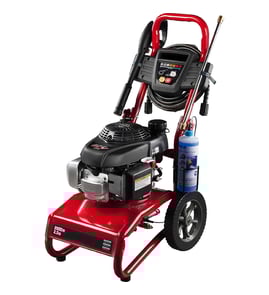



What kind of gas goes in a Craftsman 580752010 power washer?
Use clean, fresh, unleaded gasoline (regular) in your Craftsman 580752010 power washer. For best starting and steady operation, use fuel with a minimum 87 octane (87 AKI); avoid old fuel and never mix oil into the gasoline.
- Buy only what you will use in about 30 days.
- Store gasoline in an approved container, tightly capped.
- Keep fuel away from heat, sparks, and open flame.
- Wipe up spills before starting the engine.
- If the washer will sit, run it dry or treat fuel with a stabilizer.
| Do | Don’t |
|---|---|
| Use fresh, unleaded gasoline | Use gasoline that smells sour or looks dark |
| Use 87 octane (AKI) or higher | Mix oil into the gas (this is not a 2-cycle engine) |
| Fill outdoors with the engine off | Refuel while the engine is hot or running |
| Keep the cap tight after fueling | Overfill the tank (leave room for expansion) |
Your Craftsman 580752010 owner documentation includes the safety and operating rules for fueling and running the unit. Use the 580752010 owner's manual to confirm any fuel-handling cautions and storage steps for your exact pressure washer.
Fresh unleaded fuel helps the carburetor and fuel system stay clean, reduces varnish buildup during storage, and improves starting reliability, especially after the pressure washer has been sitting.
Last updated: January 2026
What PSI should my pressure washer be?
For the Craftsman 580752010 gas pressure washer, the rated working pressure is 2150 PSI, which is the PSI you should expect when the unit is operating correctly with proper water supply and the right spray tip. That PSI level is a solid fit for most homeowner cleaning jobs.
At 2150 PSI, we typically recommend this pressure range for:
- Washing vehicles, patio furniture, and outdoor equipment
- Cleaning decks and fences (use a wider fan tip and keep distance)
- Rinsing siding and general exterior cleanup
- Light to moderate concrete cleaning (driveways, sidewalks)
Use these model specs as your baseline when troubleshooting performance.
| Spec | Craftsman 580752010 rating | What you’ll notice in use |
|---|---|---|
| Pressure | 2150 PSI | Strong spray with correct tip and steady water supply |
| Flow rate | 1.9 GPM | Rinsing speed depends heavily on nozzle choice |
| Water supply temp | Max 100°F | Hotter water can reduce pump life and performance |
Low pressure is usually a setup, nozzle, or water-supply issue, not “PSI changing” on its own.
- Confirm your water source can supply at least 20 PSI at the washer and adequate flow
- Purge air from the pump by squeezing the trigger with water on before starting
- Clean the garden hose inlet screen (clogs reduce pressure fast)
- Inspect the high-pressure hose for kinks, bulges, or leaks; replace if damaged
- Swap to a different spray tip; a worn or partially clogged tip drops pressure
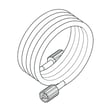
If you need a replacement, match the connection style and length to your setup; the model uses a high-pressure hose such as the hose 84006753.
Using the correct PSI for the job helps you clean faster while reducing the risk of surface damage (wood, paint, and soft stone are easy to etch at close range). It also helps you diagnose problems accurately when performance drops.
For operating and setup details (including water supply requirements and startup steps), follow the Craftsman 580752010 owner’s manual.
Last updated: January 2026
Is it worth repairing a pressure washer?
Yes, repairing a pressure washer is worth it when the problem is a wear item or a simple leak, and the total repair cost stays well below the cost of replacing the unit. For Craftsman model 580752010, routine maintenance and replacing damaged hoses or seals often restores performance.
- Repair if the issue is a clogged inlet screen, worn nozzle, or a leaking fitting
- Repair if the engine runs well and pressure loss is limited to the spray circuit (hose, wand, nozzle)
- Repair if the unit has been maintained (oil changes, clean air filter, proper storage)
- Replace if the pump has major internal damage or the unit was run without water (common pump killer)
- Replace if you have repeated breakdowns and multiple systems are failing (pump plus engine plus frame)
Many pressure problems come from the water delivery side, not the engine.
| Symptom | Most likely cause | Typical fix |
|---|---|---|
| Low pressure or surging | Clogged or wrong spray tip | Clean or swap tips; consider pressure washer spray nozzle set 196278GS |
| Water leaking at connections | Worn seal/O-ring | Replace seals; do not use sealant on leaking connections |
| Hose leaks, bulges, or kinks | Worn high-pressure hose | Replace the hose; never patch a high-pressure hose |
| Poor spray pattern | Partially clogged nozzle | Clean nozzle, flush system |
The owner’s guidance for this Craftsman pressure washer is clear on a few points:
- Never repair a high-pressure hose; replace it if it leaks, is cut, or has bulges
- Never repair leaking connections with sealant; replace the O-ring or seal
- Relieve trapped pressure at the spray gun every time you stop the engine
- Disconnect the spark plug wire before adjusting or making repairs
- Wear eye protection during use and service
For model-specific operating and maintenance intervals, use the 580752010 owner’s manual.
A small leak or clogged nozzle can make a good pump look “bad.” Fixing the spray circuit first is usually the fastest, lowest-cost way to restore pressure and avoid unnecessary pump replacement.
Last updated: January 2026
Should I use 1/4 or 5/16 pressure washer hose?
For the Craftsman 580752010 gas pressure washer, a 1/4-inch high-pressure hose is the best all-around choice for most homeowner cleaning because it’s lighter and easier to handle; choose 5/16-inch when you need longer runs and steadier flow with less pressure drop. For safe setup and hose checks, follow the 580752010 owner's manual.
Use these practical rules when deciding between 1/4 and 5/16:
- Choose 1/4-inch for shorter hose lengths, frequent moving, and easier coiling.
- Choose 5/16-inch for longer hose lengths where you want better flow consistency.
- Prioritize kink resistance and a quality outer jacket; a kinked hose performs worse than a slightly smaller diameter.
- Match fittings to your spray gun and wand; avoid adapters that restrict flow.
- Replace any hose with cuts, bulges, or leaks; we never recommend repairing a high-pressure hose.
| Hose size | Best for | What you’ll feel in use | Tradeoff |
|---|---|---|---|
| 1/4-inch | Most homeowner jobs | More flexible, easier to maneuver | More pressure drop on long lengths |
| 5/16-inch | Longer hose runs | Smoother flow at the wand | Heavier, stiffer, harder to coil |
The manual emphasizes checking hose condition and connections before starting. Use this checklist:
- Confirm high-pressure and water-supply connections are tight.
- Inspect for kinks, cuts, abrasion, or leaks.
- Turn water ON and squeeze the trigger to purge air before starting.
- Keep the high-pressure hose connected while the system is pressurized.
- When stopping, squeeze the trigger to relieve trapped pressure and engage the trigger lock.
If you’re replacing a worn or leaking hose, use the model-matched part to avoid fitment problems: hose 84006753.
Hose diameter affects how much pressure and flow you actually get at the nozzle. The right hose reduces pressure loss, prevents frustrating kinks, and helps protect the pump by keeping water moving consistently.
Last updated: January 2026