Owner’s manual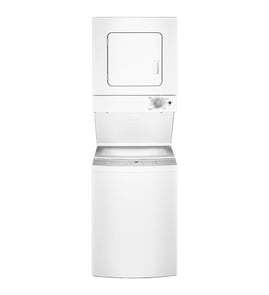




Where do you put laundry detergent in a GE washer?
For the GE WSM2480TCAWW washer, we add detergent directly into the wash basket (the tub), not into a dispenser. For best results, add detergent before loading clothes; if clothes are already in, add detergent next to the agitator (center post). See the owner's manual.
- Powder or liquid detergent: add to the wash basket
- Best practice: add detergent before you load clothes
- If you loaded first: pour detergent next to the agitator
- Measure it: use a standard measuring cup (too little detergent is a common cause of poor cleaning)
- If you get too many suds: switch to a lower-sudsing detergent and follow the package directions
| What you are using | Where it goes | Tip |
|---|---|---|
| Liquid detergent | Wash basket | Add before clothes when possible |
| Powder detergent | Wash basket | If added after loading, pour next to agitator |
| Chlorine bleach (liquid) | Next to the agitator (diluted) | Do not pour undiluted bleach on clothes |
| Fabric softener (rinse additive) | In the wash cycle per product directions | Follow dilution directions |
Putting detergent in the wash basket helps it dissolve and mix with water early in the cycle. That improves cleaning, reduces residue on fabrics, and helps prevent oversudsing issues that can affect agitation and rinsing.
Last updated: February 2026
How to wash clothes in a stackable washer?
To wash clothes in your GE WSM2480TCAWW stacked laundry center, sort and load items loosely (do not pack or wrap around the agitator), add the measured detergent, choose the cycle and water level for the load size, then close the lid so the washer can run properly. See the owner's manual for cycle and loading details.
- Sort laundry by fabric type, color, weight, and soil level.
- Add a measured amount of detergent to the wash basket.
- Load clothes dry and drop them in loosely; do not push them down.
- Select the cycle (Regular, Permanent Press, or Delicates) and set water level for the load size.
- Close the lid; the washer will fill with the lid open, but it will not spin with the lid open.
- Start the cycle and let it complete (cycle time does not include water fill time).
A proper load reaches about the clothes retaining ring and still has room to move. Load in this order to help balance and agitation:
- Large items (sheets) first
- Small items (washcloths)
- Medium items (towels)
| Do | Don’t |
|---|---|
| Mix large and small items | Overload the basket |
| Wash bulky items separately | Wrap items around the agitator |
| Adjust water level for small loads | Pack wet items down |
For best filtering results, clean the lint filter at the bottom of the agitator after every load:
- Lift off the agitator barrel
- Wipe or wash the filter clean (it is not removable)
- Snap the agitator barrel back into place
Correct sorting, dry loose loading, and the right water level help prevent oversudsing, out-of-balance conditions, and poor cleaning. Keeping the agitator lint filter clean also improves lint control from load to load.
Last updated: February 2026
Why is my GE WSM2480TCAWW not drying my clothes?
If your GE WSM2480TCAWW stacked laundry center tumbles but clothes stay damp, the most common causes are restricted exhaust airflow, a power supply issue (one breaker tripped so you get no heat), or a failed heat-control part such as a thermostat. Use the owner's manual problem solver steps first.
- Clean the lint filter and confirm it’s seated correctly; a mispositioned filter can reduce airflow.
- Inspect the exhaust ducting for blockage; make sure the outside wall cap damper opens freely.
- If you use metal flexible ducting, straighten kinks and avoid crushing the duct behind the unit.
- Dry one washer load at a time; overloading prevents proper tumbling and airflow.
- Do not mix heavy items (towels, jeans) with lightweight items in the same load.
- Check your home’s breakers or fuses; many electric dryers use two, and one can trip while the drum still tumbles.
| What you notice | Most likely cause | What to do next |
|---|---|---|
| Drum tumbles, no heat | One breaker/fuse open, or a heat-control failure | Reset/replace the tripped breaker/fuse; if power is good, test/replace the thermostat WE4X856 |
| Clothes take too long to dry | Exhaust restriction or poor load setup | Clear ducting, confirm damper operation, reduce load size |
| Dryer will not run | Door open or control not started | Close door fully; verify controls are set and Start is pressed (see owner's manual) |
If airflow and power are correct, a failed control or safety part can stop heat.
- Thermostat WE4X856: helps regulate dryer temperature; a fault can prevent heating.
- Lint screen WE18X25155: a damaged or poorly fitting screen can reduce airflow and drying performance.
Poor drying is usually an airflow problem first; restricted venting overheats the dryer, increases cycle time, and can lead to repeated shutdowns of heat-protection components.
Last updated: February 2026
Is there a reset button on a GE stackable washer and dryer?
GE stacked laundry centers like model WSM2480TCAWW typically do not have a dedicated reset button. The practical “reset” is to remove power briefly, then restore power and restart the cycle using the correct Start or cycle controls as shown in the owner's manual.
- Turn the washer/dryer controls to Off.
- Unplug the laundry center (or switch the breaker off).
- Wait 1 to 5 minutes to let the control and motor circuits fully power down.
- Restore power.
- Select the cycle again; then press Start (dryer) or set the washer cycle selector correctly.
The WSM2480TCAWW troubleshooting steps focus on basic start conditions and power supply.
- Confirm the cord is firmly plugged into the outlet.
- Check house fuses and circuit breakers; the unit must be getting current.
- Make sure the dryer door is closed; the dryer will not run with the door open.
- Make sure the washer lid is closed; the washer may fill but will not spin with the lid open.
- Verify controls are set properly (washer cycle selector engaged, dryer Start button pressed).
| What you see | Most likely check first | What to do next |
|---|---|---|
| Nothing runs | No power to appliance | Check breaker/fuses; reseat plug |
| Dryer will not run | Door open or start not pressed | Close door; press Start |
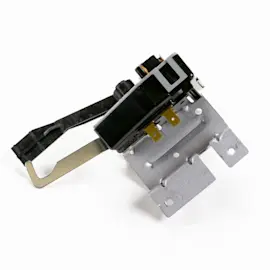
| Washer fills but will not spin | Lid open or lid switch issue | Close lid; inspect lid switch WH12X955 |
| Dryer runs but acts “off” | Lint buildup or airflow restriction | Clean lint screen and venting; follow manual cleaning steps |
A “reset” fixes many no-start situations caused by a brief power glitch, but most repeat problems come from power supply issues, an open door or lid condition, or a failed safety switch (like the lid switch).
Last updated: February 2026