Owner’s manual
 View engine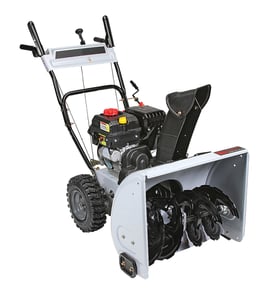


Is sae 30 the same as 5W30 for snowblower?
No. SAE 30 and 5W-30 are not the same oil, and for the Craftsman 247887050 snow thrower the specified engine oil type is SAE 5W-30, which flows better for cold-weather starting while still protecting the engine at operating temperature (see the 247887050 owner's manual).
What the numbers mean (SAE 30 vs 5W-30)
- SAE 30 is a single-weight oil; it stays relatively thick as temperatures drop.
- 5W-30 is a multi-grade oil; it is thinner when cold (the 5W) and behaves like a 30-weight oil when hot (the 30).
- In snowblower conditions, cold flow matters because the engine needs lubrication immediately at startup.
What we recommend for Craftsman model 247887050
Your operator information for this model lists:
- Engine oil type: SAE 5W-30
- Engine oil capacity: 20 oz
Using the correct viscosity helps the recoil starter pull easier, reduces wear during cold starts, and supports consistent throttle response.
Quick comparison
| Oil type | Cold-start flow | Best use case | Snowblower-friendly? |
|---|---|---|---|
| SAE 30 | Poor in cold temps | Warm-weather small engines | Not recommended for winter use |
| 5W-30 | Good in cold temps | Wide temperature range | Recommended |
Tips to avoid hard starting and engine wear
- Check oil level before each use; top off as needed (do not overfill).
- Change oil at least once per season, and always before long-term storage.
- Use fresh fuel; in general, fuel is best used within about 30 days.
- If the engine is hard to start, verify the choke and primer are being used correctly.
- For storage over 30 days, run the engine until it stops to empty the tank, then change the oil.
Why it matters
Oil that is too thick in cold weather can slow cranking speed and delay lubrication to internal parts. Following the model-specified SAE 5W-30 helps your 247887050 start easier and reduces cold-start wear.
Last updated: February 2026
Where can I find my snowblower model number?
You can find the model number on the ID label attached to your Craftsman snow thrower; for this unit, the operator documentation identifies it as model 247.88705 (often shown without the dot as 247887050). Use the exact model number from the label when ordering parts or looking up diagrams in the 247887050 owner's manual.
Common places to check on a snowblower
We typically see the model and serial label in one of these spots:
- Rear of the unit near the wheels or axle area
- Side of the frame near the auger housing
- On the main chassis/frame rail below the handlebar area
- Near the engine mounting area (on the frame, not on the plastic shroud)
- Under or behind a removable belt cover area (if equipped)
What the label usually looks like
The ID label is usually a small sticker or metal tag that includes:
- Model number
- Serial number
- Brand name (Craftsman)
- Sometimes an engine family or spec code
Model number formats you might see
For Craftsman model 247887050, the same model can appear in two common formats.
| Where you see it | Example | What to do |
|---|---|---|
| Parts listings and model pages | 247887050 | Use this format to search parts |
| Operator documentation | 247.88705 | Treat as the same model |
Why it matters
The model number is the fastest way to match the correct parts list for your 21-inch snow thrower, especially for fit-critical items like the auger drive belt and carburetor components.
If you are ordering parts, start with the parts list for model 247887050 on this page; you can also search by model number on Sears PartsDirect.
Last updated: February 2026
How many years should a snowblower last?
For the Craftsman 247887050 21" snow thrower, the operator guidance lists an average useful life of 7 years or about 60 hours of operation with proper maintenance and normal use. Many owners keep a snowblower running longer by staying on top of wear items and off-season storage.
What “average useful life” means on model 247887050
This is a planning and inspection milestone, not a hard stop date.
- Plan a thorough inspection when you reach about 7 seasons or 60 run-hours
- Expect faster wear with heavy, wet snow, gravel drives, or frequent full-throttle use
- Expect longer life with clean fuel practices, correct oil changes, and dry storage
- Replace wear items early to protect the auger, drive system, and engine
Typical lifespan ranges (what most owners see)
| Usage pattern | Typical outcome | What usually limits life |
|---|---|---|
| Light (few storms) | Often exceeds 7 years | Fuel varnish, corrosion from storage |
| Moderate (regular storms) | Around 7 to 12 years | Belts, scraper wear, friction surfaces |
| Heavy (long runs, dense snow) | 5 to 10 years | Auger/impeller wear, engine and drive stress |
Maintenance that most affects longevity
We recommend following the schedule in the 247887050 owner's manual. These items make the biggest difference:
- Use fresh gasoline; prevent stale fuel during storage
- Change engine oil at the recommended intervals
- Clear packed snow and debris from the auger housing and chute
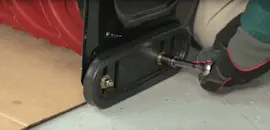
- Re-tighten hardware after the first few uses each season
- Inspect belts for glazing, cracking, or slipping; replace when performance drops
Parts that commonly extend service life
If the machine runs but performance drops, replacing common wear parts often restores reliability.
- Weak scraping or uneven clearing: replace the mtd snowblower scraper blade 731-1033
- Fuel leaks, cracking, or contamination: inspect the fuel cap and tank; replace as needed
- Hard starting after storage: clean the fuel system and service the carburetor if necessary
Why it matters
Using the 7-year or 60-hour baseline helps you schedule maintenance before a mid-storm breakdown. Proactive scraper and fuel-system upkeep reduces strain on the auger system and engine, which are the most expensive areas to repair.
Last updated: February 2026
Is it cheaper to repair or replace a snowblower?
For your Craftsman 247887050 21-inch snow thrower, it’s cheaper to repair when the problem is a normal wear item (belt, paddles, starter, carburetor) and the total repair cost stays under about half the price of a comparable new machine. Replacement is the better value when you’re facing repeated breakdowns or major engine damage.
A practical cost rule we use
Compare total repair cost (parts plus labor) to the cost of a similar new snowblower.
- Repair when the repair is under ~50% of replacement cost
- Replace when the repair is over ~50% of replacement cost
- Replace sooner if you’re paying for repeated shop labor every season
- Repair sooner if it prevents bigger damage (for example, worn paddles contacting pavement)
Repairs that are typically worth doing on model 247887050
The 247887050 owner's manual calls out common fixes such as tightening hardware for vibration and replacing a loose or damaged auger drive belt.
- Replace a worn auger drive belt
- Replace worn rubber paddles before metal contacts pavement
- Fix starting and fuel-delivery issues (stale fuel, carburetor problems)
- Replace a broken pull-start assembly
Example parts that can keep repair costs reasonable
| Repair type | What it affects | Example part from this model’s parts list |
|---|---|---|
| Auger drive belt replacement | Auger engagement and snow throwing | Auger drive belt (listed as V-belt) part number 754-04204 / 954-04204 |
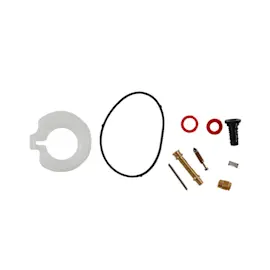
| Carburetor replacement | Starting, surging, fuel delivery | Carburetor assembly part number 751-10974 (also shown as 951-12705) |
| Pull-start repair | Pull-start function | Recoil starter assembly 951-14151 |
Signs replacement is the better value
- Engine has internal damage (low compression, heavy oil consumption)
- Multiple major repairs stack up at once (fuel system plus starter plus engine parts)
- Excessive vibration continues after tightening bolts and nuts
- Corrosion or structural damage makes repairs short-lived
Why it matters
Staying ahead of wear items (belts, paddles, fasteners) keeps your Craftsman snowblower reliable and prevents expensive secondary damage to the auger housing, drive system, or engine.
If you decide to repair, you can order model-matched parts from the parts list for Craftsman 247887050, or search by model number on Sears PartsDirect.
Last updated: February 2026