Owner’s manual
 Error Codes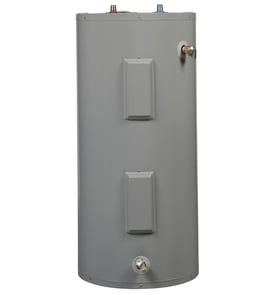




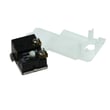
How to reset a water heater thermal switch?
On Kenmore electric water heater model 153326566, the “thermal switch” is the high-temperature shutoff (high limit) on the thermostat. Reset it by turning OFF power, opening the access panel, pressing the red RESET button, then restoring power; follow the steps in the owner's manual.
Reset steps (high limit)
- Turn OFF electrical power to the water heater at the junction box or breaker.
- Remove the upper or lower access panel screw and take off the panel.
- Fold insulation back to expose the thermostat.
- Press the red button labeled “RESET” firmly.
- Reposition insulation, reinstall the access panel, then turn ON power.
Safety checks before you open panels
- Confirm power is OFF before touching any wiring.
- Keep insulation in place except when accessing the thermostat.
- Do not operate the heater with the access panel removed.
- If you recently drained the tank, open a hot faucet until water is no longer hot before working nearby.
If it trips again (what to check next)
A high limit that keeps tripping usually points to overheating or an electrical issue. Check these common causes:
| What to check | What it can cause | Typical fix |
|---|---|---|
| Thermostat setting too high | Water overheats, high limit opens | Set temperature around 120°F (match upper and lower settings) |
| Loose wiring at thermostat/element | Heat buildup, arcing | Tighten connections with power OFF |
| Failed thermostat | Poor temperature control | Replace thermostat (upper or lower as needed) |
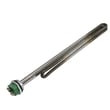
| Scale on heating element | Rumbling, inefficient heating | Clean or replace element |
If you suspect a thermostat problem, the parts list for this model includes the water heater thermostat, upper 100108683 and thermostat 100108421. For element-related overheating or rumbling, see how to replace an electric water heater heating element.
Why it matters
The high-temperature shutoff is a built-in safety device. Resetting it restores power, but repeated trips mean the water heater is running hotter than it should or has a component problem that needs correction.
Last updated: February 2026
What is the average lifespan of an electric hot water tank?
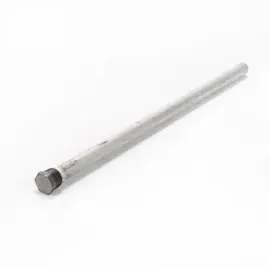
A tank-style electric water heater typically lasts 10 to 15 years. For Kenmore model 153326566, lifespan depends most on water quality, temperature setting, and maintenance; keeping the tank flushed and the anode rod in good shape helps the glass-lined tank resist corrosion (see the owner's manual).
Typical lifespan and what changes it
Most tank electric water heaters fall into this range:
- Typical: 10 to 15 years
- Shorter (often 8 to 10 years): hard water, high usage, high temperature settings
- Longer (often 15+ years): regular flushing, timely anode rod replacement, moderate temperature
Quick guide
| Situation | What you can expect | What to do now |
|---|---|---|
| Normal household use | 10 to 15 years | Flush sediment periodically; check anode rod |
| Hard water or heavy use | Closer to 8 to 10 years | Inspect anode rod more often; flush more often |
| Rotten egg smell | Anode rod reaction is common | Inspect/replace the anode rod |
Maintenance that extends tank life
The tank usually fails from internal corrosion after the anode rod is depleted. In the manual for this model family, the anode rod is described as a sacrificial part that protects the glass-lined tank and should be inspected and replaced as needed.
- Flush sediment from the tank on a routine schedule
- Inspect the anode rod and replace it when significantly depleted
- Keep temperature at a practical setting (higher temps can speed anode depletion)
- Fix small leaks and dripping valves promptly
- Always refill the tank completely before turning power back on after service
Helpful parts for this model:
- Anode rod 100109624
- If you are troubleshooting heating performance, the correct replacement element depends on whether the unit was converted to 5500 watts: water heater heating element, 3,800-watt 100108346 or element 5500 100093526
Why it matters
Once the anode rod is used up, the tank starts corroding and can eventually leak. Replacing an anode rod is far less expensive than replacing the entire water heater, and it is one of the most effective ways to extend service life.
Last updated: February 2026
What size breaker do I need for a 240 volt water heater?
For the Kenmore 153326566 electric water heater on 240 volts, we use a 30-amp double-pole breaker when the heater is set up for the higher-wattage (convertible) lower element; the manual also lists a 20-amp maximum breaker size for the lower-wattage configuration. Always match the breaker to the heater’s wattage setting and wire gauge shown in the owner's manual.
Breaker size by element wattage (240V)
This model is factory set for 3800 watts, and the lower element can be converted to 5500 watts on a 240V system.
- 3800W configuration: typically 20A maximum breaker (with 12 AWG copper)
- 5500W conversion: 30A breaker required (with 10 AWG copper)
- Use a 2-pole breaker for 240V water heaters
- Follow local electrical code for long wire runs (the manual notes special consideration beyond about 90 feet)
Quick reference table
| Heater setup (240V) | Typical wire size | Maximum breaker size |
|---|---|---|
| 3800W element setting | 12 AWG copper | 20A |
| 5500W lower element conversion | 10 AWG copper | 30A |
Why it matters
Breaker and wire size protect the circuit from overheating. If the water heater is converted to 5500W but left on a 20A/12 AWG circuit, the breaker can trip repeatedly and the wiring can overheat.
Related parts that often come up during electrical troubleshooting
If you are diagnosing “no hot water” or inconsistent heating, these parts are commonly involved:
- Water heater thermostat, upper 100108683 (controls upper heating cycle)
- Thermostat 100108421 (lower thermostat)
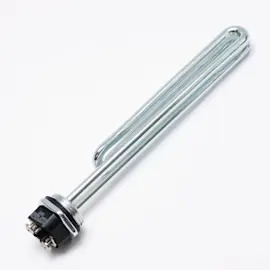
- Water heater heating element, 3,800-watt 100108346 (standard element)
- Element 5500 100093526 (higher-wattage option)
Last updated: February 2026
Are electric water heater elements universal?
No. Electric water heater elements are not universal; the replacement must match your Kenmore 153326566 water heater’s voltage and wattage, and it must physically fit the tank opening and wiring style. This model uses 240-volt elements, with 3,800 watts standard and an optional 5,500-watt lower-element setup (if converted). See the owner's manual for the rating-plate details.
What must match for a safe replacement
When we help customers choose an element, we match these basics:
- Voltage: must match the rating plate (commonly 240V on this model)
- Wattage: 3,800W vs. 5,500W matters for heat output and wiring load
- Mounting style: screw-in vs. bolt-in (must match your tank)
- Element length and shape: must clear the tank interior
- Terminal style: must match your wiring connections
Model-specific guidance for Kenmore 153326566
Your water heater is factory set to operate at 3,800 watts. The lower element on this model is a factory-installed convertible element that can be set up to run at 3,800W or 5,500W on a 240V system.
If you need a replacement element, use the one that matches how your heater is set up:
| Where | Setup on heater | Correct replacement to order |
|---|---|---|
| Upper element | 3,800W only | Water heater heating element, 3,800-watt 100108346 |
| Lower element | Not converted (3,800W) | Water heater heating element, 3,800-watt 100108346 |
| Lower element | Converted (5,500W) | Element 5500 100093526 |
Why it matters
Using the wrong element (wrong voltage, wrong wattage, or wrong fit) can cause slow recovery, nuisance tripping, overheated wiring, or element failure. Matching the rating plate and the existing configuration keeps heating performance and electrical safety where it should be.
Helpful tip before you buy
Check the water heater’s rating plate near the lower access area for an “If Converted” indication, and compare it to what you see behind the lower access panel. If you’re replacing an element, it’s also smart to replace the seal if it’s disturbed during removal.
- If the element is removed, plan on replacing the gasket
- Always fill the tank completely before turning power back on
- Turn off power at the breaker before opening access panels
Last updated: February 2026
Can you replace parts on a hot water heater?
Yes. On a Kenmore electric water heater model 153326566, we can replace many service parts (heating elements, thermostats, anode rod, drain valve, and relief valve) to restore performance and extend life. If the tank itself is leaking, replacing the water heater is the practical fix. For model-specific procedures and safety steps, use the owner's manual.
Parts you can commonly replace
These are typical replaceable components on electric water heaters like model 153326566:
- Heating element (no hot water, slow recovery, tripping breaker)
- Upper or lower thermostat (water too hot, not hot enough, temperature swings)
- Anode rod (helps reduce tank corrosion and odor issues)
- Temperature and pressure relief valve (leaking or weeping at the discharge)
- Drain valve and internal washer (drips at the valve)
Safety and prep steps we follow
Electric water heater repairs involve 240-volt power and hot water. Before opening panels or removing parts:
- Turn OFF power at the breaker and confirm power is off
- Shut off the cold water supply to the tank
- If removing an element or valve, drain the tank to below that opening
- Keep hands clear of drain discharge; hot water can cause burns
- After service, reinstall insulation and covers before restoring power
Why the fill step matters
We always fill the tank completely and confirm water flows from a hot faucet before turning power back on. Powering an empty tank can damage a heating element.
Choosing the right replacement part
The manual guidance is clear: replacement heating elements must match the voltage on the rating plate and must be no greater wattage than listed.
| Symptom | Most likely part | Example part on this model page |
|---|---|---|
| No hot water or slow heating | Heating element | Water heater heating element, 3,800-watt 100108346 |
| Temperature swings | Thermostat | Water heater thermostat, upper 100108683 or thermostat 100108421 |
| Drips at element opening after service | Element seal | Water heater heating element gasket 100108379 |
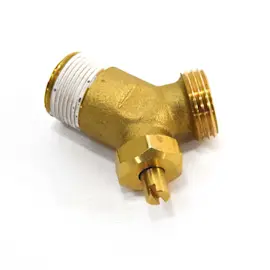
| Water on floor from valve area | Drain valve | Ao smith water heater drain valve 100108605 |
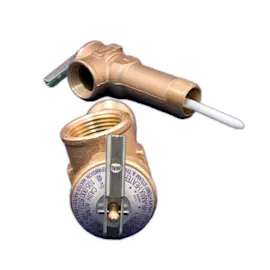
| Discharge from relief line | Relief valve | Relief valve 100108779 |
Helpful repair guidance
For step-by-step DIY instructions that match this repair type, use:
- How to replace an electric water heater heating element
- How to replace an electric water heater thermostat
Last updated: February 2026