Owner’s manual
 Error Codes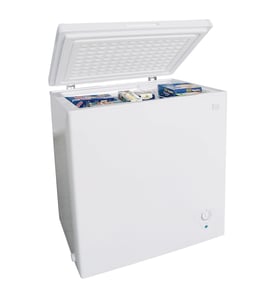



How can I tell what size my chest freezer is?
To tell the size of your Kenmore chest freezer model 25317822710, we recommend identifying it two ways: measure the outside dimensions (to confirm fit in your space) and check the capacity in cubic feet (to confirm storage size). The capacity is typically listed in the 25317822710 owner's manual.
Measure the outside dimensions (fit size)
Use a tape measure and record width, depth, and height.
- Width: left side to right side across the front
- Depth: front edge to the back (include the lid overhang if it sticks out)
- Height: floor to the top of the lid (measure to the highest point)
- Clearance: plan for airflow space around the cabinet
The manual recommends leaving 3 inches of space on all sides for air circulation, which matters when you are checking whether the freezer will fit in a tight spot.
Quick measurement checklist
- Measure at the widest and deepest points (handles and lid lips can add size)
- Measure with the freezer in its normal location (don’t forget base trim)
- Write down results in inches and keep them with your model number
Find the storage capacity (cubic feet)
“Size” often means capacity, not dimensions. Capacity is usually shown on the rating label or in the manual.
Common chest freezer capacity ranges:
| Chest freezer type | Typical capacity range |
|---|---|
| Compact | 3 to 7 cu. ft. |
| Medium | 7 to 14 cu. ft. |
| Large | 14 to 25 cu. ft. |
Why it matters
Outside dimensions help you confirm fit and ventilation, while cubic feet helps you confirm how much food you can store. Leaving the recommended clearance also helps the compressor run efficiently and keeps cabinet temperatures more stable.
Related DIY help
If your freezer has a display or is showing a code while you are checking settings, use the Kenmore electronic control module freezer error codes guide for quick troubleshooting.
Last updated: January 2026
What are common problems with mini deep freezers?
Common problems with mini deep freezers include not cooling consistently, heavy frost buildup, and unusual compressor noises. On the Kenmore 25317822710 chest freezer, these issues are often tied to temperature control settings, frequent lid openings, or a lid that is not sealing because the freezer is not level (see the 25317822710 owner's manual).
Most common symptoms and what they usually mean
- Freezer does not run at all: temperature control set to OFF, loose plug, tripped breaker, or a GFCI outlet issue
- Runs too much or too long: warm room, warm food load, lid opened often, or lid not fully closed
- Too cold inside: temperature control set too cold
- Moisture or frost inside: humid conditions, lid not seating properly, or frequent lid openings
- Noises (buzzing, popping, gurgling): normal refrigerant flow and metal expansion, especially at startup
Quick checks we recommend (in order)
- Confirm the freezer is powered and the plug is fully seated.
- Verify the temperature control is not set to OFF; adjust slightly warmer if items are freezing too hard.
- Check that the freezer is level so the lid aligns and seals correctly.
- Reduce lid-open time; warm air drives longer run times and faster frost buildup.
- If you recently started the freezer or reconnected power, allow about 4 hours to cool completely before judging performance.
Troubleshooting guide: symptom to likely cause
| Symptom | Likely cause | What to do first |
|---|---|---|
| Not cooling well | Lid opened often, warm food load | Limit openings; let temps stabilize |
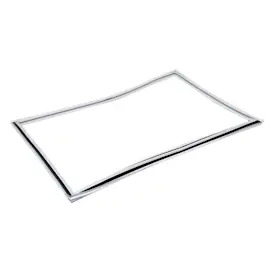
| Heavy frost buildup | Lid not sealing, humid air entering | Level cabinet; inspect lid seal |
| Runs constantly | Control set too cold, warm room | Set slightly warmer; improve airflow around unit |
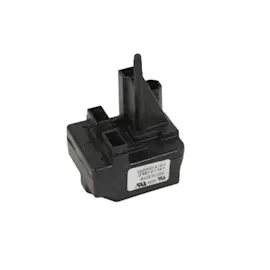
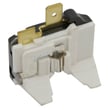
| Clicking/buzzing at start | Compressor start cycle | If it will not start, use how to replace a freezer compressor start relay |
Why it matters
A mini chest freezer depends on a tight lid seal and stable temperature control. If the cabinet is not level or the lid is opened frequently, warm humid air enters, which increases run time, frost, and temperature swings.
Last updated: January 2026
Which is better chest freezer or deep freezer?
A “deep freezer” usually means a chest freezer, so the better choice depends on whether you want maximum efficiency or easier access. For long-term storage, a chest freezer like Kenmore model 25317822710 is typically better because it holds cold air when opened and runs efficiently; see the 25317822710 owner's manual for placement and clearance details.
Chest vs upright: what you gain and what you give up
- Chest freezer (often called “deep freezer”): Better cold retention when opened, typically lower energy use, great for bulk storage.
- Upright freezer: Easier organization and faster access, but typically higher energy use because cold air spills out when the door opens.
- Defrosting: Many chest freezers are manual defrost; many uprights are auto-defrost (less frost, more energy use).
- Space needs: Chest freezers need lid clearance above the unit; uprights need door swing clearance.
- Temperature stability: Chest designs stay more stable during frequent openings.
Quick comparison
| Feature | Chest (“deep”) freezer | Upright freezer |
|---|---|---|
| Energy use | Typically lower | Typically higher |
| Cold loss when opened | Lower | Higher |
| Organization | Harder (stacking) | Easier (shelves/bins) |
| Defrost style | Often manual | Often auto-defrost |
Setup tips that matter for Kenmore 25317822710
- Leave about 3 inches of space on all sides for airflow.
- Place it away from heat sources and direct sunlight.
- Keep lid-open time short; warm air enters every time the lid is opened.
- Let hot foods cool before loading.
- Expect the exterior walls to feel warm during normal operation.
Why it matters
Freezer style affects operating cost, temperature stability, and how quickly you can find food. If you open the freezer often, organization may outweigh efficiency; if you store bulk items long-term, chest style usually wins.
Last updated: January 2026