Installation guide
 Owner’s manual
 Error Codes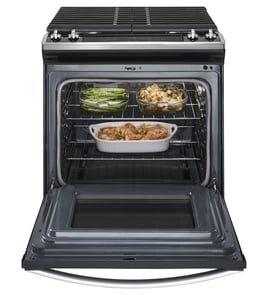




How long should a Kenmore gas stove last?
A Kenmore gas range like model 79072302011 typically lasts 15 years with normal household use. Keeping burners clean, ensuring proper ignition, and maintaining good ventilation helps reduce heat stress on components and can prevent early failures.
Typical lifespan and what affects it
Most gas ranges reach their full life when these basics stay consistent:
- Regular cleaning of surface burners, caps, and grates to prevent clogged ports
- Stable gas supply and correct flame (steady blue flame, not lazy yellow)
- Working ignition system (burners light promptly)
- Avoiding frequent boil-overs that soak igniters and switches
- Using the oven door seal to keep heat in and reduce overwork
Quick maintenance checklist for 79072302011
Use these habits to get the most life out of your range:
- Clean burner ports with a soft brush; keep spillovers out of the igniter area
- Confirm surface burners light quickly; after air is purged, ignition is typically within about 4 seconds
- Watch oven preheat behavior; a glow-bar style igniter normally lights the oven burner within about 60 seconds
- Keep the oven sealing well; replace a worn gasket if you feel heat leaking around the door
- Follow clearances and hookup guidance from the installation guide
Common “wear” parts vs. “long-life” parts
These parts often determine whether a range feels “worn out” before it truly is:
| Part type | What you notice when it’s failing | Example part for this model |
|---|---|---|
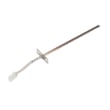
| Oven igniter | Oven takes too long to light or won’t heat | Tappan range oven burner igniter 316489403 |
| Oven temperature sensor | Oven temperature swings or bakes unevenly | Frigidaire range oven temperature sensor 316490000 |
| Door seal | Heat leaks, longer cook times, hotter control area | Range oven door seal 5304498835 |
Why it matters
A gas range can “seem” at end-of-life when a single ignition or temperature-control part is weak. Replacing a common wear part (like an igniter or sensor) often restores normal bake and broil performance and helps the appliance reach its full 15-year service life.
Last updated: February 2026
Where to find Kenmore gas range model number?
On Kenmore gas range model 79072302011, the model and serial number identification plate is located on the right-hand surface of the oven front frame. Open the storage drawer, warmer drawer, or broiler drawer (depending on your range) to see the plate; confirm the location in the installation guide.
Where to look on model 79072302011
Check these spots in this order:
- Open the bottom drawer (storage, warmer, or broiler drawer) and look at the right-hand oven front frame.
- Look for a metal or foil identification plate with the model and serial number.
- Write down the model number, serial number, and any lot number/letter shown.
- Take a clear photo of the plate before ordering parts.
- Keep the information with your Use and Care paperwork for future service.
What the identification plate tells you (and why it matters)
Besides the model number, the plate typically lists key details used for correct parts and safe setup.
| Plate item | What we use it for |
|---|---|
| Model number | Matches the correct Kenmore parts diagrams and part substitutions |
| Serial number | Helps confirm production series and compatible revisions |
| Lot number/letter | Helps narrow down version differences within the same model |
| Fuel/rating info | Confirms gas type and burner ratings for service and installation |
Why it matters
Kenmore ranges often have multiple versions that look similar. Using the exact model and serial information helps us match the right igniter, oven sensor, gas valve, or burner parts the first time and avoid returns.
Last updated: February 2026
How do I troubleshoot my 79072302011?
For your Kenmore 79072302011 gas range, start troubleshooting by matching the symptom (no ignition, weak flame, oven not heating, gas odor) to a quick safety check, then verify burner cap placement and ignition timing. Use the setup and ignition checks in the installation guide as your baseline.
Safety first (gas range essentials)
- If you smell gas: do not light burners or the oven, do not touch electrical switches.
- Ventilate the area and stop troubleshooting until the gas smell is gone.
- Keep gasoline and flammable vapors away from the range.
- Confirm the range is stable and protected against tipping (anti-tip bracket installed).
Quick symptom-based checks
- Surface burner clicks but won’t light: confirm the burner cap is centered and firmly seated; it should “click” into place and not slide off-center.
- Surface burner lights slowly: purge air from the gas line by holding the knob at LITE until it ignites; normal ignition is within about 4 seconds after air is purged.
- Low flame or burner goes out on LOW: the low setting may need adjustment at the valve stem (thin-blade screwdriver adjustment is described in the installation instructions).
- Oven won’t heat (bake): set Bake to 300°F; the oven burner should ignite within 60 seconds.
- Broil won’t light: set Broil; the broil burner should ignite within 60 seconds.
What “normal” operation looks like
| Function | What you should see | Typical timing |
|---|---|---|
| Surface ignition | Clicking spark, then steady flame | Lights within ~4 seconds (after purge) |
| Bake ignition | Igniter glow, then burner flame | Ignites within ~60 seconds |
| Temperature cycling | Igniter cycles off, flame shuts off shortly after | Flame off in ~20 to 30 seconds after igniter off |
When a part is the likely fix
If ignition is slow or inconsistent after cleaning and correct cap placement, these parts commonly solve it:
- Range oven igniter 5304506545 (oven burner ignition)
- Tappan range oven burner igniter 316489403 (alternate oven igniter option listed for this model)
- Frigidaire range oven temperature sensor 316490000 (temperature regulation issues)
Why it matters
Correct ignition timing and proper flame help the 79072302011 heat evenly and safely. A mis-seated burner cap or weak igniter can cause delayed ignition, poor baking performance, and repeated clicking.
Last updated: March 2026