Installation guide
 Owner’s manual
 Error Codes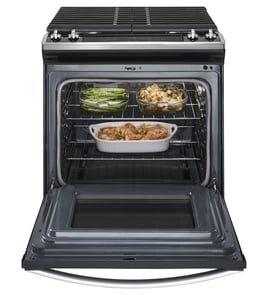



How long should a Kenmore gas stove last?
A Kenmore gas range like model 79078779405 typically lasts 15 years with normal residential use. Regular cleaning to prevent grease buildup, using the self-clean cycle correctly, and keeping burners igniting properly are the biggest factors in reaching that lifespan.
- Clean the cooktop and areas under burner heads so grease does not accumulate.
- Keep the oven interior free of heavy spills before running self-clean.
- Ventilate the kitchen during self-clean (open window, ventilation fan, or hood).
- Avoid lining the oven with aluminum foil; it can damage the oven interior and affect baking.
- Use the correct electrical setup (grounded 3-prong outlet) to protect the electronic control.
- If you convert to LP gas, follow the correct conversion process and settings.
| Task | Good interval | Why it matters |
|---|---|---|
| Wipe up sugary spills and melted plastic promptly | Same day | Prevents baked-on damage and hard-to-remove residue |
| Clean around surface burners | Weekly | Helps prevent ignition problems and uneven flames |
| Run self-clean only after removing heavy spills | As needed | Reduces smoke, odors, and overheating risk |
| Confirm proper ventilation during self-clean | Every self-clean | Helps clear normal odors and keeps the kitchen safer |
- Letting grease build up under surface burners (it can create flare-ups and heat damage).
- Using oven foil on the bottom or walls (it can permanently damage surfaces).
- Forcing the oven door during or right after self-clean (it can damage the door lock system).
- Operating the range after long cold storage without letting it warm above 32°F for several hours (protects the control).
A 15-year lifespan assumes the burner system, oven gas valve, and electronic control stay protected from grease, overheating, and power issues. Simple cleaning and correct self-clean use reduce the most common wear-and-tear failures.
For model-specific care and cleaning steps, follow the 79078779405 owner’s manual.
Last updated: February 2026
How to remove the top of a Kenmore gas range?
To remove the top on a Kenmore gas range model 79078779405, we lift off the grates and burner caps first, then remove any burner-head or burner-base mounting screws so the main top can be raised or removed. Follow the exact fastener locations in the 79078779405 installation guide.
- Turn all surface burner knobs to OFF and let the cooktop cool completely.
- Shut off the gas supply at the range shut-off valve.
- Unplug the range or switch OFF the circuit breaker.
- Protect the countertop and cooktop edges with a towel or cardboard.
- Keep screws organized by location; lengths can vary.
- Remove the burner grates.
- Lift off the burner caps.
- If your model uses removable burner heads, lift them off; if they are secured, remove the screws and lift the heads.
- Remove any screws that secure the burner bases or burner tubes to the main top.
- Open the oven door and look along the front underside of the cooktop lip for additional mounting screws.
- Lift the front of the main top; if it hinges, support it. If it fully removes, disconnect any attached wiring (such as igniter harnesses) only after power is off.
| Item | Why it comes off | What to watch for |
|---|---|---|
| Grates and burner caps | Access to fasteners | Don’t mix caps between burners |
| Burner head | Frees the main top | Screws can be seized from heat |
| Burner base/tube screws | Releases cooktop from manifold area | Avoid bending burner tubes |
| Control panel screws (sometimes) | Allows top to lift higher | Don’t pinch wiring on reassembly |
- Range surface burner head 316212400 (if a head is damaged, warped, or won’t seat correctly)
- Range screw 316240600 (if original screws strip or corrode)
Removing the main top the right way prevents gas burner misalignment, damaged igniter wiring, and uneven flames after reassembly. It also helps you access components like igniters, orifice holders, and the manifold area safely.
Last updated: February 2026
What are the parts of a gas oven?
A Kenmore 79078779405 gas range oven is built around a gas burner system (bake and broil), an ignition and gas-control system, and the oven cavity parts that hold heat and support cooking. Your 79078779405 owner's manual lists the key features and components used on this model.
- Electronic oven control and timer (control board and clock)
- Bake burner (main heat source for baking)
- Broil burner (high-heat top cooking)
- Oven racks and rack supports
- Oven door, handle, hinges, and door seal (gasket)
- Oven interior light and light switch
- Oven bottom panel and burner baffle (covers and directs heat)
- Cooktop burner system (burner heads, caps, grates, electrodes)
These parts work together to deliver gas and light it safely:
| Component | What it does | Common symptom when it fails |
|---|---|---|
| Gas valve | Opens/closes gas flow to the oven burner | No bake or no broil heat |
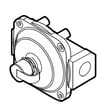
| Pressure regulator | Keeps gas pressure steady | Weak flames, uneven heating |
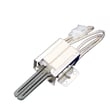
| Igniter/electrode | Lights the gas at the burner | Clicking, delayed ignition |
| Burner (bake/broil) | Produces the flame and heat | Low heat, uneven flame |
Model-matched examples from our parts list include the range bake burner 316404400 and the range pressure regulator 5304521339.
Some oven parts are designed to be removed for cleaning or service. For example, the installation instructions describe removing the oven bottom and burner baffle to observe and adjust the oven burner flame and air shutter. See the 79078779405 installation guide for the correct access steps and flame guidance.
Knowing the component groups helps you troubleshoot faster. For example, “no heat” usually points to the gas/ignition side (gas valve, igniter, regulator), while “heat leaks” or “slow preheat” often points to cavity parts (door seal, bottom panel, insulation).
Last updated: February 2026
Where to find model number on Kenmore gas range?
On Kenmore gas range model 79078779405, the model and serial number are printed on an identification plate located on the right side of the oven front frame inside the Storage Drawer or Warmer Drawer compartment. This is the fastest, most reliable place to confirm the exact model for parts.
Check these locations in order:
- Pull out the storage drawer (or warmer drawer) and look on the right side of the oven front frame.
- Look for a sticker or metal plate labeled Model No. and Serial No.
- Write the full model number exactly as shown (including any prefix like 790. if it appears).
If the drawer area label is missing or unreadable, these spots are often used on similar Kenmore ranges:
- Door jamb area (open the oven door and check the frame)
- Back panel near the vent area
- Side panel near the lower rear
Use this list so we can match the correct Kenmore parts diagram and components:
- Model number (example: 79078779405)
- Serial number
- Fuel type (natural gas vs. LP/propane)
- Any suffixes or color codes shown on the tag
Kenmore model numbers can look very similar, but burner parts, oven controls, igniters, and even the correct installation settings can vary by model and serial range. Using the exact identification plate information prevents ordering the wrong range parts.
| Your range has | Where the ID plate is located |
|---|---|
| Storage drawer | Right side of oven front frame inside the drawer compartment |
| Warmer drawer | Right side of oven front frame inside the drawer compartment |
For diagrams and additional identification details, use the 79078779405 owner’s manual.
Last updated: February 2026