Owner’s manual
 Error Codes



What does "bottom mount" mean?
A “bottom mount” refrigerator (like Kenmore model 79571022012) has the freezer compartment on the bottom and the fresh food section on top, so the items you use most often stay at a more convenient, eye-level height. See the 79571022012 owner's manual for your model’s layout and features.
What you can expect with a bottom-mount design
- Fresh food shelves and crisper drawers are in the upper compartment for easier daily access.
- Frozen food storage is in a lower drawer or lower door section.
- You typically bend less for refrigerated groceries and bend more for frozen items.
- Many bottom-mount models use sliding freezer drawers and basket rails for organization.
Bottom mount vs. top freezer: quick comparison
| Feature | Bottom mount (bottom freezer) | Top freezer |
|---|---|---|
| Fresh food access | Easier (higher) | Lower |
| Freezer access | Lower (drawer) | Easier (higher) |
| Typical organization | More drawers/baskets | More open shelf space |
| Best for | Frequent fresh food use | Frequent freezer use |
Why it matters
The “bottom mount” layout affects everyday ergonomics and also influences which parts you may interact with most, such as door components and freezer drawer hardware. For example, if the interior light does not turn on when you open the door, a common related component is the refrigerator door switch 6600JB1010A.
Last updated: February 2026
What is the advantage of a bottom mount fridge?
A bottom-mount refrigerator like Kenmore model 79571022012 keeps the fresh-food section at eye and waist level, so you reach everyday items with less bending. The freezer stays below, which is convenient for bulk storage and helps keep frequently used foods easiest to access (see the layout and features in the 79571022012 owner's manual).
Key benefits you will notice day to day
- Less bending for fresh food: produce, drinks, and leftovers are easier to grab.
- Better organization for daily use: the refrigerator compartment is the primary “work zone.”
- Freezer capacity down low: bottom drawers and baskets make it easier to store larger frozen items.
- Door-open time can drop: faster access to common items can reduce how long the door stays open.
- Good fit for many kitchens: bottom-freezer designs often pair well with standard counter and cabinet heights.
Bottom-mount vs top-freezer: quick comparison
| Feature | Bottom-mount (like 79571022012) | Top-freezer |
|---|---|---|
| Fresh-food access | Higher, easier reach | Lower, more bending |
| Freezer access | Lower drawers | Upper shelf access |
| Best for | Daily fresh-food use | Frequent freezer use |
| Typical organization | More “fridge-first” | More “freezer-first” |
Why it matters
Most households open the refrigerator section far more often than the freezer. Putting fresh food at a comfortable height reduces strain on your back and knees and can make meal prep faster.
Tips to get the most from a bottom-mount layout
- Keep the most-used items on the middle shelves for quickest access.
- Avoid overpacking; airflow helps maintain steady temperatures.
- If doors do not close smoothly, level the cabinet so the front is slightly higher than the rear (leveling guidance is in the 79571022012 owner's manual).
- If you hear new sounds after installation, many are normal for efficient compressors and fans.
Last updated: February 2026
How to tell if a Kenmore refrigerator compressor is bad?
On a Kenmore 79571022012 bottom-mount refrigerator, a truly bad compressor usually shows up as poor cooling even though the unit keeps trying to run, often with repeated clicking as the control cycles the cooling system. Keep in mind that longer run times and some high-pitched or pulsating sounds can be normal for a high-efficiency compressor.
Quick checks we recommend first
- Confirm the refrigerator has had up to 24 hours to cool completely after being plugged in or after a major temperature change.
- Listen for normal operating sounds (pulsating/high-pitched compressor sound, gurgling refrigerant flow, evaporator fan airflow).
- Check whether the compressor is running most of the time but temperatures stay warm.
- Look for frequent clicking (control switching on and off) paired with little or no cooling.
- Reduce door openings and verify doors seal and close fully; warm air intrusion can mimic cooling failures.
Symptoms that point toward a compressor problem
A compressor is more likely at fault when these happen together:
| What you notice | What it often means | What to check next |
|---|---|---|
| Fridge and freezer both warm | Sealed-system not pumping refrigerant | Verify fans are running and condenser area is clean |
| Repeated clicking, then silence | Compressor start failure or overload trip | Check for steady power and rule out airflow issues |
| Runs constantly, never reaches temp | Weak compressor or refrigerant issue | Check condenser coil cleanliness and door sealing |
What is normal (and can be mistaken for “bad compressor”)
Your 79571022012 is designed to run efficiently, so these are commonly normal:
- Compressor runs longer than older refrigerators.
- Clicking as the electronic control switches cooling on and off.
- Pulsating or high-pitched sound while running.
- Gurgling at the end of a cycle as refrigerant moves.
Why it matters
Replacing a compressor is a major repair; many “no cool” complaints are caused by airflow restrictions, dirty condenser coils, door gasket leaks, or a failed fan motor. Ruling those out first prevents unnecessary parts and downtime.
Parts that may be involved if the compressor is confirmed bad
If testing confirms the compressor is the failure point for this model, the replacement is the refrigerator compressor TCA36411702. For model-specific operating details and troubleshooting steps, use the owner's manual.
Last updated: February 2026
How do I tell what model Kenmore fridge I have?
For Kenmore refrigerators, the model number is printed on the identification label inside the fresh food (refrigerator) compartment. On Kenmore model 79571022012, the label is located on the right-hand side of the refrigerator compartment; confirm the full model number exactly as shown in the owner's manual.
Where to look for the model number label
Check these common spots first (use a flashlight and look for a sticker or metal tag):
- Inside the refrigerator compartment on the right-hand side wall (most common)
- Along the side wall near the crisper drawers
- On the ceiling of the fresh food compartment near the control housing
- Inside the freezer compartment side wall (less common)
- Behind the toe grille or base cover area (some designs)
What to write down (and why)
Record both the model and serial number exactly as printed. We recommend copying them into your manual so you have them when ordering parts or troubleshooting.
| Item | What it’s used for | Example format |
|---|---|---|
| Model number | Matching parts and diagrams to your exact refrigerator | 795.7102** (series format) |
| Serial number | Identifying production run and version details | Letters and numbers |
Tips to avoid ordering the wrong parts
Small differences in the model number can change the door parts, ice maker parts, and control components.
- Match every digit, including any suffix numbers
- If the label shows a series like 795.7102**, use the full model from the tag when searching parts
- Use the model number when selecting parts such as the refrigerator door switch 6600JB1010A or refrigerator electronic control board EBR67348003
Why it matters
Kenmore model numbers identify the exact configuration (doors, dispenser, ice maker, controls). Using the correct model number helps us show the right parts list and reduces returns caused by look-alike components.
Last updated: February 2026
Why is the bottom of my Kenmore refrigerator leaking water?
Water at the bottom of your Kenmore 79571022012 bottom-mount refrigerator is usually caused by defrost water not draining correctly into the drain pan, or by a leak in the water supply system for the ice maker and dispenser. We use the troubleshooting and care steps in the owner's manual to pinpoint the source.
Most common causes (and what to check first)
- Clogged or frozen defrost drain: Water backs up and can spill into the fresh food section, then run down to the floor.
- Drain tube issue: A split, loose, or misrouted drain tube can dump water where it should not.
- Water line connection leak: A slow drip at the shutoff valve, compression nut, or valve connection can pool underneath.
- Water inlet valve seepage: The valve can weep or leak and send water down the back or into the base area.
- Door not sealing well: Warm air increases frost, which creates excess defrost water and can overwhelm drainage.
Quick diagnostic steps (10 to 15 minutes)
- Confirm where the water starts: front center, left/right corner, or behind the unit.
- Look for ice or standing water inside (especially near the bottom of the refrigerator compartment).
- Inspect the back lower area for a drip trail from the water line or valve.
- Check the drain pan position: it should sit flat and centered under the drain outlet.
- If you recently moved the refrigerator, re-check all water line fittings for slow leaks.
Parts that commonly solve bottom leaks on this model
| Symptom you see | Likely area | Part to consider for Kenmore 79571022012 |
|---|---|---|
| Water appears after defrost cycles | Drain path | Refrigerator drain tube 5251JA3003D |
| Drip from rear near water hookup | Water supply/valve | Lg refrigerator water inlet valve MJX41178908 |
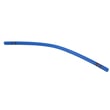
| Intermittent dripping, tubing looks stressed | Water line routing | Refrigerator water tubing MJU62070602 |
Why it matters
A small leak can turn into floor damage and can also cause temperature swings if ice builds up around the evaporator area. Fixing the drain path or water supply leak quickly helps your compressor and fans run normally and keeps food temperatures stable.
Good to know from the manual
- During normal operation, you can hear water running into the drain pan during the defrost cycle.
- When connecting the water line, the manual directs you to tighten any connections that leak and to check for dripping at water line connections.
Last updated: February 2026