Owner’s manual
 Error Codes



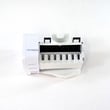
How to remove bottom grille on GE refrigerator?
On the GE GFD28GYNCFS bottom-mount refrigerator, the bottom grille (toe grille) typically snaps into place with retaining clips. We remove it by pulling straight outward from the bottom edge, then lifting slightly to release the top tabs; use the GFD28GYNCFS owner’s manual for the exact clip locations.
Before you start
- Unplug the refrigerator or switch off power at the breaker if you will reach near wiring.
- If the unit has a water line, avoid pulling or kinking the tubing behind the grille.
- Protect the floor with a towel or cardboard to prevent scratches.
- Use a plastic putty knife (preferred) to avoid marring the grille or cabinet.
Steps to remove the bottom grille
- Open both fresh food doors for better access.
- Grip the grille at the left and right lower corners.
- Pull straight out with steady pressure to pop the lower clips free.
- If it resists, slide a plastic putty knife under an edge and gently pry outward.
- Once the bottom releases, lift the grille slightly to disengage any upper tabs, then pull it away.
If the grille will not come off
- Check for hidden screws at the ends or along the top edge (some versions use screws instead of only clips).
- Make sure the grille is not caught on the leveling legs or a drip pan lip.
- Warm the room slightly; cold plastic can be less flexible and harder to unclip.
- Inspect for cracked clip points; a broken clip can wedge and hold the grille tight.
What you can access after removal
| Area behind grille | What it’s for | Common reason to access |
|---|---|---|
| Leveling legs/rollers | Levels cabinet and aligns doors | Door closing or alignment issues |
| Condenser area (varies by design) | Helps remove heat | Cleaning dust for better cooling |
| Drain pan area (varies) | Collects defrost water | Checking for leaks/puddles |
Why it matters
A properly seated bottom grille helps protect components and supports airflow and leveling access. Removing it the right way prevents broken retaining clips and reduces the chance of door alignment problems.
Last updated: January 2026
What is the most common problem with a GE refrigerator?
The most common GE refrigerator problem is a cooling issue (food not staying cold enough or freezer warming up), usually caused by airflow or heat-exchange problems like dirty condenser coils, a failing evaporator fan, or frost buildup. For your GE GFD28GYNCFS, start with the checks and settings in the GFD28GYNCFS owner’s manual.
Most common symptoms we see
- Fresh food section is warm but freezer seems OK
- Freezer is warm and ice production slows or stops
- Fridge runs a lot, is louder than normal, or cycles frequently
- Frost or ice buildup on the back wall inside the freezer
- Temperature swings after the doors are opened often
Quick checks you can do first (no parts guessing)
- Confirm temperature settings; typical targets are 37°F for fresh food and 0°F for freezer.
- Make sure vents inside the compartments are not blocked by food packages.
- Clean condenser coils and the area around the condenser fan (dust buildup is a top cause of poor cooling).
- Check door gaskets for gaps, tears, or areas not sealing; warm air leaks create frost and long run times.
- Listen for the evaporator fan; it should run when the compressor is running (door switch closed).
Common causes and what they look like
| Likely cause | What you notice | Best next step |
|---|---|---|
| Dirty condenser coils | Warm temps, long run times | Clean coils; recheck temps after 24 hours |
| Evaporator fan problem | Freezer cold but fridge warm, weak airflow | Follow how to fix your evaporator cooling fan troubleshooting |
| Frosted evaporator (defrost issue) | Frost sheet on freezer back wall | Defrost fully, then monitor for repeat |
| Door not sealing | Moisture, frost near door, alarms | Inspect/clean gasket; adjust doors if needed |
Why it matters
Cooling problems can cascade into other issues, including spoiled food, heavy frost, and ice maker or water dispenser complaints. Fixing airflow and coil cleanliness early often restores normal temperatures without unnecessary part replacement.
When to use diagnostics
If your display shows an error or the unit won’t stabilize after basic checks, use GE refrigerator error codes to narrow the failure to a sensor, fan circuit, defrost system, or control.
Last updated: January 2026
What is the capacity of the GFD28GYNCFS?
The GE GFD28GYNCFS bottom-mount refrigerator is a 27.8 cubic foot class refrigerator; we use that total-capacity figure when matching shelves, bins, and other fit-critical refrigerator parts. For the exact breakdown between fresh food and freezer, confirm the specification section in the GFD28GYNCFS owner's manual.
Quick capacity details
- Total capacity (overall): about 27.8 cu. ft.
- What that number represents: combined fresh food plus freezer storage
- What can change usable space: ice maker bucket size, door bin setup, and shelf positions
- Best place to confirm your exact spec: the model specifications in the GFD28GYNCFS owner's manual
Why capacity matters when ordering parts
Capacity helps us narrow down the correct GE refrigerator parts that must match the cabinet size and interior layout, such as:
- Crisper drawers and pantry drawers
- Door bins and dairy bins
- Glass shelves and shelf supports
- Freezer baskets and dividers
- Ice bucket and dispenser-area trim pieces
Capacity vs. “usable space” (what you notice day to day)
| Term | What it means | What affects it |
|---|---|---|
| Total capacity | Manufacturer’s rated interior volume | Model design and liner dimensions |
| Usable space | What you can actually fit | Shelves, bins, ice storage, and food shape |
| Freezer capacity | Portion allocated to the freezer | Basket layout and ice maker components |
If you are comparing models or planning a replacement
- A 27 to 28 cu. ft. French door or bottom-mount refrigerator typically fits a standard 36-inch wide opening.
- If you are checking fit in a kitchen cutout, use the exact exterior dimensions and clearance requirements listed in the GFD28GYNCFS owner's manual.
Why it matters
Using the correct capacity class helps prevent ordering interior parts that look similar but do not match the shelf rail spacing, bin mounting points, or freezer basket geometry.
Last updated: January 2026