Owner’s manual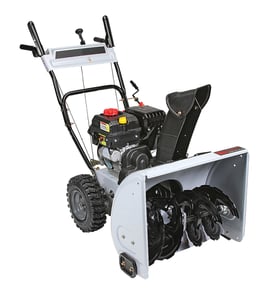


How do I find MTD replacement parts?
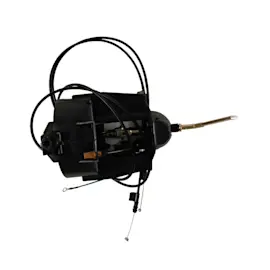
For your MTD snow thrower model 31AM63EF700, the most accurate way to find replacement parts is to match the model number to the parts diagrams and parts list, then confirm the part name and part number before ordering. Your 31AM63EF700 owner's manual also helps you identify serviceable items and maintenance needs.
- Locate the model number tag on the snowblower and confirm it reads 31AM63EF700.
- Use the model-based parts diagrams to identify the exact section (auger, drive, chute, wheels, housing).
- Match the diagram callout to the part listing (part name plus part number).
- Compare your old part to the listing (length, mounting holes, connector style, belt profile).
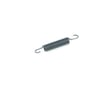
- Order common wear items by function (belt, shear pin, scraper blade, skid shoe) and replace hardware as needed.
These are frequent wear or break-protection items on many MTD snowblowers:
| What it affects | Common part to check | Example from this model’s parts list |
|---|---|---|
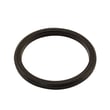
| Auger stops turning | Auger drive belt | Snowblower auger drive belt 256963 (part number 954-04050) |
| Auger jams on ice/rocks | Shear pin | Craftsman Snowblower Shear Pin (part number 738-04124A) |
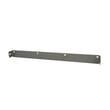
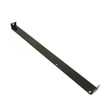
| Poor scraping on pavement | Scraper blade | Snowblower Scraper Blade (part number 790-00120-0638) |
| Machine rides too low/high | Skid shoe | Snowblower Skid Shoe (part number 784-5580-0691) |
MTD uses similar-looking parts across multiple brands and builds (MTD, Troy-Bilt, Yard Machines). Belts, cables, and housings can vary by length, routing, and mounting points, so matching by 31AM63EF700 prevents ordering a part that fits a different configuration.
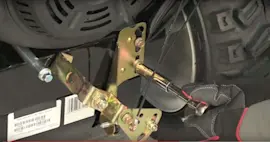
- If the auger will not engage, inspect the belt condition and cable adjustment first.
- If the auger suddenly stops after hitting something, check the shear pin before replacing belts.
- If the unit leaves a strip of snow, inspect the scraper blade and skid shoe wear.
Last updated: February 2026
What is the average lifespan of a snowblower?
For the MTD snow thrower model 31AM63EF700, the operator’s documentation lists an Average Useful Life of 7 years or 60 hours of operation. Many snowblowers can run longer with consistent maintenance, but that 7-year or 60-hour mark is the key service-life benchmark to plan around (inspection, wear parts, and safety checks). See the owner's manual for the exact statement and storage guidance.
This is a practical planning number tied to safety and wear, not a hard stop date.
- 7 years is based on typical homeowner use and aging of components
- 60 operating hours is the run-time benchmark (heavy storms can add hours quickly)
- After that point, we recommend annual inspections and closer attention to wear items
- Lifespan depends heavily on maintenance, storage, and snow conditions (wet, heavy snow is harder on belts and shear pins)
These steps directly reduce common failures like belt slip, auger binding, and drive issues:
- Change engine oil on schedule and use clean, fresh fuel (minimum 87 octane; do not use E85)
- Clear packed snow after use; run the machine briefly to help prevent freeze-up
- Check fuel lines, tank, cap, and fittings for cracks or leaks
- Keep tire pressure equal side-to-side to prevent uneven tracking and shave plate wear
- Lubricate the drive hex shaft at least once per season or every 25 hours (avoid getting oil on the friction wheel/drive plate)
Some parts are designed to wear and are normal to replace during the snowblower’s life.
| Part type | What it affects | Common symptom when worn |
|---|---|---|
| Auger drive belt | Auger/impeller power | Auger slows, squeals, or stops under load |
| Shear pins | Auger protection | Auger stops on one side after hitting debris |
| Skid shoes / scraper blade | Clearing height and housing protection | Poor scraping, uneven clearing, excessive housing contact |
If your auger performance drops, a worn belt is a common cause; the snowblower auger drive belt 256963 is one of the listed replacement options for this model.
Planning around the 7-year or 60-hour benchmark helps prevent mid-storm breakdowns and reduces safety risks from worn belts, cables, and drive components.
Last updated: February 2026
Which snowblower brand is most reliable?
Ariens, Toro, and Honda are the most consistently reliable snowblower brands overall because they have long track records for durable drivetrains, strong parts support, and dependable winter starting. MTD-built machines (like model 31AM63EF700) can also be very reliable when maintained on schedule using the procedures in the owner's manual.
Reliability depends heavily on whether you need a single-stage (lighter duty) or a two-stage (heavier duty) machine.
| Snowblower type | Best fit for | Brands that are typically most reliable |
|---|---|---|
| Single-stage | Light to moderate snow, paved areas | Toro (common top pick), Honda |
| Two-stage | Deeper snow, end-of-driveway plow berms | Ariens (common top pick), Honda, Toro |
| Cordless | Convenience, smaller areas | EGO (commonly rated highly) |
Even the best brand becomes unreliable if basic wear items and adjustments are ignored. For gas snowblowers, we focus on these reliability drivers:
- Fresh fuel (minimum 87 octane; avoid E85) and clean storage practices
- Correct tire pressure on both sides (unequal pressure causes poor tracking and uneven wear)
- Belt condition and correct tension (auger and drive)
- Shear pins in place and not substituted with bolts
- Seasonal lubrication and inspection before the first storm
On the MTD 31AM63EF700, the most common reliability-related wear parts are belts and shear pins.
- If the auger stops under load or slips, check the snowblower auger drive belt 256963 for glazing, cracking, or stretching.
- If the auger suddenly stops after hitting ice or a hidden object, inspect and replace the correct shear pin (never bypass it).
- If the unit will not drive forward consistently, inspect the ground drive belt and drive control adjustment per the manual.
A “reliable” snowblower is one that starts when it is cold and throws snow without slipping, binding, or breaking shear protection. Brand quality helps, but maintenance (fuel, belts, shear pins, and adjustments) is what keeps performance consistent season after season.
Last updated: February 2026
Is a 2 stage or 3 stage snowblower better?
A 2-stage snowblower is the better choice for most homeowners because it handles typical driveway snow well with fewer moving parts and simpler maintenance. A 3-stage snowblower is better when you regularly face deep, heavy, wet, or icy snow and want faster intake and higher throughput.
| Feature | 2-stage snowblower | 3-stage snowblower |
|---|---|---|
| Snow intake system | Auger feeds an impeller | Accelerator plus auger plus impeller |
| Best for | Most driveways; moderate to heavy snow | Deep, wet, packed, or icy snow; large areas |
| Speed through heavy snow | Good | Faster |
| Weight and complexity | Lower | Higher |
| Typical upkeep | Fewer wear points | More wear points and adjustments |
We recommend matching the stage type to what you actually clear most often:
- Choose 2-stage if you clear a standard driveway and get typical storms (including moderate to heavy snow).
- Choose 3-stage if you frequently hit plow berms, heavy wet snow, or packed snow where faster breaking and feeding saves time.
- Choose 2-stage if you want easier DIY service (belts, cables, skid shoes) and fewer adjustments.
- Choose 3-stage if you prioritize clearing speed over machine weight and added complexity.
- If you clear gravel, either type works, but set up skid shoes correctly to protect the shave plate and housing.
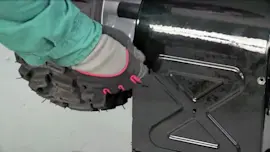
Your MTD 31AM63EF700 is a snow thrower designed around safe operation, correct control setup, and surface-specific adjustments. For example, the manual calls out adjusting skid shoes higher for smooth surfaces and lower for gravel to maintain clearance and reduce uneven wear. Use the owner's manual to confirm the correct setup and operating steps for your machine.
Stage count does not change the basics: snowblowers rely on wear items that need periodic replacement or adjustment.
- Belts can slip, glaze, or break; symptoms include weak throwing or auger not engaging.
- Shear pins protect the auger/gearbox when you hit a solid object.
- Cables can stretch and need adjustment to fully engage the auger or drive.
If you are troubleshooting engagement issues on this model, common wear parts include the snowblower auger drive belt 256963 and shear pins.
Last updated: February 2026
How do I tell how old my snowblower is?
To tell how old your MTD snow thrower model 31AM63EF700 is, we use the model and serial number tag on the machine and decode the serial number format used for that production run. The most reliable approach is to match the tag information to the identification guidance in your 31AM63EF700 owner's manual.
Look for a metal or printed tag on the snowblower frame. Common locations include:
- Rear of the main frame near the handles
- Side of the auger housing
- Under the belt cover area
- Near the engine mounting plate
- On the chassis close to the wheels
Write down the model number (31AM63EF700) and the full serial number exactly as shown.
MTD serial formats vary by series and year, so we decode it by pattern rather than guessing.
- Identify whether the serial is all numbers or letters plus numbers
- Look for a date-style block (often a year and day-of-year pattern)
- Compare the tag format to the identification notes in the 31AM63EF700 owner's manual
- If the snowblower tag is unclear, use the engine model/type/code tag as a secondary date clue (engine codes often include a build date)
- Serial begins with a 2-digit or 4-digit year block
- Serial includes a 3-digit day-of-year block (001 to 365)
- Serial includes a plant or line code (letters or a short prefix)
Older machines often show up with neglected wear items. If your augers will not turn after hitting ice or debris, check the shear pins first. The manual specifies using OEM shear pins, and this model commonly uses craftsman snowblower shear pin 738-04124A.
Knowing the build year helps us match the correct parts list and revisions for your 31AM63EF700, especially for wear parts like belts, skid shoes, and scraper blades. It also helps you plan maintenance intervals and storage prep.
| What you have | What it tells you | Best use |
|---|---|---|
| Snowblower model and serial tag | Unit identity and production series | Best for exact year |
| Engine model/type/code tag | Engine build timeframe | Backup date clue |
| Wear condition (belts, skid shoes, scraper) | Maintenance history | Helps prioritize repairs |
Last updated: February 2026