 Installation guide
 Owner’s manual



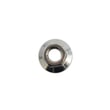
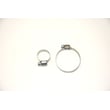
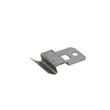
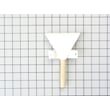
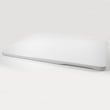
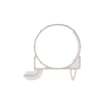
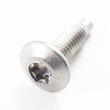
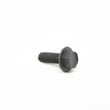
How to order GE appliance parts?
You can order replacement parts for your GE washer model GCWN2800D0WW directly from the parts list for this model, then match the part by name and part ID to ensure fit. For diagrams, part locations, and installation notes, use the owner's manual.
- Find your exact model number on the washer (use GCWN2800D0WW, not a partial number).
- Use the model parts list to locate the part by section (pump, tub, controls, suspension).
- Match the part name and part ID exactly before ordering.
- If you are fixing a symptom (not replacing a known broken part), confirm the failure first.
- Keep your serial number handy in case you need to confirm production variations.
These are frequently replaced items for drainage, lid safety, and vibration issues:
| Symptom | Common part to check | Example part on this model page |
|---|---|---|
| Won’t drain or drains slowly | Drain pump, drain hose routing | Washer drain pump WH23X10043 |
| Won’t start or stops when lid opens | Lid switch assembly | Washer lid switch assembly WH12X10334 |
| Excessive shaking or banging | Suspension components | Washer suspension rod, rear WH16X10159 |
Ordering by exact model number and exact part ID prevents fit issues and repeat repairs. On a washer like the GE GCWN2800D0WW, similar-looking pumps, lid switches, and suspension parts can mount differently or use different connectors.
If you are troubleshooting a drain problem, confirm the drain setup meets typical requirements (for example, many installations use a standpipe height of at least about 30 inches and may use an antisiphon clip when needed). The installation guide shows the correct drain hose routing and securing method.
Last updated: February 2026
What are the disadvantages of a large capacity washing machine?
A large-capacity washer like the GE GCWN2800D0WW can be convenient for bulky loads, but the tradeoffs are higher utility use when you run big cycles, more vibration risk if loads are unbalanced, and more space and airflow needs for installation. See the clearances and setup details in the installation guide.
- Higher water and energy use per cycle when you fill the tub and choose longer, heavier-duty cycles.
- More vibration and noise if bulky loads (blankets, comforters) get off-balance during spin.
- Bigger space requirements; alcove or closet installs need minimum clearances and ventilation.
- Heavier loads to handle; moving wet, oversized loads can be harder on your back.
- Dryer capacity mismatch; large washer loads often need to be split to dry efficiently.
Your installation setup can amplify the downsides of a large-capacity washer.
| Item | What to expect | Why it matters |
|---|---|---|
| Flooring | Firm flooring minimizes vibration (concrete is best) | Reduces shaking and out-of-balance spin issues |
| Water pressure | 20 to 150 psi | Helps proper fill performance |
| Drain height | Not less than 30 inches; not more than 6 ft above washer base | Prevents slow draining and siphoning problems |
| Closet ventilation | Louvered or ventilated doors; minimum open area required | Helps prevent heat and moisture buildup |
- Sort bulky items (bedding, towels) into balanced loads.
- Avoid packing the basket tight; leave room for items to move.
- Use the right cycle and water temperature for the fabric, not the biggest cycle by default.
- Install on a solid, level surface; leveling reduces vibration.
- If the washer starts banging during spin, pause and redistribute the load.
Large-capacity washers perform best when the load stays balanced and the washer is installed correctly. When either is off, you can see more noise, more wear on suspension components, and less efficient cleaning.
Last updated: February 2026
What parts fail in a washing machine?
In a GE washer like model GCWN2800D0WW, the parts that fail most often are the ones that move water, sense safety conditions, and control vibration: the drain pump, lid switch, suspension components, and tub sealing and drive parts. Many “washer problems” trace back to these few systems.
- Drain system: washer will not drain, drains slowly, or leaves water in the tub (often the drain pump or a blockage). Consider washer drain pump WH23X10043.
- Lid safety circuit: washer will not spin or agitate, or stops when it should run (often the lid switch). Consider washer lid switch assembly WH12X10334.
- Vibration control: banging, walking, or out-of-balance spinning (often suspension rods/sockets or installation issues). Consider washer suspension rod, rear WH16X10159 and washer suspension rod socket WH01X10001.
- Leaks at the tub/shaft: water under the washer, rust streaks, or noisy spin (often tub seal and sometimes bearings). Consider washer tub seal WH02X10383.
- Drive and shifting: won’t agitate, won’t spin, or makes grinding noises (often drive shaft/shifter or pulley). Consider washer drive shaft and shifter assembly WH38X10019 and washer drive pulley WH07X10019.
- Confirm the washer is on firm, level flooring to reduce vibration during spin.
- Verify the drain setup: standpipe height at least 30 inches and not more than 6 feet above the washer base.
- Avoid extension cords; use a properly grounded outlet on a dedicated circuit.
- Check for simple clogs (coins, lint) in hoses and the pump inlet.
| Symptom | Most likely area | Example part for GCWN2800D0WW |
|---|---|---|
| Won’t drain / water left in tub | Drain system | WH23X10043 drain pump |
| Won’t spin but fills/agitate is inconsistent | Lid safety | WH12X10334 lid switch |
| Loud banging or “walking” | Suspension/leveling | WH16X10159 suspension rod |
| Water leaking from bottom | Seal/bearing area | WH02X10383 tub seal |
Targeting the right system first saves time and prevents repeat failures. For example, an unlevel install can mimic bad suspension parts, and a restricted drain setup can look like a failed pump.
For model-specific operating and installation requirements, use the installation guide and the owner's manual.
Last updated: February 2026
What size dryer do I need for a 4.5 cu ft washer?
If you truly have a 4.5 cu ft washer, pair it with a dryer around 7.0 to 8.0 cu ft so loads tumble freely and dry evenly. For the GE GCWN2800D0WW specifically, use the capacity listed on the rating/feature information in your owner's manual and size the dryer about 1.5 to 2 times that washer capacity.
A 4.5 cu ft washer can produce large, dense loads; a larger dryer drum improves airflow and reduces damp spots.
- Target 7.0 to 8.0 cu ft for everyday mixed loads
- Choose 8.0+ cu ft if you wash bulky items (towels, bedding) often
- Avoid undersizing; small drums increase wrinkles and dry time
| Washer capacity | Dryer capacity to target | Best for |
|---|---|---|
| 3.5 to 4.0 cu ft | 6.0 to 7.0 cu ft | Typical mixed loads |
| 4.5 cu ft | 7.0 to 8.0 cu ft | Most households |
| 5.0+ cu ft | 8.0 to 9.0 cu ft | Large loads, frequent laundry |
Use your washer’s actual capacity (not the “extra large” marketing description) and confirm your laundry space requirements.
- Washer capacity: verify in the owner's manual
- Closet or alcove ventilation: door louvers and airflow matter when stacking or placing side-by-side
- Hookups: electric vs. gas, and outlet type
- Venting path: shorter, smoother vent runs dry faster
- Load types: bulky loads need more drum space than mixed clothing
When the dryer is too small for the washer’s typical load, clothes pack tightly, airflow drops, and you get longer cycles, damp areas, and more wrinkles. A properly sized dryer keeps wash day efficient.
Last updated: February 2026
How do I get my GE washer to drain and spin?
On your GE GCWN2800D0WW washer, select Drain & Spin (or Rinse & Spin, if that’s what your dial shows) and press Start. If it won’t drain or spin, the washer is stopping for a drain setup problem, a clog or pump issue, or a lid safety switch problem.
- Redistribute the load so items are evenly spaced (remove a few items if packed tight).
- Turn the cycle selector to Drain & Spin.
- Close the lid completely.
- Press Start; draining happens first, then high-speed spin starts after water is out.
Your installation requirements matter for draining. The discharge point must be at least 30 inches high and no more than 6 feet above the washer base.
- Make sure the hose is not kinked or crushed.
- Do not shove the hose too far down the standpipe.
- If the drain opening is below 30 inches, use the antisiphon clip described in the installation guide.
If you hear draining but water barely moves, check for a sock or lint plug in the hose or at the pump connections. If the pump is loud, seized, or not moving water, replace the washer drain pump WH23X10043.
If the washer acts like the lid is open, it will not spin. Replace the washer lid switch assembly WH12X10334 if the lid won’t register closed.
| Symptom | Likely cause | What to do |
|---|---|---|
| Water stays in tub | Hose height/kink, clog, bad pump | Verify 30-inch minimum; clear restriction; replace pump |
| Drains but won’t spin fast | Out-of-balance load, suspension wear | Rebalance load; inspect suspension rods |
| Stops when lid is closed | Lid switch issue | Check lid closure; replace lid switch |
GCWN2800D0WW is designed to limit spin until it senses proper draining; fixing the drain setup first prevents repeat no-spin problems and reduces vibration.
Last updated: February 2026


