Error Codes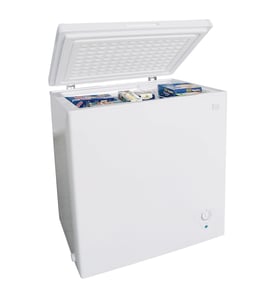





How many cubic feet is my chest freezer?
For model MFC09M3FW1, the exact cubic-foot capacity is normally listed on the model and serial tag or in the product specifications for that model. When you cannot find the spec label, you can estimate capacity by measuring the interior and converting cubic inches to cubic feet.
- Check the model and serial tag (often inside the cabinet near the top rim or on the back). Capacity is commonly printed as “cu. ft.”
- Look for a rating label near the compressor area or rear panel.
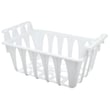
- If you are replacing storage accessories, matching the freezer size helps; for example, a correctly sized basket 216848200 should fit the interior width and ledge spacing.
- Measure the usable interior:
- Width (inches)
- Depth (inches)
- Height (inches) to the “fill line” or to where the lid gasket starts
- Multiply:
width × depth × height = cubic inches - Convert:
cubic inches ÷ 1,728 = cubic feet
| Interior measurement (in.) | Cubic inches | Estimated capacity (cu. ft.) |
|---|---|---|
| 30 × 18 × 18 | 9,720 | 5.6 |
| 36 × 20 × 20 | 14,400 | 8.3 |
| 40 × 22 × 22 | 19,360 | 11.2 |
Capacity affects how much food you can store, how you organize baskets and dividers, and what to expect for energy use and temperature recovery after loading warm items.
- Measure inside the liner, not the outside cabinet.
- Subtract space taken by the compressor hump if it reduces usable volume.
- Use the usable height, not the lid height.
Last updated: February 2026
Why is my Frigidaire chest freezer not freezing properly?
If your MFC09M3FW1 chest freezer is running but not freezing properly, the most common causes are a warm temperature setting, poor airflow from overpacking, a lid that is not sealing, or a sealed-system problem (compressor or refrigerant components). Start with temperature and sealing checks before replacing parts.
- Set the control colder and give it 24 hours to stabilize; chest freezers cool slowly after adjustments.
- Confirm the lid closes fully and evenly; re-level the freezer if the lid looks twisted.
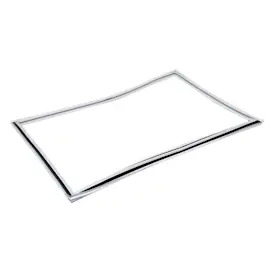
- Check the lid gasket for gaps, tears, or hardened sections; warm air leaks cause weak freezing and frost.
- Avoid overpacking; leave space along the walls and bottom so cold air can circulate.
- Verify the freezer is in a suitable location; most units struggle in very hot spaces or direct sun.
- Listen for the compressor; repeated clicking or short run times often points to a start or overload issue.
| What you notice | Most likely cause | What to do next |
|---|---|---|
| Runs constantly, still warm | Dirty condenser area, poor airflow, warm room | Improve ventilation, clean dust, reduce load |
| Frost buildup, temps swing | Lid not sealing, frequent openings | Inspect gasket, limit openings, reorganize |
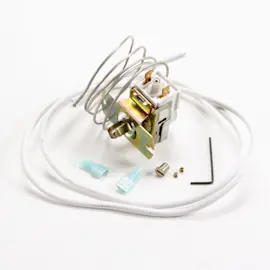
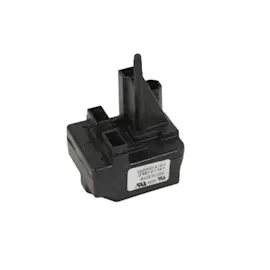
| Clicking, hum then stops | Start device or overload tripping | Check ptc starter 5304410953 and overload protector 216100113 |
| No real cooling at all, compressor runs | Sealed-system restriction or leak | Have a technician evaluate filter drier 5303305677 and refrigerant system |
We only recommend parts after basic checks confirm the freezer has good airflow and a tight seal.
- Ptc starter 5304410953: Helps the compressor start; failures can cause clicking and no cooling.
- Overload protector 216100113: Protects the compressor from overheating or overcurrent; can trip repeatedly.
- Condenser 5300120781: Part of the heat-rejection system; damage or severe blockage can reduce cooling.
- Compressor 5304443412: The pump that moves refrigerant; replacement is a major repair.
A chest freezer that is not freezing properly can lead to food spoilage and can overwork the compressor. Catching a lid-seal problem or a failing start device early often prevents bigger, more expensive sealed-system repairs.
Last updated: February 2026
How do I find the model number on my MFC09M3FW1?
The model number is printed on the freezer’s rating label (a sticker or metal tag). On a chest freezer like the MFC09M3FW1, we most often see that label on the inside wall near the top rim, or on the back exterior panel.
- Open the lid and look along the upper inside walls, especially near the front corners.
- Check the underside of the lid and the lid frame area.
- Look on the back of the cabinet near the power cord entry.
- Check the lower rear area near the compressor cover.
- If your freezer has a removable basket, lift it out and check the inside walls behind it.
The rating label usually includes the model number, serial number, and electrical information.
| Label detail | What it helps with |
|---|---|
| Model number (example: MFC09M3FW1) | Matching the correct diagrams and parts |
| Serial number | Identifying production run details |
| Electrical ratings | Confirming power requirements |
- Copy the model number exactly, including all letters and numbers.
- Avoid using only the “series” or partial number; use the full model.
- If the label is worn, take a clear photo and zoom in to confirm characters.
Using the exact model number ensures the parts list matches your specific chest freezer configuration, so items like the basket 216848200 or handle 216205005 fit correctly.
Last updated: March 2026