Installation guide
 Owner’s manual
 Error Codes



How long do Fisher and Paykel dish drawers last?
Fisher & Paykel DishDrawer dishwashers like model DD24DCHTX7-88638-A typically last 10 to 15 years with normal household use and routine cleaning. Lifespan depends most on water quality, how often you run cycles, and keeping the filter and spray arms clear.
Typical lifespan and what affects it
Most DishDrawer units reach the 10 to 15 year range when they are installed correctly and maintained per the DD24DCHTX7-88638-A owner's manual. Key factors that shorten life are hard water scale, frequent heavy loads, and running with a clogged filter.
- Water quality: hard water speeds up scale buildup on the heater and internal passages
- Cleaning habits: regular filter cleaning prevents pump strain
- Loading: overloading can block spray arms and reduce wash performance
- Detergent use: too much detergent can cause oversudsing and leaks
- Installation: a stable, secured installation reduces vibration and wear
Signs your DishDrawer is nearing end-of-life
These symptoms often point to a failing motor system, heating system, or control issue.
- Repeated fault beeps or recurring fault codes
- Poor cleaning even after filter and spray arm cleaning
- Water not heating or dishes staying wet at the end of the cycle
- Intermittent draining, grinding, or unusual motor noise
- Frequent leaks or flood-related shutoffs
Quick check: maintenance vs. repair
| What you notice | Most common cause | First step |
|---|---|---|
| Cloudy dishes, debris left behind | Clogged filter or blocked spray arm | Clean filter and spray arm, then retest |
| Continuous beeping with a code | Detected fault condition | Follow the fault steps in the manual |
| Grinding or weak wash action | Pump or rotor wear | Inspect for obstructions; consider motor components |
| No heat or long cycles | Heater system or temperature sensing | Verify incoming hot water and run a test cycle |
Parts that commonly impact longevity
If cleaning does not restore performance, these model-compatible parts are often involved in wash and circulation issues:
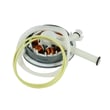
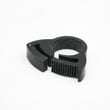
- Dishwasher filter 524828 (helps prevent debris from reaching the pump)
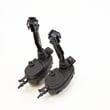
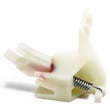
- Motor rotor 524285P (key part of the wash motor drive)
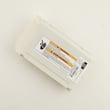
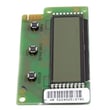
- Dishwasher electronic control board 523725USP (controls cycle logic and fault detection)
Why it matters
A DishDrawer that is cleaned regularly and kept free of blockages runs with less strain on the pump motor, heater plate, and control system. That reduces nuisance faults and helps the dishwasher reach its full 10 to 15 year service life.
Last updated: January 2026
What does A7 mean on a dishwasher?
On the Fisher & Paykel DD24DCHTX7-88638-A DishDrawer, A7 typically indicates the unit detected excess foam/suds and started an auto-recovery routine to protect washing performance. The fastest fix is to stop the cycle, clear the suds, and restart using the correct dishwasher detergent. For model-specific fault-code behavior, check the DD24DCHTX7-88638-A owner's manual.
What to do right away (suds/foam recovery)
- Press the cancel/stop function to end the cycle and stop beeping (if active).
- Open the drawer and let foam dissipate; remove standing suds with a cup or towel.
- Rinse out any spilled detergent and wipe the tub lip and drawer edges.
- Run a short rinse cycle with no detergent to flush remaining suds.
- Switch to a low-sudsing automatic dishwasher detergent; avoid hand-washing liquid.
Common causes of an A7 (excess foam) condition
| Cause | What it looks like | What to change |
|---|---|---|
| Wrong detergent (hand soap) | Lots of bubbles early in the cycle | Use automatic dishwasher detergent only |
| Too much detergent | Foam even with correct detergent | Reduce dose; follow detergent label |
| Rinse aid spill or overdose | Suds after filling rinse aid | Wipe spills; lower rinse aid setting |
| Pre-rinsing with soap | Suds appear after loading | Rinse dishes with water only |
If the problem keeps coming back
Excess foam can also lead to poor draining or odd wash results. If you repeatedly see A7 after correcting detergent use, check these items:
- Clean the filter area and remove debris that can trap suds.
- Confirm the spray arm is seated and spinning freely.
- Make sure the drawer closes fully and seals correctly.
- If you also get motor or electronics-related faults, inspect wiring connections.
If you suspect a wash-performance issue tied to circulation components, the dishwasher filter 524828 is one of the parts that can affect water flow and cleaning.
Why it matters
Too many suds cushion the spray action and can interfere with draining, so the dishwasher may pause or change operation to recover. Fixing the detergent and clearing foam usually restores normal cleaning and cycle time.
Last updated: January 2026
What are the common problems with Fisher Paykel dishwashers?
Common problems on the Fisher & Paykel DD24DCHTX7-88638-A dishwasher include no water fill, poor cleaning from spray-arm issues, drainage problems, and fault codes with beeping. Many issues are fixed with basic checks like turning on the water supply, refitting the spray arm, and cleaning the filter; use the DD24DCHTX7-88638-A user manual fault-code steps to pinpoint the cause.
Most common symptoms and what to check first
- Continuous beeping with a code: the dishwasher is self-diagnosing; note the code before resetting.
- No water / won’t start washing: confirm the shutoff valve is open and the inlet hose is not kinked.
- Poor cleaning: check that the spray arm is seated and spins freely; avoid blocking it with tall items.
- Not draining / water left in drawer: clean the filter area and check for food debris.
- Flood-related shutdown: look for leaks, over-sudsing, or water in the base.
Fault codes you’ll see most often
Your dishwasher may beep continuously and show a fault code on the wash program panel (and on some models, the display). These are common examples from the manual:
| Code | What it usually means | What we do first |
|---|---|---|
| U1 | No water (supply off) | Turn on water supply; resume cycle |
| U6 | Spray arm loose/off or low water pressure | Refit spray arm; verify water pressure |
| E1 | Flood detected | Check for leaks; stop using until dry |
| E2 | Motor fault | Inspect for obstructions; plan motor diagnostics |
| E3 | Temperature sensor fault | Verify incoming water temperature setup |
Parts that commonly relate to these problems
If cleaning and basic checks do not resolve the issue, these model-specific parts are often involved:
- For drain/cleaning performance: dishwasher filter 524828
- For motor-related faults (E2) or poor wash action: dishwasher pump motor 522088 and motor rotor 524285P
- For electrical or repeated fault behavior: dishwasher electronic control board 523725USP
Why it matters
Catching the simple causes first (water supply, spray arm fit, filter cleanliness, and the exact fault code) prevents repeat shutdowns, improves cleaning results, and helps you avoid replacing parts that are not actually causing the problem.
Last updated: January 2026
Can you run both drawers on a Fisher and Paykel dishwasher?
Yes. On the Fisher & Paykel DD24DCHTX7-88638-A DishDrawer dishwasher, the two drawers are designed to operate independently, so you can run one drawer or run both drawers at the same time as long as the dishwasher is installed correctly and has normal water and power.
How to use both drawers successfully
- Start each drawer with its own Start/Pause control; each drawer runs its own wash program.
- Make sure the water supply valve is fully open; a “no water” condition can stop operation.
- If one drawer shows a U4 fault, fix the issue in the other drawer first; U4 means the other drawer has a fault that prevents this drawer from being used.
- Load so spray arms can spin freely; a loose spray arm can trigger a U6 fault.
- Avoid overloading; each drawer is intended for smaller, separate loads.
What it means if only one drawer will run
If one drawer will not start or stops while the other runs, check for a fault code on the display and address the cause.
| Code | What it usually indicates | What to do next |
|---|---|---|
| U1 | Water supply is off | Turn on water supply, then resume the cycle |
| U4 | Fault in the other drawer | Troubleshoot the other drawer first |
| U6 | Spray arm issue or low water pressure | Refit/check spray arm, confirm water pressure |
| E1 | Flood detected | Stop use and check for leaks in/under the unit |
| E2 | Motor fault | Plan a motor circuit diagnosis |
Parts that commonly relate to “won’t run” or motor-type faults
If troubleshooting points to a drive or motor issue, these model-matched parts are commonly involved:
- Motor rotor 524285P (rotor for the wash motor system)
- Dishwasher pump motor 522088 (main pump motor assembly)
- Dishwasher hall sensor 528785P (motor position/speed feedback)
- Dishwasher electronic control board 523725USP (controls cycles and motor operation)
Why it matters
Running both drawers is a key advantage of a double DishDrawer: you can wash two smaller loads on different cycles, or run a full capacity wash by operating both drawers together. When a fault in one drawer blocks the other (such as U4), fixing the root issue restores normal two-drawer operation.
For model-specific operating steps, fault-code actions, and safety guidance, follow the DD24DCHTX7-88638-A user manual.
Last updated: January 2026