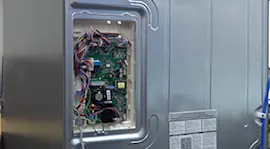
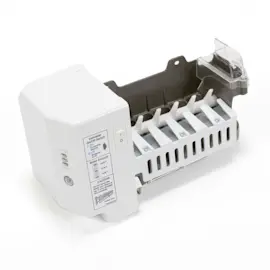
Installation guide
 Error Codes



How to identify GE washer model?
Your GE washer’s model number is printed on the appliance ID label; for the washer parts page you are on, the model is S3700G1WW. On most GE top-load washers, you will find the label under the lid or on the cabinet opening, and you can match that number to parts and installation details.
Check these common GE locations first:
- Under the washer lid, around the tub opening
- On the underside of the lid itself
- Along the top rim of the cabinet (lid opening)
- On the back of the washer near the control panel area
- Near the rating plate area (often around the backsplash/control console area)
Record both numbers exactly as shown.
| Item | What it’s used for | Example format |
|---|---|---|
| Model number | Ensures you get the correct parts diagrams and replacement parts | S3700G1WW |
| Serial number | Helps identify production run details for service and compatibility | Letters and numbers |
These quick checks prevent ordering the wrong GE washer parts:
- Copy the model number character-for-character (including any letters)
- Take a clear photo of the label before you start shopping or troubleshooting
- If the label is worn, look for a second label on the back panel
- Use the model number to confirm fit before ordering items like a lid switch, timer, or drain pump
GE often uses similar-looking cabinets across multiple washer series; the model number is what ties your washer to the correct diagrams, installation requirements, and parts such as the washer lid switch assembly WH12X10334.
For installation-related identification details (like where the rating plate is referenced and other setup requirements), use the S3700G1WW installation guide.
Last updated: February 2026
What is the average lifespan of S3700G1WW?
A GE washer like model S3700G1WW typically lasts 10 to 14 years with normal household use. Lifespan depends most on load size, leveling, water quality, and how quickly you address leaks, draining problems, or excessive vibration.
- Overloading (stresses the drive system, tub, and suspension)
- Out-of-level installation (increases vibration and wear)
- Slow draining (overworks the drain pump and can leave residue)
- Leaks at the tub (can damage bearings and the drive shaft)
- Lid switch issues (can stop cycles and lead to repeated restarts)
Use these habits to reduce wear on the tub, bearings, and suspension:
- Keep loads balanced; wash bulky items in smaller batches
- Level the washer and re-check if it starts walking
- Use the right detergent amount to reduce buildup
- Run a monthly cleaning cycle (hot water, empty tub)
- Inspect hoses and the tub area for early signs of dripping
| Symptom | Common cause | What to check next |
|---|---|---|
| Loud roaring during spin | Worn tub bearing | Bearing noise gets worse fast; plan repair soon |
| Tub wobble or banging | Worn suspension | Look for sagging or broken suspension parts |
| Won’t drain or drains slowly | Drain pump issue or blockage | Check pump and hoses for debris |
| Won’t run/spin with lid closed | Lid switch problem | Test lid switch operation |
Knowing the typical 10 to 14 year lifespan helps you decide whether to repair now (often smart for a single failed part) or plan a replacement if multiple major systems are wearing out.
For model-specific installation and setup details that reduce vibration and wear, use the installation guide.
Last updated: March 2026
What replacement parts are most commonly needed for the S3700G1WW?
For GE washer model S3700G1WW, the most commonly replaced parts are the lid switch, drain pump, suspension components, and drive/pulley and hub hardware. These parts directly affect filling, spinning, draining, and vibration control.
- Washer lid switch assembly WH12X10334 (won’t start, won’t spin, stops mid-cycle)
- Washer drain pump assembly WH23X10030 (won’t drain, slow drain, humming)
- Washer suspension rod and spring assembly WH16X10057 (banging, walking, off-balance)
- Washer drive pulley WH07X10019 (slipping, weak spin, squeal)
- Washer water-level pressure switch WH12X10065 and hose pressure switch WH41X365 (overfilling, underfilling, incorrect water level)
| What the washer is doing | Parts to focus on | Typical clue |
|---|---|---|
| Won’t spin but fills/agitate | Lid switch assembly | Lid must “click” and register closed |
| Won’t drain or leaves water | Drain pump assembly | Pump hums or drains very slowly |
| Shakes hard in spin | Suspension rod and spring assembly | Tub leans or bounces excessively |
| Water level is wrong | Pressure switch, pressure hose | Fills too high or stops too soon |
- Confirm the symptom happens on more than one cycle
- Unplug the washer and check for loose connectors at the lid switch area
- Look for coins, socks, or debris restricting the drain path
- Verify the washer is level and the floor is solid
- Note any unusual noises (squeal vs. roar helps narrow the cause)
Replacing the correct part the first time prevents repeat breakdowns and protects major components like the tub, shaft, and bearing.
For safe access and reassembly guidance, follow the installation guide.
Last updated: March 2026