Owner’s manual
 Error Codes


What are the dimensions of a Kenmore Elite?
Kenmore Elite refrigerator dimensions vary by model and style. For Kenmore Elite model 59677593800 (bottom-mount), the exact height, width, and depth are listed in the 59677593800 owner's manual; use that spec to confirm fit in your cabinet opening and for delivery clearance.
Typical size ranges (helpful for planning)
Most Kenmore Elite bottom-mount refrigerators fall into these common ranges:
- Width: about 29 to 33 inches
- Height: about 68 to 71 inches
- Depth (cabinet): about 33 to 35 inches
- Depth (with handles): often 1 to 3 inches deeper than cabinet depth
- Door swing clearance: typically needs extra space beyond the case width
How to measure your space correctly
Use a tape measure and record three numbers for each dimension (top, middle, bottom) since walls and floors are rarely perfectly square.
- Measure width of the opening at top, middle, and bottom
- Measure height from floor to the lowest overhead cabinet or trim
- Measure depth from back wall to the front edge of counters
- Leave room for airflow behind and above the refrigerator
- Plan a path for delivery (doorways, turns, stairs)
Dimension checklist (what to compare)
| What you’re checking | Why it matters | What to use |
|---|---|---|
| Case width/height/depth | Confirms the unit physically fits | Specs in the manual |
| Depth with handles | Prevents sticking out too far past counters | Specs in the manual |
| Door swing clearance | Ensures doors and drawers open fully | Manual clearance guidance |
| Water line clearance | Prevents kinks and leaks behind the unit | 5/16-in water line space |
Why it matters
A refrigerator that is even 1 inch too tall, too wide, or too deep can block cabinet doors, prevent full drawer opening on a bottom-mount freezer, or restrict airflow that affects cooling performance.
Last updated: January 2026
What are the common problems with Kenmore Elite refrigerators?
Common problems on the Kenmore Elite 59677593800 bottom-mount refrigerator include warm temperatures (often airflow or fan related), frost buildup (defrost or door-seal related), water or ice issues (valve, filter, or line restrictions), and new or changing noises. Many fixes start with basic checks and cleaning listed in the 59677593800 owner's manual.
Most common symptoms and what usually causes them
- Not cooling or uneven cooling: blocked vents, dirty condenser area, or a failing evaporator fan motor.
- Runs too much: warm room, frequent door openings, large food load, or doors left ajar (the manual notes longer run times can be normal with high-efficiency compressors).
- Frost or ice buildup: door not sealing, door left open, or a defrost system problem (heater, sensor, control).
- Water under the refrigerator: clogged/iced drain path or a leaking water line connection.
- Ice maker or dispenser problems: restricted filter, low water pressure, frozen fill tube, or a weak inlet valve.
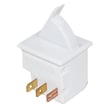
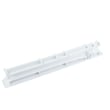
- Lights not working: door switch issue such as the refrigerator light switch W11396033.
Quick checks we recommend before replacing parts
- Confirm power and controls are on; after a new install, allow 24 hours to cool fully (per the manual).
- Set temperatures to recommended settings and avoid repeatedly moving to “coldest” (it will not cool faster).
- Make sure doors close fully and gaskets are clean and sealing.
- Listen for the type of noise; some buzzing, pulsating, and hissing can be normal during operation.
- If ice and water are slow, check for kinks in the supply line and replace the filter on schedule.
Parts that commonly solve these problems (when diagnosis points there)
| Symptom | Common suspect part | Example for this model |
|---|---|---|
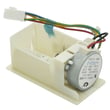
| Warm fridge, weak airflow | Evaporator fan motor | W11024089 |
| Frost buildup, warm temps | Defrost heater | WP67002493 |
| No water to ice maker/dispenser | Water inlet valve assembly | WP67006531 |
| Door light issues | Light switch | W11396033 |
Why it matters
Cooling, defrosting, and water delivery systems work together. A simple airflow restriction can mimic a sealed-system failure, and a poor door seal can cause both frost buildup and long run times.
Last updated: January 2026
What does DH mean on Kenmore Elite refrigerator?
On the Kenmore Elite 59677593800 bottom-mount refrigerator, “DH” is most often a defrost-related message (commonly read as “defrost heater” or “defrost heating”). It typically shows up when the refrigerator is having trouble completing a defrost cycle and frost starts restricting airflow.
What to do right away
- Power reset the refrigerator for 5 minutes, then restore power.
- Check the freezer back wall for heavy frost or a solid ice sheet.
- Make sure both doors close fully and the gaskets seal all the way around.
- Confirm the temperature settings are at normal cooling settings.
- If cooling is weak, move food away from vents to improve airflow.
What “DH” usually points to
A defrost problem is usually in one of these areas:
| System area | What can be wrong | Common symptom |
|---|---|---|
| Defrost heat | Heater not warming the evaporator | Frost buildup, warmer fresh food section |
| Defrost sensing | Temperature sensor not reading correctly | Code returns after reset |
| Air movement | Evaporator fan not moving air | Freezer cold but fridge warm |
For this model, the defrost heater is a key part in that circuit: refrigerator defrost heater WP67002493.
How we confirm it on model 59677593800
Use the troubleshooting and diagnostic information in the 59677593800 owner's manual. That is where Kenmore lists the display messages, what triggers them, and the safe checks you can do before replacing parts.
Why it matters
When the defrost system does not clear frost off the evaporator, ice blocks airflow. The freezer can still feel cold, but the refrigerator section warms because cold air cannot circulate through the damper and vents.
Last updated: January 2026
Why is my Kenmore Elite refrigerator leaking water out of the bottom?
Water leaking from the bottom of your Kenmore Elite 59677593800 bottom-mount refrigerator is typically caused by a clogged or frozen defrost drain, a leaking water supply connection, or seepage at the filter, dispenser tubing, or inlet valve. Start by identifying whether the leak happens during defrost or only during ice and water use.
Quick checks (fastest way to narrow it down)
- If you see ice or water on the freezer floor, the defrost drain is blocked.
- If the puddle appears after dispensing water or after an ice maker fill, check the water system.
- Look behind the refrigerator for drips at the shutoff valve and supply line connection.
- Check the filter area for moisture right after a filter change.
- Inspect the drain pan area for overflow or a pan that is out of position.
Most common cause: clogged or frozen defrost drain
During defrost, meltwater should flow through the drain tube into the drain pan. When the drain clogs, water backs up, freezes on the freezer floor, then eventually leaks out the bottom.
What we recommend
- Unplug the refrigerator.
- Remove freezer bins and the lower drawer as needed.
- Melt any ice on the freezer floor using warm air (no open flame).
- Flush the drain with hot water until it runs freely.
For model-specific panel access and component locations, use the 59677593800 owner's manual.
Water line, filter, or valve leaks
The manual’s water line instructions call out tightening the compression nut and checking for leaks after turning the water on. If the leak only happens with ice maker or dispenser use, focus on the inlet valve and tubing.
| When it leaks | Most likely source | What to check |
|---|---|---|
| Constant slow puddle | Supply line connection | Compression nut, tubing rub points |
| Only during ice or water use | Inlet valve or tubing | Drips during fill or dispensing |
| After filter change | Filter seating or housing | O-ring, fully seated filter |
If you find the valve seeping or not closing fully, replace the refrigerator water inlet valve assembly WP67006531.
Why it matters
Bottom leaks can create ice buildup that restricts airflow, causes temperature swings, and damages flooring. Fixing the source early keeps cooling performance stable and prevents repeat puddles.
Last updated: January 2026