Error Codes




What is the average lifespan of a Maytag washing machine?
Most Maytag washing machines last 10 to 13 years with normal household use; with consistent care, many run 14 years or longer. For your Maytag MHW8630HC4 washer, routine cleaning, correct loading, and fixing small issues early are what most often extend service life.
What affects lifespan the most
- Load size and balance: frequent overloading or washing heavy, unbalanced loads shortens bearing, suspension, and motor life.
- Detergent use: too much HE detergent can cause residue, odors, and extra strain during draining.
- Water quality: hard water increases scale and can contribute to valve and dispenser issues.
- Drain health: slow draining makes the pump work harder and can lead to repeated drain errors.
- Ventilation and cleaning: leaving the door ajar between loads helps prevent mold and gasket odors.
Maintenance that adds years (simple routine)
- Run a monthly cleaning cycle (washer cleaner or hot cycle as appropriate).
- Wipe the door boot and glass; remove hair, coins, and debris.
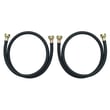
- Check fill hoses yearly for bulges or cracking; replace as needed.
- Keep the washer level to reduce vibration and tub wear.
- If draining slows, clean the pump filter area and inspect the drain path.
Common “wear items” and what they do
| Part | What it impacts | When it becomes suspicious |
|---|---|---|
| Drain pump | Draining and spin completion | Standing water, long drain, drain errors |
| Water valve | Filling and water temperature control | No fill, slow fill, wrong temp |
| Door lock/strike | Starting and safe spinning | Door won’t lock, cycle won’t start |
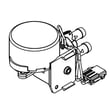
If you are chasing a drain-related problem that is shortening cycle performance, the washer drain pump assembly W11458345 is the model-matched pump assembly to check first.
Why it matters
A washer that is kept clean, level, and draining freely runs with less vibration and less motor and pump strain; that directly reduces the most expensive failures (tub, bearings, controls) over time.
Last updated: January 2026
What is the most common problem with a Maytag washer?
For the Maytag MHW8630HC4 washer, the most common service issues we see are drain and spin problems: the washer will not drain, will not spin out, or stops mid-cycle. In many cases, the root cause is a restriction in the drain path or a failing drain component such as the washer drain pump assembly W11458345.
Quick checks we recommend first
- Unplug the washer for 1 minute, then plug it back in and try a Drain/Spin cycle.
- Confirm the drain hose is not kinked, crushed, or pushed too far down the standpipe.
- Check the standpipe or laundry sink for a slow drain (a household clog can mimic a washer failure).
- Reduce load size and redistribute items; an out-of-balance load can prevent a full spin.
- Verify both hot and cold water supply valves are fully open; fill issues can stop a cycle early.
Most common symptoms and likely causes
| Symptom | Most likely cause | What to do next |
|---|---|---|
| Won’t drain or leaves water in tub | Clogged pump filter/coin trap (if equipped), blocked hose, failing pump | Inspect drain path; replace pump if noisy or not running |
| Won’t spin or spins weakly | Drain problem, door lock not engaging, load imbalance | Fix drain first; then check door lock/strike and leveling |
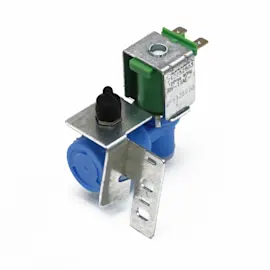
| Fills slowly or won’t fill | Clogged inlet screens, weak supply, failing valve | Clean screens; consider water valve W11688995 |
| Leaks during fill or drain | Loose hose connection, worn clamp, cracked hose | Tighten connections; replace clamp/hose as needed |
Parts that commonly solve these problems on MHW8630HC4
- Washer drain pump assembly W11458345 for no-drain, humming, or intermittent draining
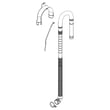
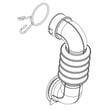
- Assembly, drain hose W11549455 if the drain hose is split, soft, or leaking
- Water valve W11688995 for slow fill, no fill, or water that continues to seep in
- Hose clamp WP596669 for leaks at pump or hose connections
- Strike, door W11316914 if the door will not latch consistently (spin may not start)
Why it matters
Drain and spin issues are the most disruptive because the washer can stop with water in the tub, leaving clothes soaked and increasing the chance of odor and residue buildup. Fixing the drain path first prevents unnecessary part replacement and restores normal cycle completion.
Related help: Maytag maxima front load washer error codes
Last updated: January 2026
Is it worth fixing a Maytag washer?
Fixing a Maytag washer is worth it when the repair is a common, contained issue (drain, fill, door lock) and the total cost stays well below the price of a comparable new washer; for the Maytag MHW8630HC4, many key parts are available, which strongly supports repair.
A simple rule we use to decide
- Repair when the estimate is under 50% of replacement cost and the washer has been reliable.
- Replace when the estimate is over 50%, the washer has repeated breakdowns, or the repair involves multiple major assemblies.
- Repair first when the symptom points to a single service part (pump, valve, lock, hose).
What usually makes repair “worth it” on the MHW8630HC4
These are high-impact, common fixes that often restore normal operation without replacing the whole washer:
- Not draining or stopping mid-cycle: check the drain path and consider the washer drain pump assembly W11458345.
- Not filling, slow fill, or fill errors: inspect inlet screens and consider the water valve W11688995.
- Door won’t lock, won’t start, or door lock errors: inspect the strike and lock; the lock option on this model is ha15g janus- W11565030.
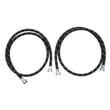
- Leaks at the back or during fill: replace aging hoses such as washer fill hose set 8212545RP.
- Drain hose damage or siphoning issues: consider the assembly, drain hose W11549455.
Quick cost-to-benefit comparison
| Situation | Typical outcome | Usually worth fixing? |
|---|---|---|
| Single-part failure (pump, valve, door lock) | Predictable repair, fast turnaround | Yes |
| Multiple symptoms (won’t fill + won’t drain + UI issues) | Longer diagnosis, higher parts risk | Sometimes |
| Major assembly replacement (tub and drum) | High parts cost and labor | Often no |
Why it matters
A front-load washer like the Maytag MHW8630HC4 can look “dead” from one failed component (for example, a drain pump or door lock). Choosing a targeted repair avoids replacing a full appliance when a single part is the root cause.
Helpful troubleshooting resource
If you’re seeing a code on the display, we use the Maytag maxima front load washer error codes guide to narrow the problem to the most likely parts and checks.
Last updated: January 2026
What is the capacity of the Maytag MHW8630HC4?
The Maytag MHW8630HC4 washer has a 5.0 cu. ft. capacity, which is a large front-load size for family laundry and many bulky items when you load it loosely so clothes can tumble and rinse properly.
What 5.0 cu. ft. means for real loads
A 5.0 cu. ft. drum is designed for larger loads, but cleaning still depends on good tumbling space.
- Wash bulky items like towels, hoodies, and many comforters (check the item care label)
- Load to about 3/4 full for mixed loads; do not pack items tight
- Use HE detergent and measure carefully to prevent oversudsing
- Choose cycle options (soil level, extra rinse) based on fabric and load size
Quick capacity comparison
| Washer capacity | Typical fit | Common benefit |
|---|---|---|
| 4.2 to 4.8 cu. ft. | Average loads | Smaller footprint, more loads for bedding |
| 5.0 cu. ft. | Family and many bulky loads | Fewer loads, good balance of size and efficiency |
| 5.4+ cu. ft. | Extra-large loads | More room, still requires loose loading |
If performance seems “small” for the capacity
If clothes come out too wet, cycles stop, or rinsing is poor, the issue is usually draining, water fill, or door locking, not drum size.
- Slow drain or standing water: inspect the drain path and pump
- Long fill times: check inlet screens and household water pressure
- Cycle won’t start or stops: door lock and strike alignment can matter
Parts commonly involved in these symptoms include the washer drain pump assembly W11458345 and the water valve W11688995.
Why it matters
Using the correct capacity helps you size loads for proper tumbling; that improves cleaning, reduces vibration, and helps prevent drain and spin complaints.
Last updated: January 2026