Error Codes




How do I tell how old my KitchenAid is?
To tell how old your KitchenAid side-by-side refrigerator model KRSF705HPS05 is, we use the serial number: the first three digits typically indicate the day of the year it was built, and the last two digits indicate the year. This lets you calculate the exact manufacture date.
Where to find the serial number on a side-by-side refrigerator
On most KitchenAid refrigerators, the model and serial tag is usually located:
- Inside the fresh food (refrigerator) compartment on a side wall
- Near the top ceiling area inside the refrigerator section
- On or near the crisper drawer frame area
- Sometimes behind the toe grille (less common)
If the tag is hard to read, cleaning it gently can help; avoid soaking the label.
How to decode the date from the serial number
We decode the serial number using this common format:
- First 3 digits: day of the year (001 to 365, or 366 in leap years)
- Last 2 digits: year (for example, 19 = 2019, 23 = 2023)
Quick example
If your serial number begins with 318 and ends with 83, that indicates the 318th day of 1983, which is November 14, 1983.
Day-of-year cheat sheet (quick reference)
| Month | Day-of-year range (non-leap year) |
|---|---|
| January | 001 to 031 |
| February | 032 to 059 |
| March | 060 to 090 |
| April | 091 to 120 |
| May | 121 to 151 |
| June | 152 to 181 |
| July | 182 to 212 |
| August | 213 to 243 |
| September | 244 to 273 |
| October | 274 to 304 |
| November | 305 to 334 |
| December | 335 to 365 |
Why it matters
Knowing the manufacture date helps us match the correct KitchenAid parts for KRSF705HPS05, especially when designs change over a production run (for example, ice maker, door switch, or water inlet valve variations).
If you are also confirming you have the right model number, use how to find your appliance model number (and what it means for parts).
Last updated: February 2026
What is the life expectancy of a KitchenAid refrigerator?
A KitchenAid refrigerator like model KRSF705HPS05 typically lasts 12 to 17 years with normal household use. Consistent temperatures, clean airflow, and timely replacement of wear items (filters, ice maker components, door seals) are the biggest factors in reaching the high end of that range.
What affects refrigerator lifespan most
- Heat and airflow: Dust on the condenser area and restricted vents make the compressor work harder.
- Door sealing: A leaking gasket causes longer run times and moisture issues.
- Water and ice system health: Mineral buildup and valve wear can create leaks or ice production problems.
- Filter maintenance: Old filters can reduce flow and strain the water system.
- Usage habits: Frequent door openings and overpacking reduce cooling efficiency.
Maintenance checklist to help your KRSF705HPS05 reach 12 to 17 years
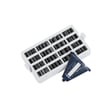
- Replace the air filter on schedule; use the correct refrigerator air filter W10311524.
- Keep food from blocking interior air vents; maintain clear airflow paths.
- Clean dust from the condenser area (unplug the refrigerator first).
- If you notice weak dispenser flow or slow ice fill, test the refrigerator water inlet valve WPW10341320.
- If the freezer door does not seal tightly, inspect and replace the refrigerator freezer door gasket WPW10249913 if it is torn, warped, or hardened.
Quick guide: symptoms that shorten lifespan
| Symptom | Common cause | What to do first |
|---|---|---|
| Runs constantly | Dirty condenser, poor airflow, gasket leak | Clean condenser, check door seal |
| Warm fridge, cold freezer | Airflow restriction, fan issue | Clear vents, listen for fan noise |
| No ice or small cubes | Low water flow, valve issue | Check supply, test inlet valve |
| Frost buildup | Door not sealing, frequent openings | Inspect gasket, reduce humidity |
Why it matters
A side-by-side refrigerator is a sealed-system appliance; when it runs hot or leaks air, the compressor and controls cycle more often. Reducing run time with basic upkeep is the most direct way to extend service life and avoid expensive repairs.
Last updated: February 2026
What is the most common problem with a KitchenAid refrigerator?
The most common KitchenAid refrigerator problems are cooling issues (temperature too warm or inconsistent), ice maker problems (no ice or small/odd cubes), and water leaks. On the KitchenAid KRSF705HPS05 side-by-side refrigerator, these symptoms usually trace back to airflow, water supply, or dispenser/ice system components.
Most common symptoms and what they usually mean
- Fridge or freezer too warm: restricted airflow, dirty condenser area, or a fan/defrost issue
- Ice maker not making ice: low water flow, a valve problem, or an ice maker failure
- Water leaking: loose water line connection, clogged drain, or a housing/valve issue
- No water from dispenser: filter/housing restriction, frozen line, or inlet valve problem
- Noisy operation: fan blade rubbing ice or a failing fan motor
Quick checks you can do first (no tools)
- Confirm the temperature settings are at normal targets (most refrigerators run best around 37°F fresh food and 0°F freezer).
- Make sure vents inside the compartments are not blocked by food packages.
- Check the door seals for gaps and verify doors close fully.
- If ice or water is slow, verify the household shutoff valve is fully open and the supply line is not kinked.
- If you recently replaced a filter, purge air by dispensing water for a few minutes.
Parts that commonly solve these problems on KRSF705HPS05
| Symptom | Common part to inspect | What it affects |
|---|---|---|
| No ice or weak ice production | Refrigerator water inlet valve WPW10341320 | Water fill to ice maker and dispenser |
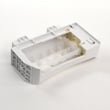
| Ice maker dead or inconsistent | Refrigerator ice maker W10873791 | Ice harvest and cycling |
| Musty odors, food tastes off | Refrigerator air filter W10311524 | Air circulation odor control |
| Clicking or fan noise | Refrigerator evaporator fan blade WP2169142 | Air movement across evaporator |
Why it matters
Cooling and ice maker complaints often share the same root causes: poor airflow or restricted water flow. Fixing the underlying cause protects food quality, prevents ice clumps and leaks, and helps the compressor run less.
Last updated: February 2026