Owner’s manual
 Error Codes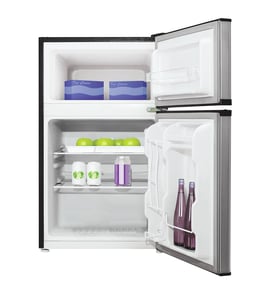




What is the cubic foot of my Kenmore refrigerator model 25594683010?
The exact cubic-foot capacity for Kenmore model 25594683010 is listed in the product specifications section of the owner's manual. This model is a compact refrigerator (manual covers models 94683/94689), so its capacity is in the compact range rather than full-size (for example, not 26 cu. ft.).
How to find the capacity in the manual (fast)
Use the owner's manual and look for a section labeled Specifications, Product features, or Capacity. If you are viewing a PDF, use search for these terms:
- "cu. ft." or "cubic"
- "capacity"
- "specifications"
- "model 94683" or "94689"
- "dimensions" (capacity is often near dimensions)
What you can infer from the model and manual
The documentation we have for this unit identifies it as a compact refrigerator and shows features like a full-width freezer compartment, slide-out wire shelves, and a drip tray. Those are typical of compact units, which are commonly used in dorm rooms, offices, and small apartments.
Typical compact refrigerator capacity range
| Refrigerator type | Typical capacity range |
|---|---|
| Compact refrigerator | 1.7 to 4.5 cu. ft. |
| Apartment-size (small full-size) | 7 to 14 cu. ft. |
| Full-size refrigerator | 18 to 28 cu. ft. |
Why it matters
Knowing the cubic feet helps us match the right storage accessories and confirm fit for shelves, racks, and door bins. It also helps set realistic expectations for cooling recovery time and freezer performance in a compact refrigerator.
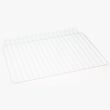
If you are replacing interior storage parts, match them to your model’s parts list, such as the midea refrigerator shelf 12931000000854 or midea refrigerator rack 501112840113.
Last updated: February 2026
What's the average life of a Kenmore refrigerator?
Most Kenmore refrigerators average 12 to 15 years of service life; compact models like Kenmore 25594683010 typically fall in that same range when they have good airflow, clean condenser areas, and doors that seal tightly. For model-specific care and operating guidance, use the owner's manual.
What affects refrigerator lifespan the most
- Ventilation and heat: keep clearance around the cabinet so the compressor can shed heat.
- Door seal condition: a leaking gasket forces longer run times and faster wear.
- Cleaning habits: spills and odors can lead to corrosion and blocked drains.
- Leveling and door alignment: a tilted cabinet can cause poor door closing.
- Usage patterns: frequent door openings and warm food loads increase compressor cycling.
Quick maintenance checklist (compact refrigerator)
- Vacuum dust from the rear and bottom area every 6 to 12 months.
- Confirm the door closes on its own and does not pop open.
- Keep the temperature control set to a stable, mid-range setting.
- Leave space between items for airflow on the shelves.
- Clean and dry the interior regularly to prevent odors.
Common “wear” items vs. major repairs
| What you notice | Likely category | Typical next step |
|---|---|---|
| Broken or missing accessory | Convenience part | Replace the accessory (example: midea ice tray 501113810004) |
| Door not sealing or closing well | Alignment or seal issue | Level unit, clear obstructions, inspect seal |
| Warm temps, loud running, poor cooling | Cooling system issue | Check airflow and cleanliness; then diagnose further |
Why it matters
A refrigerator that runs hotter or longer than normal (often from poor airflow or a weak door seal) puts extra strain on the compressor and can shorten overall life. Keeping the cabinet level and clean is the simplest way to protect long-term reliability.
Last updated: February 2026
What are the main 5 parts of a refrigerator?
For the Kenmore 25594683010 compact refrigerator, the “main 5” parts are best thought of as the five core cooling-system components: compressor, condenser, evaporator, metering device (capillary tube/expansion device), and thermostat/temperature control. These work together to move heat out of the cabinet and keep food cold; see the owner's manual for the model’s parts and features.
The 5 core components (what they do)
- Compressor: pumps refrigerant through the sealed system; it is the “engine” of cooling.
- Condenser coil: releases heat to the room as refrigerant condenses.
- Evaporator coil: absorbs heat inside the refrigerator/freezer as refrigerant evaporates.
- Metering device (capillary tube/expansion device): drops refrigerant pressure so it can get cold in the evaporator.
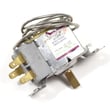
- Thermostat/temperature control: senses temperature and cycles the compressor to maintain the set point.
Parts you interact with most on this model
Your 25594683010 manual lists several user-facing parts and features that affect daily use:
- Full-width freezer compartment
- Ice cube tray
- Fixed door shelves and can shelf
- Slide-out wire shelves
- Drip tray
- Adjustable temperature control
Quick comparison: “core cooling” vs “everyday use” parts
| Category | Examples | Why you care |
|---|---|---|
| Core cooling system | Compressor, condenser, evaporator, metering device, thermostat | Determines whether the refrigerator cools properly |
| Cabinet and convenience | Shelves, door racks, drip tray, ice tray | Affects storage, spills, and organization |
Why it matters
When a refrigerator is not cooling, the issue is usually tied to one of the five core cooling components (or airflow around them). When the refrigerator is cooling but messy or inconvenient, the fix is often a cabinet part such as a shelf, rack, or drip tray.
Related replacement parts for this model
If you are replacing broken or missing accessories, these are common matches for the Kenmore 25594683010:
- Midea ice tray 501113810004
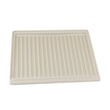
- Midea refrigerator drip tray 12131000012819
- Midea refrigerator rack 501112840113
Last updated: February 2026
Can you still get parts for Kenmore refrigerators?
Yes. We still carry replacement parts for Kenmore refrigerators, including model 25594683010; you can match parts by model number and replace common items like door shelves, racks, and the ice cube tray using the diagrams and part listings for your refrigerator.
Parts you can commonly replace on Kenmore 25594683010
These are examples of parts available for this compact refrigerator model:
- Midea ice tray 501113810004 (ice cube tray for the freezer compartment)
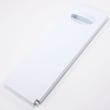
- Midea refrigerator door, outer 503700140382 (outer door assembly)
- Midea refrigerator rack 501112840113 (door rack)
- Midea rack, large 501112840112 (larger rack/shelf component)
- Midea can shelf 501112840114 (can shelf)
- Midea refrigerator drip tray 12131000012819 (drip tray listed in the parts and features)
How to make sure you order the right part
Use your model number and compare the part description to what you’re replacing.
- Confirm the model number on the rating label is 25594683010
- Match the part by name and identifier (part ID) to avoid look-alikes
- Compare how the old part mounts (tabs, screw holes, clips)
- Check whether the part is left-hand or right-hand (common for door-related parts)
- Use the exploded-view diagrams and notes in the owner's manual
Quick match checklist
| What to match | What to look for | Example on this model |
|---|---|---|
| Fit | Same mounting points and dimensions | Door racks and shelves |
| Function | Same purpose in the compartment | Ice cube tray |
| Location | Door vs interior vs base | Drip tray vs rack |
Why it matters
Kenmore refrigerators often have multiple similar-looking shelves, racks, and door components across model families. Matching by model 25594683010 and the exact part ID helps ensure proper fit, door sealing, and stable storage.
Last updated: February 2026
How to tell if a Kenmore refrigerator compressor is bad?
On your Kenmore 25594683010 compact refrigerator, a bad compressor usually shows up as little to no cooling even though the unit has power; you may hear repeated clicking (start attempt) or notice the compressor never gets warm. Confirm basics first, then check for sealed-system symptoms before replacing parts. See the owner's manual for model-specific troubleshooting and safety guidance.
Quick checks before blaming the compressor
These steps rule out common setup and airflow issues that can mimic compressor failure.
- Make sure the refrigerator has been plugged in long enough to cool; after plugging in, allow about 2 to 3 hours before loading food.
- Verify the temperature control is not set to the warmest setting.
- Confirm the unit has proper ventilation clearance: about 3/4 inch on the sides, 2 inches on top, and 2 inches at the back.
- If the refrigerator was tilted more than 45 degrees during moving, let it stand upright for at least 24 hours before plugging it in.
- Listen for the evaporator/condenser fan (if equipped) and check that air can circulate inside (shelves not blocking vents).
Signs the compressor or start components are failing
A compressor problem is often confused with a start relay/overload problem. Here are the most common symptoms.
- Clicking every few minutes with no sustained running (overload trips).
- Humming briefly, then clicking off (hard-start condition).
- Compressor runs but cooling is weak (possible internal wear or sealed-system restriction).
- Compressor is extremely hot to the touch and shuts off (overheating/overload).
- No sound or vibration from the compressor while the refrigerator is warm (could be compressor, control, or start device).
What you can safely observe (and what needs a technician)
| Check | What you do | What it suggests |
|---|---|---|
| Compressor area sound | Listen for hum, then click | Start device or compressor not starting |
| Cabinet temperature | Fridge stays warm for hours | Cooling system not operating correctly |
| Ventilation/clearances | Verify spacing around unit | Poor heat removal can reduce cooling |
| Post-move settling | Upright 24 hours if over-tilted | Prevents cooling-system malfunction |
Electrical testing (winding resistance, amp draw, start relay checks) requires a meter and safe handling around live voltage; we recommend using a qualified technician for that level of diagnosis.
Why it matters
Replacing a compressor is a major repair; confirming airflow, setup, and start symptoms first helps avoid replacing the wrong component and gets your compact refrigerator cooling again faster.
Last updated: February 2026