Owner’s manual
 View engine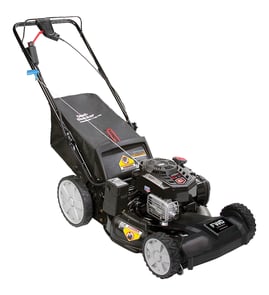



How much does it cost to repair a hydrostatic transmission on a lawn mower?
Hydrostatic transmission repairs are typically a riding-mower cost; your Craftsman 917377700 gas walk-behind mower normally uses a belt-and-pulley drive system instead of a hydrostatic transmission. For hydrostatic riding mowers, repairs commonly run from a few hundred dollars for service to $1,300 or more for the transmission itself, with full replacement sometimes reaching about $2,500 installed. See the 917377700 owner's manual to confirm your mower’s drive type.
What you’re really paying for
Hydrostatic costs vary because the “repair” can mean anything from a fluid service to a full transaxle replacement.
- Diagnostic time and labor (often the biggest variable)
- Fluid and filter service (when the unit is serviceable)
- Linkage, control, or drive-belt related fixes (often cheaper than transmission work)
- Full hydrostatic transaxle replacement (highest cost)
- Pickup and delivery (common with riding mowers)
Walk-behind vs. hydrostatic: quick comparison
For model 917377700, drive problems are more often tied to belts, pulleys, and wheel-drive components.
| Mower type | Typical drive system | Common “won’t move” causes | Typical cost direction |
|---|---|---|---|
| Walk-behind (like 917377700) | Belt/pulleys, wheel drive | Worn belt, idler pulley issue, wheel drive wear | Lower to moderate |
| Riding mower (hydrostatic) | Hydrostatic transaxle | Internal wear, fluid issues, pump/motor failure | Moderate to high |
If your mower won’t move (917377700)
Before assuming a transmission problem, we check the common motion-drive wear items first.
- Inspect the drive belt for glazing, cracking, or stretching; replace if worn (example: belt, 21-in 532406712)
- Check idler pulleys for wobble, noise, or seized bearings (examples: husqvarna lawn mower idler pulley 532166042 and husqvarna lawn mower idler pulley 532166043)
- Look for grass buildup under the drive cover and around pulleys
- Verify the drive control cable engages and returns smoothly
- Check drive wheels and related hardware for wear or binding
Why it matters
Hydrostatic replacement is one of the most expensive mower repairs; correctly identifying whether you have a hydrostatic system (riding mower) or a belt-driven self-propel system (walk-behind) prevents unnecessary parts purchases and gets you to the real fix faster.
If you need to order parts for the Craftsman 917377700, we recommend using the parts list for this model first, or searching by model number on Sears PartsDirect.
Last updated: February 2026
Should I use 87 or 89 gas for lawn mower?
Use 87-octane regular unleaded gasoline in your Craftsman 917377700 gas walk-behind mower; the owner’s manual specifies a minimum of 87 octane. Using 89 octane will not improve performance in normal operation, but it also will not hurt the engine.
What the Craftsman 917377700 manual says
The fuel guidance for this mower is straightforward:
- Use fresh, clean, regular unleaded gasoline
- Use 87 octane minimum
- Do not mix oil with gasoline
- Buy fuel you can use within about 30 days to keep it fresh
For the exact wording and other operating specs (oil type, capacity, blade torque), check the 917377700 owner's manual.
When 89 octane makes sense (and when it does not)
Higher octane is mainly for engines designed for it (high compression). Most walk-behind mower engines are built to run on regular.
- Use 87 for normal mowing and routine refueling
- Use 89 only if 87 is unavailable and you need fuel immediately
- Do not use old gas (stale fuel is a common cause of hard starting)
- Avoid overfilling; fill only to the bottom of the filler neck
Quick comparison
| Fuel choice | Works in 917377700? | What you gain |
|---|---|---|
| 87 octane (regular) | Yes (recommended) | Correct fuel per manual |
| 89 octane (mid-grade) | Yes | No typical performance benefit |
Why it matters
Using the correct fuel helps prevent hard starting, rough running, and fuel-system issues during storage. Fresh 87-octane regular is the best match for how this Craftsman mower is designed to operate.
Last updated: February 2026
Why is my self-propelled lawn mower pulling to one side?
If your Craftsman 917377700 self-propelled mower pulls to one side, the most common causes are uneven wheel height settings, a drive system that is not engaging evenly, or a wheel/drive component binding on one side. Start with wheel height and drive control checks in the owner's manual.
Quick checks that fix most “pulling” problems
- Set both front wheels to the same cutting height; then match both rear wheels.
- Inspect both drive wheels for packed grass, mud, or debris that can drag one side.
- Confirm the drive control lever moves smoothly and returns fully when released.
- Adjust drive control cable tension if the drive feels “loose” or uneven (the manual describes the button adjustment under the drive control housing).
- Test on a flat, dry surface; wet grass reduces traction and can make one wheel slip.
Drive system causes (self-propelled models)
Your manual explains that forward motion is controlled by the operator presence control bar and the drive control lever; if the cable tension is off, speed and engagement can drop. When one side engages more strongly than the other, the mower can “steer” itself.
What to look for
| Symptom | Likely cause | What to do |
|---|---|---|
| Pulls only when self-propel is engaged | Drive cable out of adjustment | Perform the drive control adjustment procedure in the manual |
| Pulls even when pushed (self-propel off) | Wheel dragging or binding | Clean around wheels; check for bent hardware or debris |
| Pulls and vibrates | Blade or blade adapter issue | Stop and inspect; repair before mowing |
Parts that commonly relate to tracking and drive feel
If you find a damaged wheel or worn drive-side hardware, these model-matched parts are commonly involved in drive and wheel operation:
- Lawn mower drive wheel 532193139 (damaged tread or hub can cause uneven traction)
- Dust cover 581840401 (missing or broken covers can allow debris into the wheel area)
- Belt, 21-in 532406712 (a worn belt can reduce drive performance and feel inconsistent)
Why it matters
A mower that pulls to one side is harder to control and can lead to uneven cutting, extra wear on the drive system, and unsafe footing, especially on slopes. The manual also stresses mowing across slopes (not up and down) and maintaining firm footing.
Last updated: February 2026
What year is Craftsman Model 917377700?
Craftsman model 917377700 is identified in the documentation as a rotary lawn mower model number, but the year of manufacture is not encoded in the model number itself. To find the year, we use the mower’s product ID/serial number label and match it to the date-code format shown in the 917377700 owner's manual.
Where to find the date information
Look for a sticker or stamped tag on the mower (commonly on the rear deck, near the wheels, or on/near the handle mounting area). Check for:
- A serial number (sometimes called product number)
- A date code (may be numeric)
- A manufacturing label with month and year
How to decode it (what to look for)
Many Craftsman walk-behind mowers use a date code on the label, not the model number. Once you locate the code, compare it to the format described in your documentation.
- If the label shows a 6-digit date code, it is often read as MMDDYY
- Example:
072811typically reads as July 28, 2011 - If the label uses a different pattern (letters plus numbers), use the label legend or the identification section in the manual
Quick reference table
| What you have | What it tells you | What to do next |
|---|---|---|
| Model number: 917377700 | Identifies the mower design and parts list | Use it to match parts and diagrams |
| Serial/date code label | Identifies build date or production run | Decode the date code to get the year |
| Engine model (example: Honda GCV160) | Identifies the engine family | Use for engine-specific service parts |
Why it matters
The build year helps us choose the correct drive belt, pulley, blade adapter, and hardware when a model had production changes. It also helps when troubleshooting issues like self-propel problems (belt wear, idler pulley drag, or drive control cable adjustment).
Parts that commonly depend on the exact build configuration
If you are servicing the drive system on this model, these parts are commonly involved:
- Belt, 21-in 532406712 (drive belt)
- Husqvarna lawn mower idler pulley 532166042 (pulley used in the drive system)
- Rope guide 586122501 (starter rope routing support)
Last updated: February 2026
What kind of gas do you put in a Craftsman push mower?
For the Craftsman 917377700 gas walk-behind mower, use unleaded regular gasoline. This model’s specifications list gasoline capacity/type: 1.0 quarts (unleaded regular); using the correct fuel helps prevent hard starting and carburetor problems. See the fuel spec in the owner's manual.
Recommended fuel guidelines
- Use fresh unleaded regular gasoline
- Use E0 to E10 fuel when available (up to 10% ethanol)
- Avoid E15 and E85 fuels in small engines
- Buy only what you will use in about 30 days
- Store fuel in a clean, approved gas can; keep water and dirt out
Quick reference for model 917377700
| Spec | What to use | Notes |
|---|---|---|
| Gas type | Unleaded regular | Matches the mower’s product specification |
| Fuel capacity | 1.0 quarts | Do not overfill; leave room for expansion |
| Ethanol | E0 to E10 | Higher ethanol commonly causes running issues |
If the mower runs rough after refueling
- Drain old fuel and refill with fresh unleaded regular
- Check that the fuel cap vent is open (a blocked vent can cause stalling)
- Inspect the air filter and spark plug condition
- If it surges or won’t stay running, clean the carburetor (stale fuel varnish is a common cause)
Why it matters
Correct gasoline and good fuel storage reduce varnish buildup in the carburetor and help protect rubber fuel-system parts. That means easier starts, steadier RPM, and fewer no-start problems after storage.
Last updated: February 2026