Owner’s manual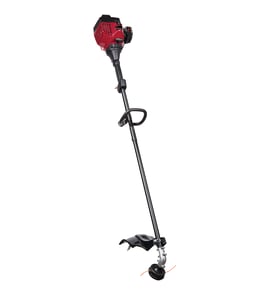





How to replace a gas trimmer head?
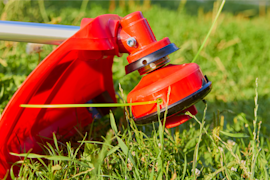
On the MTD high wheel line trimmer model 25A-26J7783, replacing the trimmer head starts with safety: shut the engine off and wait until the head fully stops. Then remove the head hardware and install the new head exactly as shown in the 25A-26J7783 owner's manual.
Safety first (before you touch the head)
- Shut the engine off.
- Wait until the trimmer head comes to a complete stop (it can spin for a few seconds after release).
- Disconnect the spark plug wire so the engine cannot start accidentally.
- Work on a flat surface; keep the trimmer stable.
- Wear gloves and eye protection.
Basic replacement steps (most common process)
- Disable the engine: disconnect the spark plug wire.
- Access the head area: clear debris so you can see the spindle and fasteners.
- Lock the spindle (if equipped): many heads have a small lock hole; insert a nail or screwdriver to keep the spindle from turning.
- Remove the head: unthread the head or remove the retaining fastener (some heads use reverse threads).
- Install the new head: thread it on or reinstall the fastener; tighten securely.
- Verify clearance: spin the head by hand to confirm it turns freely and does not rub the debris shield.
If you are only replacing trimmer line (not the head)
Our manual for this model shows a simple line change on the spindle:
- Remove the worn line.
- Fold the replacement line in half.
- Insert both ends through the loop near the edge of the spindle.
- Pull the ends through until the line is secured under the metal tab.
- Cross the ends and pull tight to lock it in place.
Trimmer line spec (from the manual)
| Item | What to use |
|---|---|
| Recommended trimmer line | 490-040-M035 |
Why it matters
A correctly installed head and properly routed line reduce vibration, prevent premature spindle wear (especially if the spindle contacts concrete or gravel), and help the trimmer cut consistently.
Last updated: January 2026
Which is better, .080 or .095 trimmer line?
For the MTD 25A-26J7783 high wheel line trimmer, .095 trimmer line is better for thicker weeds and longer wear, while .080 is better for lighter grass and easier edging. For this model, use the line type and size specified in the 25A-26J7783 owner's manual.
How to choose between .080 and .095
- Choose .080 for light grass, routine touch-ups, and cleaner edging.
- Choose .095 for heavier weeds, taller growth, and fewer line breaks.
- If the engine bogs down or the head feels less responsive, step down to .080.
- If the line keeps snapping in tough growth, step up to .095.
- Always match the diameter to what your trimmer head is designed to accept.
What matters most on the 25A-26J7783
This trimmer uses a rotating line setup; the correct replacement line specification is listed in the manual’s replacement parts section. Using the specified diameter helps the trimmer spin smoothly and reduces stress on the drive components.
| Line diameter | Best use | What you give up |
|---|---|---|
| .080 in | Light trimming and edging | Shorter life in heavy weeds |
| .095 in | Mixed trimming and tougher weeds | More drag, slightly less finesse |
Why it matters
Line that is too thick increases drag and can accelerate wear on the trimmer’s rotating system; line that is too thin breaks more often and leaves uncut strands.
Last updated: January 2026
What is the average lifespan of 25A-26J7783?
The MTD 25A-26J7783 high wheel line trimmer has an average useful life of 7 years, or about 140 hours of operation when it’s operated and maintained as described in the owner's manual. At the end of that lifespan, we recommend a yearly safety and wear inspection.
What “average useful life” means
This is a safety and wear benchmark used for outdoor power equipment. It helps you plan maintenance and decide when to inspect or refresh wear items.
- 7 years is based on typical homeowner ownership time
- 140 hours is based on typical run time over those years
- Heavy use (large lots, thick weeds, frequent edging) reaches 140 hours sooner
- Good maintenance extends reliability within that lifespan
Maintenance that most affects lifespan
Keeping fasteners tight and wear parts in good shape reduces vibration, improves cutting performance, and helps protect the spindle, belt drive, and engine.
- Check and tighten nuts, bolts, and screws regularly
- Inspect guards and shields for damage and replace if worn
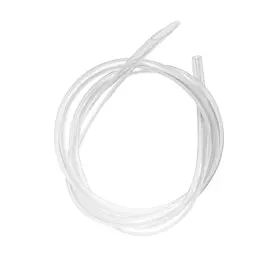
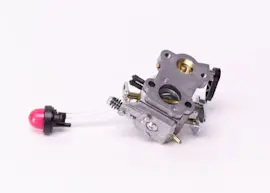
- Check fuel line, tank, cap, and fittings for cracks or leaks
- Stop the engine and inspect after striking a foreign object
- Use correct replacement cutting line, such as MTD line trimmer cutting line, 10-pack 490-040-M035
Quick reference table
| Measure | Average useful life | Best for |
|---|---|---|
| Calendar time | 7 years | Typical homeowner use patterns |
| Engine run time | 140 hours | Tracking actual wear and service intervals |
Why it matters
Past the average useful life, worn components (guards, shields, fasteners, spindle-related parts) can increase the risk of thrown debris and mechanical failure. A yearly inspection helps keep the trimmer operating safely and cutting cleanly.
Last updated: March 2026