Owner’s manual
 Error Codes


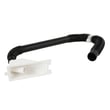
Does my Kenmore top load washer have a filter?
Yes, Kenmore washer model 11024422300 uses internal screens and drain-path components to catch debris, but it does not use a simple, user-cleanable “lint filter” like some other washers. For your exact cleaning and access points, follow the maintenance and troubleshooting steps in the 11024422300 owner's manual.
What “filter” means on this washer
On this style of Kenmore top-load washer, filtration is typically handled by:
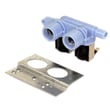
- Inlet valve screens at the hot and cold water connections (trap sediment)
- The drain pump and hoses (can trap small items and buildup)
- The tub and basket system (lint is carried away with drain water rather than collected in a removable filter)
Quick checks you can do safely
Before any inspection, unplug the washer and turn off both water faucets.
- If filling is slow or inconsistent, check for clogged inlet valve screens at the hose connections
- If the washer will not drain or drains slowly, inspect the drain hose for kinks and the standpipe/sink for clogs
- If you suspect a drain restriction inside the washer, the drain pump is the common service point
- If you see residue or lint on clothes, reduce load size and confirm you are using the correct water level and detergent amount
Common “filter-like” symptoms and likely causes
| Symptom | Most common area to check | Related part for this model |
|---|---|---|
| Won’t fill or fills slowly | Inlet valve screens, supply hoses | Washer inlet valve (not always required) |
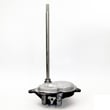
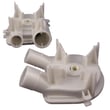
| Won’t drain or drains slowly | Drain hose, pump | Washer drain pump WP3363394 |
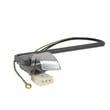
| Stops or won’t spin | Lid switch, drive system | Washer lid switch WP3949238 |
Why it matters
Keeping the inlet screens and drain path clear helps prevent no-fill, no-drain, and poor-rinse complaints. It also reduces strain on key components like the inlet valve and drain pump, which can improve overall washer performance.
Last updated: February 2026
How to identify a Kenmore washer model?
Your Kenmore washer model number is on the model and serial number label; for Kenmore model 11024422300, the label is located under the washer lid. Once you have the full model number, we can match the correct parts (like a lid switch, drain pump, or inlet valve) to your exact washer.
Where to look on Kenmore washers
Most Kenmore washers place the model/serial label in one of these spots:
- Top-load washers: under the lid (often on the rim or underside area)
- Front-load washers: inside the door opening (around the door frame)
- All styles (sometimes): on the back panel near the power cord or control console
For this specific washer, confirm the location and how the label is formatted in the 11024422300 owner’s manual.
What the model number looks like (and why it matters)
Kenmore washer model numbers commonly start with 110 and continue with additional digits. Using the complete model number helps us avoid look-alike parts that fit other Kenmore series.
Quick check table
| What you find | What it tells you | What to do next |
|---|---|---|
| Model number (example: 11024422300) | Exact washer design and parts list | Use it to select compatible parts |
| Serial number | Production run details | Keep it for service records |
| Purchase date (if recorded) | Age and warranty reference | Note it in your records |
Tips to avoid common mix-ups
- Write the model number exactly as shown, including all digits
- Take a clear photo of the label before ordering parts
- If the label is worn, clean it gently with a damp cloth so the print is readable
- Match parts by model, not by appearance alone
Why it matters
Kenmore washers share many similar cabinets and controls, but internal components can differ by series. The correct model number ensures the right fit for key items like the washer lid switch WP3949238 or washer drain pump WP3363394.
Last updated: February 2026
How to reset a Kenmore 11024422300 washer?
To reset a Kenmore 11024422300 washer, we power-cycle it: stop the cycle, unplug the washer for 1 minute, then plug it back in and restart the cycle. If it is paused mid-cycle, wait about 2 minutes because some cycles include a normal pause.
Quick reset steps (power-cycle)
- Push in the cycle control knob to stop the washer.
- Make sure the lid is fully closed.
- Unplug the washer (do not use an extension cord).
- Wait 60 seconds.
- Plug the washer back in.
- Select a cycle and pull out the cycle control knob to restart.
If it still will not start, agitate, or spin
These checks fix the most common “looks dead” or “won’t run” situations on this model.
- Confirm the washer is not in a normal 2-minute pause.
- Reduce the load size if the tub is overloaded.
- Rebalance the load so the basket is centered.
- Verify the lid closes firmly; the washer will not agitate or spin with the lid open.
- Check for excessive suds; measure detergent carefully.
What “reset” does (and does not) do
| What you are trying to fix | What a reset helps | What usually needs troubleshooting/parts |
|---|---|---|
| Control stuck in a pause or odd state | Yes | No |
| Washer will not spin with lid open | No | Lid closure or washer lid switch WP3949238 |
| Won’t drain or spin due to blockage | Sometimes | Drain hose height/clog, washer drain pump WP3363394 |
Why it matters
A simple power-cycle clears a stalled cycle and gets you back to washing fast. If the washer repeatedly needs resets, the root cause is usually a lid switch issue, draining problem, oversudsing, or an unbalanced load.
For cycle-start and stop details specific to this washer, use the 11024422300 owner's manual.
Last updated: February 2026
Is it worth repairing a Kenmore washing machine?
Yes, repairing a Kenmore washer is usually worth it when the fix restores reliable washing and spinning for less than the cost of replacing the machine. For Kenmore model 11024422300, many common failures are repairable with standard parts and a straightforward diagnosis using the 11024422300 owner's manual.
How we decide if repair makes sense
We use a simple cost and condition check before buying a new washer:
- Repair cost vs. replacement cost: if the repair is clearly cheaper, repair wins.
- What failed: wear parts (lid switch, drain pump, coupling) are typically good-value repairs.
- Overall condition: rusted cabinet, severe leaks, or repeated breakdowns push toward replacement.
- Performance symptoms: no spin, no drain, or won’t agitate often point to fixable components.
- Downtime: if you need laundry running fast, a quick part swap can beat shopping and delivery.
Common repairs that are often worth doing
These are frequent, high-impact fixes on many Kenmore 110 top-load designs:
| Symptom | Likely area to check | Example part for this model |
|---|---|---|
| Won’t spin or stops when lid opens | Lid safety circuit | Washer lid switch WP3949238 |
| Won’t drain or leaves water in tub | Drain pump or blockage | Washer drain pump WP3363394 |
| Agitates poorly, loud rattling, no movement | Motor-to-transmission coupling | Washer motor coupling 285753A |
| Fills slowly or won’t fill | Water inlet valve, screens | Washer inlet valve 285805 |
Why it matters
A targeted repair keeps a solid Kenmore washer in service and avoids the cost and hassle of replacing the appliance. The manual also emphasizes safe operation and avoiding unapproved repairs; using the correct procedure and parts helps prevent repeat failures and protects the washer’s mechanical and electrical systems.
Before you spend money: quick checks we recommend
- Unplug the washer and confirm the lid closes and latches firmly.
- Check for standing water (drain issue) vs. no agitation/spin (drive issue).
- Listen for the motor: hums but no movement often points to coupling or drive components.
- Inspect fill hoses and valve screens for sediment if fill is weak.
- Use the troubleshooting and safety guidance in the 11024422300 owner's manual before disassembly.
Last updated: February 2026
What is the average lifespan of a Kenmore washer?
A Kenmore washer typically lasts 10 to 15 years. For Kenmore model 11024422300, regular care and avoiding chronic overloading are what most often determine whether it reaches the high end of that range; use the maintenance guidance in the 11024422300 owner's manual.
Typical lifespan and what changes it
Most washers land in the same general window, but real-world life varies based on load size, cycle frequency, and installation conditions.
- 10 to 15 years is the normal expectation for a household washer
- Heavy weekly use and frequent large loads shorten life
- Good leveling and balanced loads reduce wear on the drive system
- Routine cleaning helps prevent odor, residue, and corrosion
- Early failures are often tied to a single worn mechanical part
Parts that commonly affect “how long it lasts”
On a direct-drive style Kenmore top-load washer like the 11024422300, these parts often decide whether a repair is simple or the machine becomes unreliable:
| Symptom you notice | Common wear area | Example part for this model |
|---|---|---|
| Won’t spin or agitates intermittently | Lid safety circuit | Washer lid switch WP3949238 |
| Won’t drain or leaves water in tub | Drain system | Washer drain pump (WP3363394) |
| Loud grinding, poor agitation/spin | Drive and transmission components | Gear case (3360629) |
How to help your washer reach 15 years
These habits reduce stress on the motor, clutch, gear case, and suspension.
- Load so items move freely during washing (do not pack the basket tight)
- Use the correct water level and cycle for the load size
- Keep the washer level; re-level if it starts walking or banging
- Address slow draining quickly (clogs and pump strain compound over time)
- Follow fabric care labels and use bleach correctly to avoid damage
Why it matters
Washer lifespan is mostly about wear per cycle. Balanced loads and proper draining reduce strain on high-wear components (like the lid switch, drain pump, and gear case), which are the most common reasons a washer becomes uneconomical to keep.
Last updated: February 2026
What is the capacity of Kenmore model 11024422300?
Kenmore washer model 11024422300 is a classic top-load, direct-drive style washer; models in this family typically fall in the about 3.2 to 3.5 cu. ft. range. For the exact capacity for your specific unit, we recommend checking the specifications section in the 11024422300 owner's manual.
How to confirm the exact capacity on your washer
Use these quick checks to match the correct spec to your exact configuration.
- Look in the 11024422300 owner's manual for the model specifications section
- Check the model and serial label under the washer lid (the manual notes this label location)
- Compare your tub style (porcelain basket, plastic tub) to the descriptions in the manual
- If you are measuring for load size, use practical load guidance (see below) rather than guessing cu. ft.
Practical load-size guidance (works even without the cu. ft. number)
Capacity matters most when you are deciding how full to load the basket.
- Fill the basket loosely; items should move freely during washing
- Keep bulky items (blankets, comforters) to one layer around the basket when possible
- Avoid packing clothes down; that reduces cleaning and can cause out-of-balance spinning
- If you routinely get off-balance issues, inspect suspension components such as the washer suspension spring WP63907
Typical capacity range for Kenmore 110 top-load washers
This helps set expectations when you are comparing machines.
| Washer type | Typical capacity range | Best for |
|---|---|---|
| Standard top-load (direct-drive era) | 3.0 to 3.5 cu. ft. | Medium to large everyday loads |
| Larger top-load (later high-capacity designs) | 3.6 to 4.3+ cu. ft. | Bulky items and larger households |
Why it matters
Using the right load size helps the drive system, clutch, and gearcase work correctly, improves rinse performance, and reduces vibration. Overloading can also shorten the life of wear parts like the motor coupling and suspension.
Last updated: February 2026