Error Codes

How do I know what model my garage door opener is?
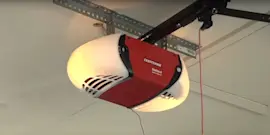
Your garage door opener’s model number is printed on a label on the powerhead (the motor unit mounted to the ceiling or wall). For Craftsman model 139658060, the label is typically under a cover, so you may need to open the light lens or front cover to see it.
Where to look on common opener styles
Check these spots on the motor unit housing:
- Jackshaft operator (wall-mounted): under the front cover
- One-light model: under the light cover (light lens)
- Two-light model: under the light cover opposite the controls and antenna
- Ceiling-mounted chain/belt drive: on the side panel near the antenna wire, or behind the light lens
- Near the learn button area: sometimes the label is close to the learn button and wiring terminals
What to write down (so you get the right parts)
Record the information exactly as shown on the label:
- Model number (for example, 139658060)
- Serial number (if listed)
- Motor type (AC or DC, if shown)
- Any logic board or receiver part identifiers printed on the label
Quick checklist before you order parts
These steps prevent mismatches when you are troubleshooting remotes, wall controls, or safety sensors:
- Confirm the model number matches character-for-character
- Check whether your opener uses a DC motor (often has diagnostic codes)
- Note how many light lenses the powerhead has (one-light vs two-light)
- Take a clear photo of the label for reference
Error codes can help confirm what you have
If your Craftsman opener is flashing lights or showing a diagnostic pattern, match the code to the right troubleshooting path using Craftsman error codes.
| What you see | What it usually means | What to do next |
|---|---|---|
| Label is visible and readable | You can identify the exact model | Use the model number to match parts and diagrams |
| Label is hidden by a cover | Normal on many openers | Remove the light lens or front cover and recheck |
| Lights flash in a repeating pattern | Opener is reporting a fault | Look up the code and follow the checks |
Why it matters
Craftsman garage door opener parts and programming steps vary by model series and control board. Using the exact model number helps ensure the correct remote compatibility, safety sensor setup, and repair parts selection.
Last updated: February 2026
Where can I buy Craftsman garage door opener parts?
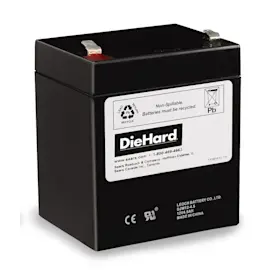
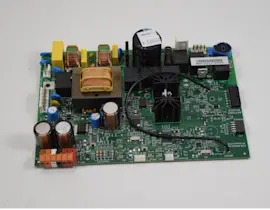
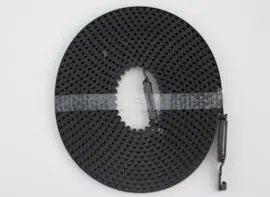
You can buy replacement parts for your Craftsman garage door opener model 139658060 through our parts listings and diagrams, then order the exact components you need by matching the part to your opener’s assembly. For broader Craftsman garage door opener part searches, use Sears PartsDirect.
How to make sure you order the right part
Use your model number (139658060) and confirm the part’s location in the opener so you get the correct match.
- Match the part to the correct diagram section (motor head, rail, door control, safety sensors)
- Compare the part description to what you see on the opener
- Check for any visible markings on the old part (labels, color, connector style)
- If the issue is intermittent, inspect wiring connections before ordering parts
- If the opener shows diagnostic flashes, look up the code first using Craftsman error codes
Common parts people replace on Craftsman openers
These are the most frequently replaced items on many Craftsman garage door openers (exact parts vary by build).
| Symptom | Common part area to check | What to look for |
|---|---|---|
| Door won’t close | Safety sensor system | Misalignment, blocked beam, damaged wires |
| Motor runs but door doesn’t move | Drive system | Stripped gear, loose chain/belt, worn sprocket |
| Remote or wall button issues | Controls | Weak remote battery, wall control wiring, logic board symptoms |
| Reverses or stops | Travel/force settings | Door binding, force set too low, sensor issues |
Why it matters
Ordering by model number and diagram position prevents wrong-part returns and speeds up repair time, especially on items like safety sensors, wall controls, and drive components that can look similar across Craftsman series.
Last updated: February 2026
How to resync garage opener?
To resync (re-engage) your Craftsman garage door opener model 139658060 after using the emergency release, fully close the door, pull the red release cord toward the opener to reset the latch, then press the wall control or remote until the trolley clicks back onto the carriage.
Quick re-sync steps (trolley re-engagement)
- Make sure the garage door is fully closed and not stuck on the floor.
- Pull the red emergency release cord down and toward the opener motor (this resets the release mechanism).
- Press the wall control (preferred) or a programmed remote.
- Watch the trolley move; you should hear or feel a click when it re-locks.
- Test one full open and close cycle.
If it will not re-engage
These checks fix most “won’t reconnect” situations:
- Door is not fully closed: push it down by hand (with the opener disconnected) so the trolley can line up.
- Trolley is not near the door arm: run the opener briefly with the wall control to bring the trolley close.
- Release cord is still in manual position: pull the cord toward the opener again to reset it.
- Safety sensors are blocked or misaligned: the opener may refuse to close, which looks like a sync problem.
- Travel or force settings are off: the opener may reverse before it can latch and complete a cycle.
What “resync” usually means
| What you are trying to fix | What to do | What you should see |
|---|---|---|
| Door moves by hand but not by opener | Re-engage the trolley (steps above) | Trolley clicks back in, door runs automatically |
| Remote stopped working | Reprogram remote to the opener | Remote operates door reliably |
| Door starts down then reverses | Check sensors, travel, and force | Door closes without reversing |
Why it matters
When the trolley is disengaged, the motor can run but it cannot move the door. Re-engaging the trolley restores normal automatic operation and helps you confirm the door and safety sensor system are working correctly.
Related troubleshooting help
- Use our Craftsman error codes guide if you see blinking lights or diagnostic codes.
- For closing issues tied to sensors, adjustments, or door travel, our garage door opener common questions article helps narrow down the cause.
Last updated: February 2026
How do I know which garage door opener is compatible?
For a Craftsman garage door opener like model 139658060, compatibility is determined by the opener’s radio system (learn-button/rolling-code type) and the door’s requirements (door weight, spring balance, and drive style). Match the remote or smart controller to the opener’s learn-button system first, then confirm the door is properly balanced.
Quick compatibility checklist (what we check first)
- Opener brand and model: Craftsman 139658060 on the motor unit label.
- Learn button system: Identify the learn button and its color (common colors include red/orange, purple, yellow, green).
- Remote/control type: Standard remote, keypad, wall control, or smart controller.
- Safety sensors: Photoeyes must be installed and aligned for normal closing.
- Door condition: Door must move smoothly by hand and stay at mid-travel when released.
How to identify the right remote or control
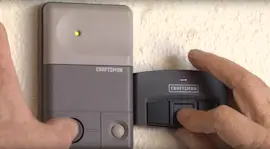
- Locate the learn button on the motor head (usually behind the light lens or a small cover).
- Note the learn button color and any nearby markings.
- Use that information to choose a compatible remote/keypad and follow the programming steps.
If your opener flashes lights or shows a diagnostic pattern during programming or operation, use our Craftsman error codes reference to match the symptom to the correct fix.
Smart control and “universal” compatibility (what to expect)
Many “universal” remotes and controllers work across multiple generations, but compatibility still depends on the opener’s radio platform.
| What you’re adding | Usually works when | Common sign it won’t pair |
|---|---|---|
| Universal remote/keypad | Learn button system is supported | Remote won’t program, opener light flashes repeatedly |
| Smart controller | Opener supports the controller’s protocol | App/controller can’t learn the opener |
| Wall control | Control wiring and logic match the opener | Wall button works intermittently or not at all |
Why it matters
Using the wrong compatible control wastes time and can look like a bad circuit board, bad receiver, or “dead” remote. Matching the learn-button system first prevents misdiagnosis and helps you avoid unnecessary parts replacement.
Last updated: February 2026
What's the average cost to have a garage door opener installed?
For a Craftsman garage door opener such as model 139658060, the average installed cost is $300 to $800+ for the opener and professional labor. Price depends on the drive system (chain, belt, or screw), whether you are replacing an existing opener, and any electrical or accessory work.
Typical installed price ranges
These ranges apply to most residential garage door openers; your total lands in a band based on opener type and job complexity.
- Chain drive opener: typically $300 to $500 installed
- Belt drive opener: typically $400 to $800+ installed
- Smart/Wi-Fi opener or added accessories: typically $500 to $1,200+ installed
- Replacement vs. first-time install: replacements usually cost less because wiring and mounting points may already exist
| Job type | What the installer typically does | Typical total cost |
|---|---|---|
| Replace an existing opener | Remove old unit, mount new opener, reconnect wiring, set travel/force, safety test | $300 to $700 |
| First-time opener install | Add mounting, run wiring as needed, install wall control and sensors, full calibration | $400 to $1,200+ |
What changes the price the most
These are the most common cost drivers we see for Craftsman garage door opener installs.
- Drive type (belt is quieter; chain is usually lower cost)
- Door size and weight (heavier doors take more setup and tuning)
- Electrical needs (adding an outlet or new wiring increases labor)
- Accessory setup (keypad, extra remotes, smart features)
- Safety sensor issues (alignment, sun glare, damaged brackets, or wiring)
Why it matters
A correct install includes travel limits, force adjustments, and safety sensor alignment. Getting these right prevents nuisance reversals, “won’t close” symptoms, and unnecessary wear on the door and opener.
Helpful DIY resources (after installation)
- Craftsman error codes
- How to make force adjustments if a garage door wont open or close video
- Garage door wont close safety sensor troubleshooting video lights blink 10 times
Last updated: February 2026