 Owner’s manual
 Error Codes




How to tell cubic feet of Kenmore refrigerator by model number?
For Kenmore model 25370013810, the most reliable way to get cubic feet is to look up the capacity in the 25370013810 owner's manual. If you cannot find a capacity listing there, you can still estimate cubic feet by measuring the usable interior space and converting cubic inches to cubic feet.
Fast ways to find capacity (best to least effort)
- Check the model/serial plate inside the refrigerator compartment; confirm the full model number is 25370013810.
- Look in the specifications section of the 25370013810 owner's manual.
- If you have a similar Kenmore 253.70013 series unit, use the manual to confirm the series and features, then match to your exact model number.
- Estimate capacity by measuring interior dimensions (most accurate DIY method).
How to estimate cubic feet by measuring
- Empty the main refrigerator compartment enough to measure.
- Measure width x depth x height of the usable space in inches (do not include door bins if you want “cabinet” space only).
- Multiply the three numbers to get cubic inches.
- Divide by 1,728 to convert to cubic feet.
Quick conversion table
| What you have | What to do | Result |
|---|---|---|
| Inches (W x D x H) | Multiply | Cubic inches |
| Cubic inches | Divide by 1,728 | Cubic feet |
Why the model number alone is not enough
Kenmore model numbers can indicate series and platform (for example, the 253 prefix is common on certain Kenmore-built refrigerator lines), but the exact cubic feet is tied to the specific configuration and cabinet size. The manual gives the definitive spec for your exact model.
Why it matters
Knowing cubic feet helps you compare replacement refrigerators, choose correctly sized shelves and bins, and set realistic expectations for food storage in the fresh food and freezer sections.
Last updated: January 2026
Why is my Kenmore refrigerator leaking underneath?
Water under your Kenmore bottom-mount refrigerator model 25370013810 is most often caused by a clogged or frozen defrost drain that overflows into the cabinet and ends up on the floor, or by a drain pan issue underneath the unit. Use the steps in the 25370013810 owner's manual to safely access and clean the areas involved.
Quick checks we recommend first
- Confirm the leak is water, not oily residue (compressor area) or spilled food liquids.
- Look for water pooling inside the fresh food section near the back bottom.
- Check for ice buildup on the freezer floor (often points to a defrost drain problem).
- Make sure the refrigerator is level; rocking can cause water to miss the pan.
- Inspect door sealing; warm air intrusion increases frost and drain icing.
Most common causes (and what to do)
Clogged or frozen defrost drain
- Clear the drain opening with warm water (turkey baster works well) and flush until it runs freely.
- If it refreezes quickly, check for heavy frost that suggests an airflow or defrost issue.
Drain pan shifted, cracked, or overflowing
- Pull the refrigerator straight out (avoid side-to-side shifting) and inspect the pan.
- If the pan is damaged or not seated, correct its position or replace it.
Door not closing fully or gasket leaking
- Warm, humid air creates excess frost that can block the drain.
- If the gasket is torn or not sealing, replacement is often the lasting fix (see refrigerator door gasket 5304513732).
Symptom-to-cause guide
| What you see | Most likely cause | Best next step |
|---|---|---|
| Water under front of unit | Drain pan overflow or drain issue | Inspect pan and clear defrost drain |
| Ice on freezer floor, then water | Frozen defrost drain | Thaw and flush drain thoroughly |
| Condensation near doors | Door not sealing or doors misaligned | Check gasket, level, and door closure |
Why it matters
Leaks can damage flooring and also signal airflow or door-seal problems that make the refrigerator run longer and build more frost. Fixing the drain and sealing issues helps prevent repeat leaks and temperature swings.
Last updated: January 2026
What does DH mean on Kenmore Elite refrigerator?
On Kenmore model 25370013810, dH typically indicates a defrost heater (defrost heating) problem, meaning the refrigerator is not heating properly during the defrost cycle and frost can build up on the evaporator, reducing cooling. Use the troubleshooting steps in the 25370013810 owner's manual to confirm symptoms and safe access points.
What you’ll usually notice when dH shows up
- Refrigerator section warms up while the freezer may still seem cold
- Frost or ice buildup on the rear freezer panel
- Fan noise changes (fan hitting ice) or airflow feels weak at vents
- Water dripping or puddling after a manual defrost
- The unit runs longer than normal
Quick checks we recommend (safe, no disassembly)
- Power reset: Unplug for 5 minutes, then restore power.
- Door sealing: Make sure doors close fully and gaskets seal all the way around.
- Airflow: Do not block vents with food packages.
- Temperature settings: Return controls to the recommended mid-range settings.
- Listen for the evaporator fan: If airflow is weak, a fan issue can mimic defrost trouble.
When parts are commonly involved
If the code returns and cooling performance drops, these components are common suspects in a defrost-heating issue:
| Component | What it does | What happens when it fails |
|---|---|---|
| Defrost heater circuit | Melts frost off the evaporator | Heavy frost, warm fridge temps |
| Defrost control (board) | Powers defrost at the right time | No defrost or erratic defrost |
| Evaporator fan | Moves cold air through compartments | Warm fridge, poor airflow |
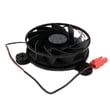
For airflow-related symptoms on this model, the Kenmore refrigerator fan motor 5304513768 is a common replacement part.
Why it matters
A defrost-heating problem lets frost build up on the evaporator coil, which blocks airflow and forces the compressor to run longer. Fixing the root cause restores normal temperatures and helps prevent repeat warm-ups.
Last updated: January 2026





