Owner’s manual
 Error Codes



What is the most common problem with GE refrigerators?
Cooling problems are the most common issue we see on GE refrigerators like model GSS23GMKKCES. The usual symptoms are warm fresh food temperatures, soft ice, or the unit running constantly; the most frequent causes are airflow restrictions, dirty condenser coils, or a defrost or control problem.
Quick checks we recommend first
- Confirm the temperature settings were not changed accidentally.
- Make sure vents inside both compartments are not blocked by food packages.
- Clean dust from the condenser area (poor heat release causes weak cooling).
- Check that both doors close fully and the gaskets seal all the way around.
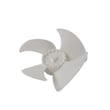
- Listen for the evaporator fan; it should run when the compressor is running.
Common causes and the parts that often relate
| Symptom | Most likely area | Example part for this model |
|---|---|---|
| Fridge warm, freezer OK | Airflow/damper issue | Air damper assembly (if sticking) |
| Both sections warm | Sealed system, compressor, or controls | Main control board, compressor kit |
| Frost buildup, then warming | Defrost system not clearing ice | Defrost thermostat |
| Temps swing up and down | Temperature sensing/control | GE profile refrigerator temperature sensor WR55X10025 |
| Water/ice issues plus odd temps | Water filter restriction or valve issue | Water filter, inlet valve |
Why it matters
A GE side-by-side depends on steady airflow from the freezer to cool the fresh food section. When coils are dirty, a fan is weak, or frost blocks the evaporator, temperatures rise quickly and food quality drops.
Where to confirm model-specific diagnostics
Use the GSS23GMKKCES manual for the control settings, operating sounds, and any model-specific troubleshooting steps before replacing parts.
Related DIY help
If the issue includes beeping or a door left open message, follow how to reset the door alarm on a GE refrigerator.
Last updated: January 2026
How to reset a GE side by side refrigerator?
To reset your GE GSS23GMKKCES side-by-side refrigerator, we recommend a simple power reset: unplug the refrigerator (or switch the breaker off) for about 2 minutes, then restore power and allow up to 24 hours for temperatures to fully stabilize. See the GSS23GMKKCES owner's manual for control and troubleshooting details.
Quick reset methods that work most often
- Power cycle reset: Unplug for 2 minutes, then plug back in.
- Breaker reset: Turn the refrigerator circuit breaker OFF for 2 minutes, then ON.
- Exit certain modes: If the refrigerator is in a non-cooling mode (such as showroom mode), unplugging and plugging back in restores normal operation.
- After reset: Keep doors closed as much as possible while the system rebalances.
What to expect after a reset
Modern GE refrigerators may run longer right after power is restored. Use this as your checklist:
- Cooling may take up to 24 hours to fully stabilize.
- Fans and the compressor may cycle more often at first.
- If the unit was in a defrost cycle, normal cooling resumes after about 30 minutes.
- Door alarms and beeping usually stop once doors are fully closed.
| Situation | What we recommend | Normal time frame |
|---|---|---|
| Minor glitch, controls acting odd | Power cycle reset | 2 minutes off, then restart |
| Not cooling right after restart | Keep doors closed, confirm controls not set to OFF | Up to 24 hours |
| Suspected defrost cycle | Wait and monitor temps | About 30 minutes |
| Beeping | Confirm doors fully closed and sealing | Immediate once closed |
If you are resetting after a water filter change
A “reset” is also used for the filter indicator on many GE dispensers:
- Run water for 2 gallons (about 5 minutes) to clear air.
- Press and hold RESET WATER FILTER for 3 seconds (some models reset automatically when a new filter is installed).
If the dispenser or icemaker will not run without a filter installed, use the correct bypass plug or install the correct filter, such as the GE refrigerator water filter XWFE.
Why it matters
Resetting clears minor control glitches and restores normal operation after power interruptions, filter changes, or certain operating modes. It also helps you avoid misdiagnosing normal behaviors like longer run times during temperature stabilization.
Last updated: January 2026
What are signs my GE ice maker is broken?
If your GE GSS23GMKKCES ice maker is broken, you’ll typically see no ice production, very slow production, small or hollow cubes, cubes stuck in the mold, or repeated buzzing when the ice maker is ON but water is not filling. Use the GSS23GMKKCES owner's manual troubleshooting steps to confirm the cause.
Common signs (and what they usually point to)
- No ice at all: ice maker switch OFF, water supply off, or freezer not cold enough.
- Slow ice production: freezer temperature too warm or door left open too often.
- Small or hollow cubes: clogged or incorrectly installed water filter.
- Cubes stuck in the ice maker: ice maker needs to be turned OFF, cleared, then turned back ON.
- Ice clumps in the bin: freezer too warm or cubes partially melting and refreezing.
- Frequent buzzing: ice maker ON but water supply is off or restricted.
Quick checks we recommend before replacing parts
- Confirm the ice maker switch is set to ON.
- Verify the refrigerator has been running long enough to stabilize; after changes, allow 24 hours for temperatures to fully normalize.
- Make sure the freezer door closes fully and nothing is holding it open.
- Level the ice in the bin by hand; piled cubes can shut the ice maker off.
- If cubes are stuck in the mold, turn the ice maker OFF, remove cubes, then turn it back ON.
- If cubes are small or hollow, replace the filter or install the bypass plug.
Parts that commonly solve ice maker symptoms on this model
| Symptom | Most common cause | Part to check first |
|---|---|---|
| Small/hollow cubes | Restricted filtration | GE refrigerator water filter XWFE |
| No fill, no ice | Water not entering unit | Refrigerator water inlet valve WR57X30890 |
| No ice production (module failure) | Ice maker assembly issue | Ice maker WR30X35285 |
Why it matters
Ice makers are sensitive to freezer temperature and water flow. Fixing a simple issue (door not sealing, warm freezer, clogged filter, water supply off) prevents wasted food, leaks, and repeated dispenser problems.
Last updated: January 2026