Owner’s manual
 Error Codes


Can you get a universal remote for an old garage door opener?
Yes. For the Craftsman 13953993DM garage door opener, you can typically use a compatible universal remote, but the best results come from using a Security+ rolling-code remote that can be programmed using the opener’s “learn” button. Programming steps and compatibility notes are in the owner's manual.
- Confirm your opener uses Security+ rolling code (the manual notes the code changes with each use).
- Look for a universal remote that explicitly supports Security+ / rolling-code openers.
- If you already have one working remote, use it to verify the opener learns new remotes.
- If the wall control has a LOCK feature enabled, remotes may appear “dead” until unlocked.
- If the opener is behaving erratically, fix sensor or wiring issues first so programming is reliable.
Most Security+ compatible remotes program like this:
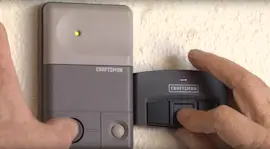
- Press and release the LEARN button on the motor unit (the indicator light stays on for about 30 seconds).
- Within that time window, press and hold the button on the remote you want to use.
- Release when the opener lights blink or you hear clicks.
If you are replacing a lost remote, erase old codes first so only your current remotes work.
The manual procedure is:
- Press and hold the LEARN button until the learn indicator light goes out (about 6 seconds).
- Reprogram each remote and any keyless entry you still want to use.
| Option | Best for | What changes |
|---|---|---|
| Universal remote (Security+ compatible) | Most “old opener” situations | Adds a new handheld remote only |
| Add-on external receiver + new remotes | Very old or odd-frequency systems | Bypasses the built-in receiver and uses the add-on receiver |
Using a rolling-code (Security+) compatible remote keeps the opener’s security features working as designed; the manual warns that non-rolling-code transmitters can defeat the anti-code-theft protection.
Last updated: February 2026
How do I program my remote to my garage door opener?
To program a remote to your Craftsman 13953993DM garage door opener, use the motor unit’s LEARN button to store the remote’s code. Once paired, the remote’s large button will open and close the door, and you can add multiple Security+ remotes.
- Make sure the garage door is fully closed and the opener has power.
- Locate the LEARN button on the motor unit (on the opener head near the wiring/indicator light).
- Press and release LEARN (the indicator light turns on briefly).
- Within about 30 seconds, press and hold the button on the remote you want to use.
- Release the remote button when the opener light flashes or you hear a click.
- Test the remote: press the programmed button; the door should move.
- Check the wall control for Lock mode; if the wall control light is flashing, the Lock feature is on. Hold Lock for 2 seconds to turn it off.
- Replace the remote battery and try again.
- Stand 5 to 10 feet from the opener when programming (too close can reduce signal reliability).
- Confirm the safety reversing sensors are installed and aligned; misalignment can prevent normal operation.
- If you recently moved in, erase old codes first (steps below), then reprogram your remotes.
Use this when you want to deactivate lost remotes.
- Press and hold the motor unit LEARN button for about 6 seconds.
- Release when the learn indicator light goes out.
- Reprogram each remote and any keyless entry you still want to use.
| Feature | What to expect on 13953993DM |
|---|---|
| Remote type | Security+ rolling code remotes |
| Max remotes | Up to 8 remotes |
| Keyless entry | Up to 1 keyless entry (if equipped) |
Programming the remote correctly ensures your opener uses its rolling-code security and prevents unwanted remotes from operating your garage door.
For model-specific button locations and programming variations, follow the steps in the 13953993DM owner's manual. You can also use our how to program garage door opener remotes video for a visual walkthrough.
Last updated: February 2026
Is it worth repairing a 20 year old garage door opener?
For a 20-year-old Craftsman garage door opener like model 13953993DM, replacement is usually the better investment because typical opener lifespan is 10 to 15 years. A small repair can make sense, but repeated failures or major issues (motor, logic board, gears) usually mean you will spend close to the cost of a newer, more reliable opener.
A repair is worth it when the problem is isolated, the door is in good shape, and the opener can still pass required safety checks.
Common “repairable” situations include:
- The opener lights flash and the door will not close because the safety sensors are misaligned or blocked
- The door stops and reverses due to force or travel limit settings that need adjustment
- A worn drive component (belt, worm gear) is the only failure and the rest of the unit is solid
- The wall control or remote issue is caused by wiring, interference, or a simple control problem
For model-specific adjustment and safety test steps, use the owner's manual.
We recommend replacement when reliability and safety are becoming ongoing concerns.
Signs it is time to replace:
- The opener fails the Safety Reverse Test even after adjustments
- The door closes while the safety reversing sensor is obstructed (this is a serious safety issue)
- You have repeated breakdowns (gears, motor, receiver/logic board)
- The garage door is not properly balanced (this can cause chronic opener problems)
The manual calls out safety tests that should be done after adjustments and monthly.
| Check | What should happen | What it points to if it fails |
|---|---|---|
| Safety reverse test | Door reverses on a 1-1/2 inch object (or a 2x4 laid flat) | Force/limit settings, door balance, or opener issue |
| Protector System sensor test | Door should not close; lights flash when beam is blocked | Sensor alignment/obstruction or sensor failure |
Older openers can become less dependable, and incorrect force/limit settings or sensor problems can prevent the safety reverse system from working as designed. That is why the manual emphasizes testing after any adjustment and every month.
Last updated: February 2026
How do I know what model my garage door opener is?
Your Craftsman garage door opener’s model is printed on the opener’s rating label; for this unit, the owner documentation identifies it as model 139.53993DM (shown as 13953993DM on our parts page). Use the label on the motor unit to confirm the exact model before ordering parts or programming remotes.
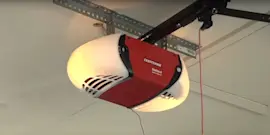
On most Craftsman openers like 13953993DM, the model information is on the motor unit housing (the power head mounted to the ceiling) or just under a light lens/cover.
Check these common spots:
- Under the light cover or light lens on the motor unit
- On the side panel of the motor unit near the wiring terminals
- Behind the front cover (if your unit has a snap-on faceplate)
- On a paper or foil rating label near the antenna wire
- In the first pages of the owner's manual (model is listed on the cover)
We recommend matching all of the following:
- Model number (example: 13953993DM)
- Brand (example: Craftsman)
- Drive type (chain or belt, if applicable)
- Remote type (many units use Security+ rolling code)
| What you’re checking | Where you’ll see it | Why it matters |
|---|---|---|
| Model number | Rating label on motor unit | Ensures correct parts and programming steps |
| Logic board/learn button style | Motor unit (near learn button) | Helps match compatible remotes/keypads |
| Safety sensor style | Sensors at bottom of door tracks | Helps troubleshoot “won’t close” issues |
Garage door opener parts and programming steps are model-specific. For example, Security+ remotes and the learn button procedure depend on the receiver type; using the correct model number prevents ordering the wrong components and speeds up troubleshooting.
If you’re trying to identify the opener because it’s flashing lights or acting up, use our Craftsman error codes guide to narrow down the issue.
Last updated: February 2026
What are the common problems with Craftsman garage door openers?
Common problems on the Craftsman 13953993DM garage door opener are safety sensor faults that stop the door from closing (often with opener lights flashing), remote or wall control issues, and travel or force settings that need adjustment. Grinding, rattling, or humming also points to drive wear or a binding, unbalanced door.
- Won’t close; opener lights flash: Safety reversing sensors are blocked, misaligned, or not connected.
- Reverses during closing: Door is binding, or travel/force needs adjustment.
- Remote won’t run the opener: Lock mode is on, remote needs programming, or battery is weak.
- Moves a little then stops: Protector System is detecting an obstruction or sensor problem.
- Hums or is very noisy: Door is jammed, hardware is loose, or drive components are worn.
- Clean and align both safety sensor lenses; confirm both indicator lights are on.
- Test the safety reversal: place a solid object in the door path and try to close; the door should stop and the opener lights should flash (see the owner's manual).
- Pull the emergency release and check door balance by hand; it should move smoothly and stay near mid-travel.
- Inspect tracks and rollers for rubbing, bends, or tight spots.
- Read diagnostic flash patterns to narrow the fault using Craftsman error codes.
| Problem | Most likely cause | Best next step |
|---|---|---|
| Won’t close; lights flash | Sensor blocked/misaligned | Align sensors; clear obstructions |
| Reverses while closing | Binding door; force/travel off | Inspect door movement; adjust per manual |
| Remote won’t activate | Lock mode; needs programming | Disable lock mode; reprogram remote |
| Hums/no movement | Door jam; worn drive | Verify door moves freely; inspect drive |
These symptoms are often safety features working as designed. Correct sensor alignment and monthly reversal testing help protect people and property and reduce strain on the motor and drive.
Last updated: February 2026