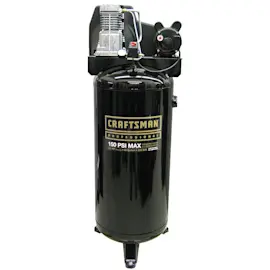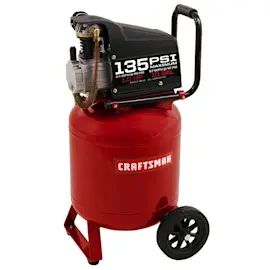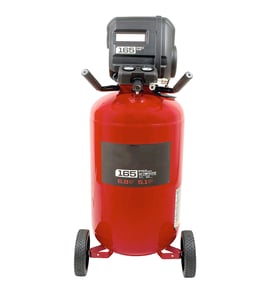


Is a 20 gallon air compressor big enough for air tools?
Yes, a 20-gallon air compressor is big enough for many common air tools in intermittent use, especially for DIY work. With a Craftsman 919165200 air compressor, the real limiter is the tool’s CFM requirement at 90 PSI, not the tank size alone; high-demand tools can outrun the pump.
What a 20-gallon compressor handles well
A 20-gallon tank gives you a useful air “buffer,” so tools that use short bursts of air typically work well.
- Brad/finish nailers and staplers
- Tire inflation and blow guns
- Small impact wrench use (short bursts, pauses between fasteners)
- Light-duty ratchets (intermittent)
- Small touch-up spray work (short passes, recovery time)
When 20 gallons feels too small
If the tool needs steady airflow, the tank empties quickly and the compressor may run nearly nonstop, causing pressure drop at the regulator.
- DA sanders and grinders
- HVLP or continuous paint spraying
- Media blasting
- Air tools used “all day” without breaks
Quick sizing rule: match CFM first, then tank
Use this as a practical guide when comparing your tool label to your compressor output.
| Tool demand (CFM @ 90 PSI) | Typical experience on 20 gallons | What to expect |
|---|---|---|
| 0 to 3 | Good | Fast recovery, stable pressure |
| 3 to 5 | Usually OK | More cycling, plan short pauses |
| 5+ | Often frustrating | Pressure drops, long recovery |
Why it matters
Tank size mainly affects how long you can run before pressure drops; compressor pump output (CFM) determines whether you can keep up. If your tool’s CFM is higher than the compressor can supply, a bigger tank only delays the pressure drop, it does not prevent it.
Helpful next step
If your compressor struggles with a specific tool, use our DIY troubleshooting for air compressor won't build tank pressure to rule out leaks, valve issues, or pump wear before upgrading.
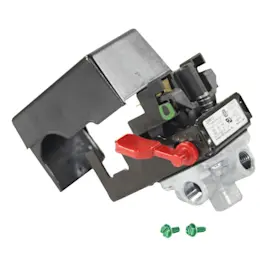
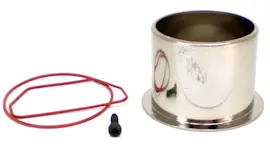
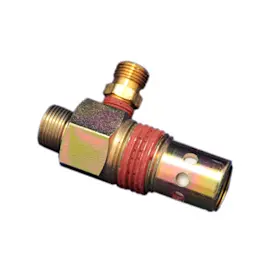
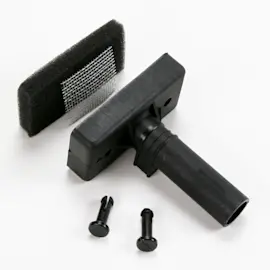
For replacement parts and diagrams for Craftsman 919165200, start with the parts list for this model; you can also search by model number on Sears PartsDirect.
Last updated: February 2026
What is the most common cause of air compressor failure?
The most common cause of failure on a Craftsman air compressor like model 919165200 is poor maintenance that leads to overheating and accelerated wear (dirty intake filter, restricted cooling airflow, moisture left in the tank, and small air leaks that make the pump run too long). Use air compressor common questions for quick prevention tips, and use Sears PartsDirect to look up maintenance and replacement items by model.
Most common failure drivers (what we see most often)
- Overheating from long run time: caused by air leaks, restricted airflow, or pushing the compressor beyond its duty cycle.
- Dirty or clogged intake filter: reduces airflow, raises pump temperature, and lowers output.
- Moisture and corrosion: not draining the tank can rust fittings and damage valves.
- Air leaks: at quick-connects, regulator, drain valve, or fittings; the unit cycles more and wears faster.
- Electrical stress: weak outlet/extension cord issues, failing pressure switch, or a tired motor capacitor.
Quick checks that prevent most breakdowns
- Drain the tank after use (especially in humid garages).
- Listen for hissing and soap-test fittings to find leaks.
- Keep the pump and motor cooling fins clear; maintain good ventilation.
- Replace or clean the intake filter on schedule.
- Verify the pressure switch cuts out normally and the safety valve is not venting.
Symptom-to-cause cheat sheet
| What you notice | Most likely cause | What to do next |
|---|---|---|
| Won’t start | Power supply issue, pressure switch, capacitor | Follow air compressor won't start |
| Runs but won’t build pressure | Leak, worn pump seals/valves, bad check valve | Follow air compressor won't build tank pressure |
| Tank won’t hold air | Leak at drain/fittings, tank corrosion | Follow air compressor tank won't hold air |
| Safety valve pops | Overpressure, faulty pressure switch/regulator | Follow air compressor safety valve keeps popping open |
Why it matters
Most “sudden” air compressor failures are really wear from heat, moisture, and extra run time. Reducing leaks, keeping airflow clean, and draining the tank lowers operating temperature and extends pump, valve, and pressure-switch life.
Last updated: February 2026
Is it worth it to repair a compressor?
For a Craftsman air compressor model 919165200, it’s worth repairing when the problem is limited to common service parts (pressure switch, check valve, regulator, gauges, fittings) and the tank and pump are in good shape; it’s not worth it when the tank is compromised or the pump is badly worn because cost and downtime rise fast.
Quick decision checklist
- Repair it if the compressor runs but has control issues (won’t shut off, won’t restart, won’t regulate pressure).
- Repair it if you can trace the issue to a single failure point (leak, switch, valve, gauge).
- Replace it if the tank won’t hold air after you’ve ruled out fittings and drain valve leaks.
- Replace it if the pump has low compression (slow fill, can’t build pressure) and rebuild cost is high.
- Replace it if it repeatedly trips breakers or overheats after basic electrical checks.
Typical repair vs replace: what usually tips the scale
| What’s wrong | Typical path | Why |
|---|---|---|
| Won’t start, hums, or trips breaker | Repair | Often electrical/control related (switch, capacitor, wiring, unloader) |
| Won’t build tank pressure | Repair first, then evaluate pump | Could be leaks, check valve, reed valves, head gasket |
| Can’t adjust output pressure | Repair | Common regulator issue |
| Gauge not working | Repair | Low-cost, low-risk fix |
| Tank won’t hold air (not a fitting leak) | Replace | Tank integrity is the deciding factor |
What we recommend checking first (fast, high-value)
- Confirm where air is escaping: spray soapy water on fittings, regulator, drain valve, safety valve, and check valve area.
- Listen at shutdown: a long hiss after the motor stops points to unloader/check valve issues.
- Watch the gauges: if tank pressure rises but outlet pressure won’t adjust, the regulator is the likely culprit.
- Time the fill: a big slowdown compared to normal suggests valve/gasket wear in the pump.
Why it matters
Repairing the right failure (like a pressure switch or check valve) restores safe cut-in/cut-out control and prevents hard starts, overheating, and repeated cycling. Replacing a unit with a compromised tank avoids ongoing leaks and unreliable pressure storage.
Helpful DIY resources
- Use our troubleshooting steps for air compressor won't start to narrow down electrical and control causes.
- If pressure is low or fill time is long, follow how to rebuild an air compressor pump to judge whether a rebuild is practical.
For parts lookup by model number and diagrams, start with the parts list for model 919165200, or search by model on Sears PartsDirect.
Last updated: February 2026
What does 4.0 scfm at 90 PSI mean?
4.0 SCFM at 90 PSI means your Craftsman air compressor model 919165200 can deliver about 4 standard cubic feet of air per minute while maintaining 90 PSI at the outlet. It is a performance rating used to match the compressor to air tools that require a certain airflow at a working pressure.
How to use this rating to choose tools
When a tool lists an air requirement (often written as “SCFM @ 90 PSI”), compare it to the compressor’s rating.
- If the tool needs 3.0 SCFM @ 90 PSI, this compressor can typically keep up.
- If the tool needs 5.0 SCFM @ 90 PSI, the compressor will run constantly and pressure will drop.
- For continuous-use tools (sandblasters, DA sanders, grinders), plan extra airflow capacity.
- For intermittent tools (brad nailers, staplers, small blow guns), SCFM demand is usually lower.
- Use a properly sized hose and fittings; restrictions reduce usable airflow.
SCFM vs CFM (what “standard” means)
SCFM is measured under standardized conditions so different compressors can be compared more fairly. Actual airflow at your jobsite can vary with temperature, altitude, and how the compressor is set up.
Quick comparison
| Spec on the label | What it tells you | What you do with it |
|---|---|---|
| 4.0 SCFM @ 90 PSI | Airflow available at a common working pressure | Match to tool SCFM requirement at 90 PSI |
| PSI (pressure) | How much force the air has | Ensure it meets the tool’s required PSI |
| Tank size (gallons) | Stored air buffer | Helps with short bursts, not continuous demand |
Why it matters
Air tools need both pressure (PSI) and volume (SCFM). PSI can look “high enough” while SCFM is too low, which causes slow tool performance, pressure sag, and frequent cycling.
Related troubleshooting help
If your compressor struggles to keep up, won’t build pressure, or cycles oddly, use our DIY guides like air compressor won't build tank pressure to pinpoint common causes (leaks, check valve issues, pressure switch problems).
You can also look up diagrams and replacement items for Craftsman model 919165200 by searching on Sears PartsDirect.
Last updated: February 2026