Installation guide
 Owner’s manual
 Error Codes



What is the most common problem with a GE dryer?
The most common GE dryer problem is poor drying or no heat, and the most common root cause is restricted airflow from lint buildup or a crushed/long vent run. On the GE DPSE810GG6WT gas dryer, start by checking venting and basic start conditions before replacing parts; see the DPSE810GG6WT owner's manual for operating and care details.
Most common symptoms and what they usually mean
- Dryer runs but clothes stay damp: vent restriction, lint buildup, or weak burner ignition
- Dryer will not start: door not fully closed, failed door switch, or power issue
- Dryer is noisy (squeal, thump, rumble): worn belt, idler pulley, or drum glides
- Dryer shuts off early: airflow restriction causing overheating, or sensor-related issues
- Long dry times: overloaded drum, heavy fabrics, or blocked exhaust duct
Quick checks we recommend first (fast, no parts)
- Clean the lint screen and confirm strong airflow at the outside vent hood.
- Inspect the vent path for kinks, crushed flex duct, or excessive length.
- Avoid overloading; large loads dry slower and can wrinkle.
- For gas models, confirm the dryer is properly vented outdoors and installed correctly; use the DPSE810GG6WT installation guide for venting requirements.
Parts that commonly fix the issue on this model
If airflow is good and the symptom persists, these parts are frequent fixes on GE gas dryers like DPSE810GG6WT:
| Symptom | Common part to check | Example part for this model |
|---|---|---|
| Won’t start | Door switch | Door switch WE4M415 |
| Runs but no heat | Ignition system | Igniter WE04X25996 |
| Squealing or drum not turning well | Belt and tensioning | Dryer drum belt WE03X29897, idler pulley WE12X83 |
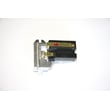
| Scraping or rumbling | Drum support surfaces | Dryer drum glide bearing (green) WE03X37317, dryer drum front glide pad WE03X37318 |
Why it matters
Restricted venting is the most common underlying cause because it increases drying time, can overheat the dryer, and can trigger repeated part failures (thermostats, sensors, and ignition components). Good airflow protects performance and helps the dryer dry evenly.
Last updated: February 2026
Where to find part number on GE dryer?
On your GE DPSE810GG6WT gas dryer, the model and serial tag (used to look up the correct replacement parts) is located on the front panel behind the dryer door. Once you have that information, we use it to match the exact part number for items like the belt, igniter, or door switch.
Where to look on the dryer
Check these common GE locations in this order:
- Front panel behind the door (most common on this model)
- Door opening or door frame area
- Inside the control console area (often where service information and wiring details are stored)
- Rear panel label (less common, but possible)
What to write down (and why)
Record the details exactly as shown on the tag:
- Model number (example: DPSE810GG6WT)
- Serial number (helps confirm production run and correct revisions)
- Fuel type (gas vs. electric; your model is a gas dryer)
Why it matters
Many GE dryers use similar-looking parts across multiple models. Using the model and serial from the tag helps us avoid ordering the wrong size belt, the wrong igniter style, or a control that will not match your wiring.
Quick examples of parts that depend on the model tag
Here are a few DPSE810GG6WT parts where an exact match matters:
| Part type | Example part for this model | What a mismatch can cause |
|---|---|---|
| Drum drive | Dryer drum belt WE03X29897 | Squealing, slipping, or no tumble |
| Ignition | Igniter WE04X25996 | No heat or intermittent heat |
| Door safety | Door switch WE4M415 | Dryer will not start |
Best next step
Use the location diagram and identification section in the DPSE810GG6WT owner’s manual to confirm you are reading the correct tag, then search parts by the exact model number.
Last updated: February 2026
What is the average lifespan of DPSE810GG6WT?
A GE gas dryer like model DPSE810GG6WT typically lasts 13 years with normal household use. Consistent airflow (clean lint filter and venting) and prompt repair of wear items like belts and glides are the biggest factors in reaching that lifespan.
Typical lifespan and what affects it
Most dryers reach their full service life when heat, airflow, and drum support parts stay in good condition.
- Clean the lint filter before every load.
- Keep the vent run short and free of lint buildup.
- Avoid overloading; it strains the drum belt, idler, and motor.
- Address squealing, thumping, or burning smells right away.
- Use the cycle and heat settings recommended in the DPSE810GG6WT owner's manual.
Parts that commonly limit dryer life
These are normal wear parts; replacing them on time helps prevent bigger failures.
| Symptom | Common wear area | Example part for DPSE810GG6WT |
|---|---|---|
| Drum will not turn or slips | Belt and tension system | Dryer drum belt WE03X29897 |
| Squealing or scraping | Drum glides and felt seals | Dryer drum glide bearing (green) WE03X37317 |
| No heat or intermittent heat | Ignition and gas heat components | Igniter WE04X25996 |
Why it matters
A dryer that is venting poorly runs hotter and longer, which shortens the life of the high-limit thermostat, control board, and motor. Good airflow also improves drying performance and helps prevent shutdowns.
Last updated: March 2026