Installation guide
 Owner’s manual
 Error Codes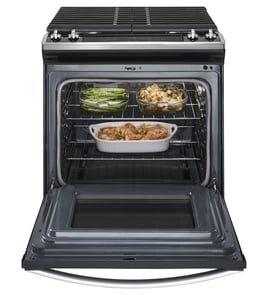


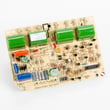
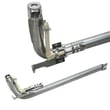

How to remove the top of a Kenmore gas range?
On the Kenmore 66572002103 gas range, removing the cooktop (main top) typically means lifting the top after you remove the grates and burner pieces, then releasing any hidden fasteners so the top can hinge up or come off for service.
Before you start (safety first)
- Turn all burner knobs to OFF and let the range cool completely.
- Shut off the gas supply valve.
- Unplug the range (or switch off the breaker) to prevent shock while working near igniters and wiring.
- Protect the countertop and finish; set down a towel for grates and caps.
- If you need to pull the range out, confirm the anti-tip bracket is engaged when you put it back (details are in the installation guide).
Steps to remove the cooktop (main top)
- Remove the grates.
- Lift off the burner caps.
- Remove the burner heads/bases (some lift off; others are held by screws).
- Look for mounting screws at the front lip (under the control panel edge) and/or near burner openings; remove them.
- If your version uses burner tube screws, remove the screws securing the tubes so the top can lift.
- Lift the cooktop from the front and raise it. Some tops hinge up; others lift off once the rear tabs clear.
What you may need (tools and parts)
| Item | Why you need it |
|---|---|
| Phillips screwdriver | Common cooktop and burner-base screws |
| 1/4-in nut driver | Typical sheet-metal fasteners |
| Small container | Keeps screws from getting lost |
| Range surface burner head WP4455980 | Replace if corroded, warped, or clogged |
Why it matters
We remove the cooktop to access ignition parts, wiring, and gas components underneath. If the top is forced up with screws still installed, it can bend the main top or crack burner parts, leading to poor flame or ignition problems.
Quick checks if the top will not lift
- Recheck for screws hidden under burner heads/bases.
- Confirm all burner caps and heads are fully removed.
- Gently wiggle the top to free rear locating tabs; do not pry hard against enamel.
- If ignition wires feel tight, stop and reposition the top so wiring is not strained.
Last updated: February 2026
What model is my Kenmore gas range?
Your Kenmore gas range model number is printed on the model and serial rating plate. On Kenmore model 66572002103, that plate is located on the frame behind the storage drawer, so pulling the drawer out is the fastest way to confirm the exact model.
Where to look on model 66572002103
Check these common label locations in this order:
- Behind the storage drawer on the front frame (model and serial rating plate)
- On the frame near the drawer opening (you may need a flashlight)
- Inside the oven door area (door jamb) on some ranges
- On the back panel near the vent area on some installations
Quick steps to find it
- Turn the oven and all surface burners off.
- Pull the storage drawer out fully; lift slightly and continue pulling to remove it (most drawers release this way).
- Look for a sticker or metal plate that lists Model and Serial.
- Write the model number exactly as shown (for example, 66572002103).
What the label typically shows
| Label item | What it’s used for | Why it matters |
|---|---|---|
| Model number | Parts lookup and diagrams | Ensures the right Kenmore range parts fit |
| Serial number | Production details | Helps match revisions and compatible parts |
| Gas type info | Natural gas vs. LP/propane | Prevents incorrect setup and unsafe operation |
Why it matters
Kenmore range parts can look identical across similar models, but burner components, controls, and ignition parts can differ. Using the exact model number helps us match the correct parts and instructions from the 66572002103 owner’s manual.
Last updated: February 2026
What is the average lifespan of 66572002103?
A Kenmore gas range like model 66572002103 typically lasts 15 years with normal household use and basic maintenance. Keeping burners clean, ensuring proper ignition, and addressing heating issues early helps you reach that lifespan. For care and cleaning details, use the 66572002103 owner's manual.
What affects lifespan most
- Cooking frequency and heat levels (daily high-heat use shortens life)
- Spillovers and corrosion on the cooktop and burner parts
- Ignition wear (clicking, delayed lighting, weak spark)
- Oven heat accuracy (overheating strains components)
- Ventilation and moisture around controls and wiring
Quick maintenance checklist
- Clean burner caps and heads regularly; keep ports clear.
- If burners click but do not light, dry and clean the igniter area.
- Avoid harsh abrasives on the control panel and cooktop finish.
- Verify oven temperature if baking results change; a failing sensor can cause temperature swings.
- Use correct cookware size to reduce heat stress on surface burners.
Common “end-of-life” symptoms and what they usually mean
| Symptom | Most common cause | Typical fix path |
|---|---|---|
| Oven won’t heat or heats weakly | Igniter getting weak | Replace igniter (often restores normal baking) |
| Oven temperature is inconsistent | Sensor drifting out of range | Test/replace sensor |
| Burners won’t spark or spark is erratic | Ignition module or igniter issue | Inspect wiring, then replace failed part |
| Door won’t latch for self-clean | Latch mechanism worn | Inspect/replace latch parts |
Parts that often restore performance
If your range is otherwise in good shape, replacing a few common wear parts can extend usable life:
Why it matters
Knowing the typical 15-year lifespan helps you decide whether to repair or replace. If your 66572002103 is under that range, a targeted repair (ignition or temperature control) often brings performance back without replacing the whole range.
Last updated: March 2026