Installation guide
 Owner’s manual
 Error Codes


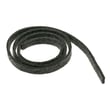
How to replace GE dryer sensor?
On the GE GTDP520GD0WW gas dryer, the “sensor” most customers mean is the moisture sensor inside the drum area. Replacing it is a moderate repair: unplug power, shut off gas, open the cabinet, swap the sensor and reconnect the harness, then reassemble and test a timed cycle.
- Unplug the dryer from the electrical outlet.
- Turn the gas shutoff valve to the OFF position.
- Let the dryer cool completely.
- Wear gloves; cabinet edges can be sharp.
- Take a quick photo of wire routing before disconnecting anything.
For model-specific disassembly and access points, follow the GTDP520GD0WW installation guide.
GE dryers commonly have more than one sensor-type part. Use this quick check to confirm you have the right one.
| What you’re seeing | Most likely part | Common symptom |
|---|---|---|
| Two metal bars/strips inside the drum area near the lint filter housing | Moisture sensor | Auto cycles end too soon or run too long |
| Small device near the burner tube/flame area | Radiant sensor | No heat or heat cuts out |
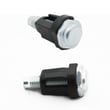
If you are replacing the moisture sensor for this model, use the dryer moisture sensor WE1M575.
- Disconnect power and shut off gas.
- Remove the top and/or front panel (varies by configuration).
- Locate the moisture sensor bars and the wire harness connection.
- Disconnect the harness; remove the mounting screws.
- Install the new sensor, reconnect the harness, and secure wiring away from moving parts.
- Reassemble panels; restore gas and power.
- Run a timed dry cycle to confirm heat and drum operation, then test an auto cycle.
A failing moisture sensor can make the GTDP520GD0WW overdry loads (wasting gas) or stop early (leaving clothes damp). Replacing the sensor restores normal automatic cycle performance and helps prevent unnecessary wear on the drum belt and idler system.
Last updated: February 2026
Where is my thermal fuse located on my GE dryer?
On the GE GTDP520GD0WW gas dryer, the thermal fuse is typically mounted on the blower housing inside the cabinet, close to the exhaust duct where lint-laden air leaves the drum. You access it by unplugging the dryer, removing the front or rear panel, and locating the small fuse on the blower housing.
- Unplug the dryer (and shut off the gas supply valve for extra safety while you work).
- Pull the dryer away from the wall so you can access the cabinet.
- Remove the appropriate access panel (rear panel on many GE designs; some require front access).
- Look for the blower housing near the lint duct and exhaust outlet; the thermal fuse is usually a small, flat component with 2 wires.
- Take a photo of the wire positions before disconnecting anything.
- Use a multimeter to check continuity after removing at least one wire from the fuse terminal.
For panel removal and cabinet access details specific to your dryer, use the GTDP520GD0WW installation guide.
The thermal fuse is a one-time safety device. If the dryer overheats (often from restricted airflow), the fuse opens and the dryer may not run or may run with no heat, depending on the circuit design.
| Symptom | Common airflow-related cause | What to check first |
|---|---|---|
| Dryer will not start | Overheat event opened fuse | Lint screen, vent duct, blower area |
| Runs but poor drying | Vent restriction causing high temps | Crushed/kinked vent, clogged duct |
| Burning smell or very hot cabinet | Severe restriction | Stop using; inspect venting immediately |
On a gas dryer like the GTDP520GD0WW, proper venting is critical for safe, efficient drying. The installation instructions emphasize tight, properly oriented duct joints and avoiding fasteners that protrude into the duct because they collect lint; those issues can contribute to overheating conditions that blow a thermal fuse.
- Clean the lint screen every load.
- Inspect and clean the vent run regularly (especially long runs or multiple elbows).
- Confirm duct joints are taped and tight, with the male end pointing away from the dryer.
- Avoid plastic or thin foil venting; use 4-inch metal ducting where required.
For airflow and duct setup best practices, follow the GTDP520GD0WW installation guide.
Last updated: February 2026
Where to find part number on GE dryer?
On your GE GTDP520GD0WW gas dryer, the model and serial tag (where you will find the model number and often the information you need to match the correct replacement part) is typically located inside the dryer door opening, on the door frame or just inside the door area. Use that tag to confirm the exact model before ordering parts.
- Model number (for this dryer: GTDP520GD0WW)
- Serial number (helps identify production details)
- Electrical and gas information (useful for service and installation)
- Sometimes a component number or additional codes used for parts lookup
| Item | What it identifies | Example from this model page |
|---|---|---|
| Model number | The exact dryer version | GTDP520GD0WW |
| Part ID | Sears PartsDirect identifier for ordering | WE03X29897 |
| Manufacturer part number | GE part number used by the maker | WE12M29 |
- Match the model number exactly from the tag before you shop.
- If you are replacing a wear item (belt, glides, felt), inspect related parts at the same time.
- For a squeal, thump, or drum not turning, common suspects include the belt, idler pulley, and drum glides.
- Use the diagrams and part lists in the GTDP520GD0WW owner’s manual to confirm locations and names.
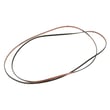
If the drum will not tumble or you find a broken belt, the correct belt listing for this model is the dryer drum belt WE03X29897.
GE often uses similar-looking parts across multiple dryer families. Confirming the exact model number from the door-area tag prevents ordering a part that fits a different GE dryer configuration.
Last updated: February 2026