 Owner’s manual
 View engine


Should I spray my snowblower with WD-40?
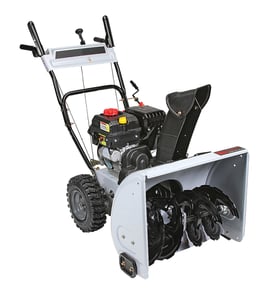
We do not recommend spraying your entire Craftsman C950-52935-1 snow thrower with WD-40. For storage and corrosion protection, use a rust preventative on bare metal areas like the auger housing and impeller, and follow the cleaning, lubrication, and fuel steps in the owner's manual.
WD-40 can help displace moisture on small metal linkages, but it is not a long-term lubricant and it can attract dirt.
- OK for: light moisture displacement on exposed metal linkages after use
- Not ideal for: belts, friction surfaces, pulleys, or areas that need real grease or oil
- Avoid spraying: near the belt drive area, controls that must grip, and any hot engine surfaces
- Do not use as a substitute for: proper lubrication at specified lube points
Your manual specifically calls out protecting bare metal and doing storage prep to prevent fuel-system gumming.
- Thoroughly clean the snowblower after the season
- Lubricate all lubrication points (per the manual)
- Touch up chipped paint and address rust spots
- Cover bare metal parts of the auger housing and impeller with rust preventative
- For storage 30 days or longer, remove fuel or treat it with stabilizer and run the engine to circulate it
| Task | What it prevents | When to do it |
|---|---|---|
| Clean and dry the machine | Corrosion, packed snow and salt residue | After each use and before storage |
| Lubricate lube points | Seized pivots, premature wear | Before storage; during season as needed |
| Rust preventative on bare metal | Rust on auger housing and impeller | Before off-season storage |
| Fuel removal or stabilizer + run engine | Gum deposits in tank, filter, hose, carburetor | If storing 30+ days |
Rust protection and correct lubrication keep the auger and impeller moving freely and help the drive system last longer. Fuel storage steps also reduce hard-starting and rough running caused by stale gas and deposits.
Last updated: February 2026
What is the life expectancy of a snowblower?
A gas snowblower like the Craftsman C950-52935-1 typically lasts 15 to 20 years with normal residential use and consistent maintenance. The biggest life-extenders are correct fuel mix, routine cleaning, and keeping wear items like belts and filters in good shape (details are in the owner's manual).
- Fuel quality and storage habits: stale fuel and moisture shorten engine life.
- Correct fuel and oil mix: this model uses a 40:1 fuel/oil mix ratio.
- Routine cleaning after use: removing salt, slush, and debris reduces corrosion.
- Lubrication and fastener checks: loose hardware and dry bushings accelerate wear.
- Replacing wear parts on time: belts, spark plugs, filters, and shear bolts are normal maintenance items.
Use this as a simple seasonal routine:
- After each use, run the engine a few minutes to melt off snow and ice.
- Clean and dry the machine; flush off salt and wipe dry.
- Before storage, inspect moving parts for wear and replace as needed.
- Keep bolts tight, including shear bolts and other fasteners.
- Store safely; don’t store indoors with fuel in the tank near ignition sources.
| Item type | Examples | What to expect |
|---|---|---|
| Wear items | Belts, spark plug, filter, shear bolts | Replaced periodically; normal upkeep |
| Long-life parts | Auger housing, frame, handles | Last many years unless damaged or corroded |
If you’re doing a tune-up, the air filter is a common starting point; our filter 394358S is one of the model-specific parts available for this snowblower.
A snowblower’s “life expectancy” is mostly about preventing avoidable damage: corrosion from salt, fuel system issues from stale gas, and drivetrain wear from running loose or dry. A consistent maintenance routine keeps performance strong and avoids expensive repairs.
Last updated: February 2026
Is it worth fixing a snowblower?
Yes, it’s usually worth fixing a Craftsman snow thrower like model C950-52935-1 when the problem is a normal wear item (belt, filter, fasteners) or a simple adjustment, because the repair cost is often far less than replacing the machine and restores reliable snow-throwing performance.
We use these checkpoints to make the call quickly:
- Starts and runs well after basic maintenance (fresh fuel, correct oil level, clean filter).
- Problem is isolated to common wear parts (belt, pulley, scraper, cable adjustment).
- Auger and housing are solid (no major cracks, severe rust-through, or bent auger housing).
- Parts are available for your model and the repair is straightforward.
- You want predictable performance in heavy snow; a tuned machine often outperforms a bargain replacement.
For model-specific maintenance and adjustment steps, use the owner's manual.
These are frequent, cost-effective fixes on single-stage machines:
- Replace a worn auger belt: snowblower auger drive belt 760928MA
- Clean or replace the air filter: filter 394358S
- Replace a worn scraper bar (shave plate): scraper 55323MA
- Inspect/replace an idler pulley if the belt slips: idler pulley 48924MA
- Tighten or replace missing hardware (nuts, lock washers, screws)
If the auger stops turning or performance drops, the manual also points to belt replacement/adjustment and cable adjustment as first checks.
| Situation | Typical fix | Why it’s usually worth it |
|---|---|---|
| Auger won’t spin but engine runs | Belt or cable adjustment | Restores snow throwing quickly with minimal parts |
| Poor scraping, leaves snow behind | Scraper replacement | Improves clearing and reduces strain on the auger |
| Belt squeal or slipping | Idler pulley and belt inspection | Prevents repeat belt wear and loss of drive |
| Storage-related hard starting | Storage tune-up steps | Avoids carburetor and starting issues next season |
A snowblower that’s maintained and stored correctly lasts longer and is safer to operate. The manual’s storage guidance (cleaning, lubricating points, checking fasteners, and protecting bare metal) helps prevent the exact problems that make a machine feel “not worth fixing.”
Last updated: February 2026
How do I tell what year my Craftsman snowblower is?
To tell the year of your Craftsman snowblower, we use the model and serial number from the ID label on the machine; for model C950-52935-1, the serial number format determines the build year, and the owner's manual shows where to find key identification information and parts diagrams.
Check these common locations on a Craftsman snow thrower:
- On the rear of the frame near the handles
- On the side of the auger housing
- Near the engine mounting area
- On a metal tag or adhesive label (wipe off snow, oil, and grime first)
Write down both the model number (C950-52935-1) and the serial number exactly as shown.
Craftsman snowblowers were produced by different manufacturers over the years, so the serial number pattern is what tells you how to decode the date.
- If the serial begins with a date-style code, the first characters often represent the year, followed by month/day.
- If the serial uses a letter-number format, the letter can indicate the manufacturing year in that series.
- If the snowblower label does not clearly decode, use the engine identification tag (engine model/type/code) to determine the engine’s manufacture date, which closely matches the snowblower’s build timeframe.
| What you have | What to do | What you get |
|---|---|---|
| Model + serial label is readable | Match the serial pattern to its date code style | Build year (and often month/day) |
| Label is damaged or missing | Use engine ID tag and date code | Engine year (good proxy) |
| Mixed parts or rebuilt unit | Compare label date and engine date | Best estimate of production year |
Knowing the production year helps us match the correct parts and diagrams for your Craftsman C950-52935-1, especially for wear items like belts, scraper components, and auger-drive hardware.
When you confirm the exact model/serial, it is easier to select the right replacement parts, such as:
- Snowblower auger drive belt 760928MA (auger engagement and throwing)
- Auger assembly 327072MA (auger rotation and snow intake)
- Scraper 55323MA (clearing down to the surface)
- Filter 394358S (engine airflow and performance)
Last updated: February 2026
What is the most common reason snowblower won't start?
The most common reason a Craftsman snow thrower like model C950-52935-1 will not start is a fuel issue: old gasoline, contaminated fuel, or a fuel delivery problem that keeps the engine from getting the right fuel charge. Use the exact starting and fuel instructions in the C950-52935-1 owner's manual.
- Put the ignition key in the RUN/ON position.
- Confirm the fuel shutoff (if equipped) is ON.
- Use fresh gasoline; drain and refill if the fuel is old or smells varnished.
- Set choke and primer correctly for cold starts; for warm restarts, leave choke OFF and do not over-prime.
- Make sure the spark plug wire is firmly connected.
- If using electric start, use a properly grounded outlet and the correct extension cord type.
- Replace the fuel and try the manual’s cold-start steps exactly.
- If the engine smells strongly of fuel or the plug is wet, the engine is likely flooded; wait a few minutes, set choke to OFF, and try again.
- If it still will not start, check ignition and airflow: spark plug condition, air intake, and carburetor.
| What you notice | Most likely cause | Best first step |
|---|---|---|
| No sputter at all | Key OFF, no spark, or no fuel flow | Key ON; check plug wire; verify fuel is reaching carb |
| Starts then dies | Stale fuel or restricted fuel flow | Drain/refill fuel; inspect fuel tank and lines |
| Strong fuel smell, wet plug | Flooded engine from over-priming | Choke OFF; wait; retry start |
A restricted air intake can contribute to hard starting and poor running. If your unit uses a serviceable filter and it’s dirty or oil-soaked, replace it.
Fuel breaks down during storage and leaves deposits that clog small carburetor passages. Following the correct choke and primer procedure prevents flooding and gets the right air-fuel mix for reliable starting.
Last updated: February 2026