Installation guide
 Owner’s manual
 Error Codes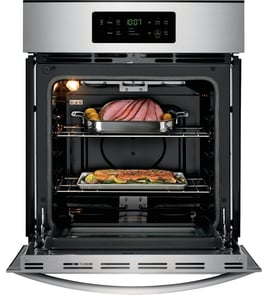





Are GE wall ovens any good?
GE wall ovens are a solid, dependable choice for most kitchens, and the GE JK5000SF3SS is built for typical everyday baking and broiling with standard safety and installation requirements. Overall quality comes down to correct installation, proper airflow, and keeping key components like sensors and door seals in good shape.
What “good” looks like in real use
We judge wall ovens on consistent temperature control, safe operation, and serviceability. For the JK5000SF3SS, these are the most practical indicators:
- Even baking and accurate temps (food finishes when recipes say it should)
- Stable preheat and recovery after opening the door
- Door seals well (no excessive heat escaping around the door)
- Cooling system runs as designed (cabinet area does not overheat)
- Controls respond normally (no random resets or unresponsive keys)
Common issues that affect performance (and the parts that usually fix them)
If a wall oven seems “not that good,” it is often a specific part drifting out of spec rather than the whole oven being poor quality.
| Symptom | Most common cause | Part to check on JK5000SF3SS |
|---|---|---|
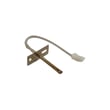
| Oven temperature is off by 25 to 75°F | Sensor out of range | Wall oven temperature sensor WB21X10165 |
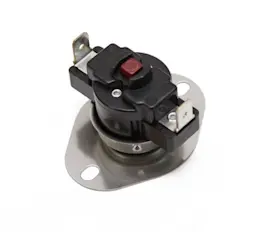
| Oven shuts down or seems to overheat | Cooling/limit protection issue | Range high-limit thermostat WB24X46906 |
| Heat leaks, longer cook times | Worn or torn door seal | Oven door gasket WB35X34867 |
Why installation quality matters (more than most people think)
A wall oven can only perform well if it is installed correctly. GE’s installation instructions call out that electric wall ovens must be hard-wired into an approved junction box (no plug and receptacle), and the surrounding cabinetry must tolerate heat up to about 200°F. Use the JK5000SF3SS installation guide to confirm cutout, junction box location, and clearances.
Quick checks we recommend before blaming the oven
- Confirm the oven is level and racks sit flat
- Verify the door closes firmly and the gasket is fully seated
- Run a simple temperature check with an oven thermometer
- Listen for the cooling fan operation during and after baking
- Review operating modes and settings in the JK5000SF3SS owner’s manual
Why it matters
A “good” wall oven is one that holds temperature, vents heat safely, and stays reliable over time. Keeping the temperature sensor, cooling protection, and door gasket in good condition protects cooking results and helps prevent heat stress on surrounding cabinets.
Last updated: February 2026
How long do GE wall ovens last?
Most GE electric wall ovens, including model JK5000SF3SS, last about 12 years with normal household use. With consistent cleaning, correct installation, and prompt repair of heating or control issues, a wall oven commonly reaches 15 years.
What affects lifespan the most
- Heat stress from frequent high-temp baking, broiling, or self-clean cycles
- Ventilation and cooling (blocked airflow can overheat electronics)
- Door seal condition (heat leaks make components work harder)
- Power quality (surges can damage control boards)
- Maintenance habits (spills left to bake on can damage finishes and sensors)
Quick maintenance that helps your JK5000SF3SS last longer
Use the care and cleaning guidance in the JK5000SF3SS owner’s manual.
- Keep the door gasket clean and seated evenly; replace it if it’s torn or flattened
- Avoid slamming the door; it stresses hinges, glass, and the latch/lock
- Run self-clean only when needed; high heat accelerates wear on wiring and controls
- If baking temps seem off, check calibration settings before assuming a part failure
- If the oven overheats or shuts down, address cooling airflow issues promptly
Common “end-of-life” symptoms vs. fixable issues
| Symptom | Often fixable? | Common next step |
|---|---|---|
| Oven won’t hold temperature | Yes | Test/replace the wall oven temperature sensor WB21X10165 |
| Fan runs a long time after cooking | Usually normal | Confirm expected behavior in the manual; check airflow if excessive |
| Uneven baking or long preheat | Often | Inspect bake element, sensor, and calibration |
| Control glitches after outage | Often | Reset clock and cooking functions per manual guidance |
Why it matters
Knowing the typical lifespan helps you decide whether to repair or replace. If your JK5000SF3SS is under 12 years old, repairs like a temperature sensor or door gasket are often cost-effective compared to replacing the entire wall oven.
Last updated: February 2026
What is the difference between a regular GE and GE profile?
GE Profile is GE’s step-up line; compared with “regular” GE models, Profile typically adds more premium styling, upgraded controls, and extra cooking features. For your GE JK5000SF3SS electric wall oven, the best way to confirm which features are included is to compare the feature list in the JK5000SF3SS owner’s manual.
What usually changes with GE Profile
In most product lines, GE Profile models are positioned above standard GE models in both features and price.
Common differences include:
- More advanced controls (touch panels, more precise settings)
- More cooking modes (convection options, specialty modes)
- More premium finishes and design details
- More convenience features (timers, probes, self-clean options depending on model)
- Higher typical purchase price
How to compare the two the right way
Because “GE” and “GE Profile” vary by product generation, we recommend comparing by model number and feature list, not just the badge.
| What to compare | Standard GE | GE Profile |
|---|---|---|
| Design/finish | Practical, basic styling | More premium styling and trim |
| Controls | Often simpler | Often more advanced |
| Feature set | Core cooking functions | More feature-rich |
| Price | Lower | Higher |
Why it matters
When you’re ordering parts or planning a repair, the exact model number matters more than the product line name. Using JK5000SF3SS ensures you get the correct components (for example, a sensor or control board that matches your oven’s configuration).
Last updated: February 2026