Owner’s manual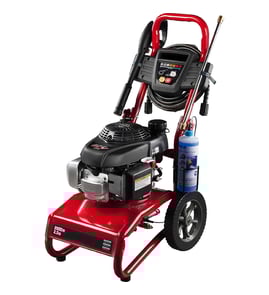



Do you really need a 4000 PSI pressure washer?
No. For the Troybilt 020240 gas pressure washer, the maximum rated pressure is 2,550 PSI with a max flow rate of 2.3 GPM, which is already enough for most residential cleaning when you use the right nozzle and technique (see the 020240 owner's manual).
What PSI you actually need for common jobs
For most homeowners, cleaning results depend on PSI, GPM, and the spray tip you choose.
- Cars, patio furniture, grills: ~1,200 to 2,000 PSI (use a wider fan tip)
- Decks and fences (wood): ~1,500 to 2,500 PSI (avoid cutting into wood)
- Driveways and sidewalks (concrete): ~2,500 to 3,500 PSI (faster with higher GPM)
- Heavy buildup, commercial work, graffiti: ~3,500 to 4,000 PSI (often paired with higher GPM)
Why GPM matters as much as PSI
PSI is impact; GPM is rinsing power. A higher GPM unit usually cleans faster because it carries dirt away more efficiently.
| Spec | What it affects | What to prioritize |
|---|---|---|
| PSI | How hard the spray hits | Stuck-on grime, tight areas |
| GPM | How fast you rinse and flush debris | Large surfaces, speed |
| Nozzle angle | How concentrated the spray is | Preventing damage, control |
How to get “more cleaning” without 4000 PSI
We recommend these practical upgrades and checks before moving to a higher-PSI machine:
- Use the correct spray tip for the surface (wider fan for delicate materials)
- Keep a consistent distance; start farther away and move closer as needed
- Confirm your water supply is strong enough; the manual calls for more than 3.3 GPM and at least 20 PSI at the washer end of the garden hose
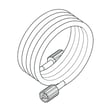
- Inspect for hose kinks, cuts, or leaks; replace a damaged hose with the pressure washer hose 84006753
- Avoid letting the unit idle with the trigger off for long periods; the thermal relief system can discharge hot water to protect the pump
Why it matters
Using more PSI than you need increases the chance of etching concrete, damaging wood, and forcing water behind siding. Matching PSI, GPM, and nozzle choice gives better results with less risk.
Last updated: February 2026
Do I put regular gas in my pressure washer?
Yes. For the Troybilt 020240 gas pressure washer, we use regular unleaded gasoline; fill the fuel tank and leave a little space for fuel expansion. For the exact fueling and safety steps for your unit, follow the 020240 owner's manual.
What fuel to use (and what to avoid)
- Use clean, fresh regular unleaded gasoline.
- Do not use old or contaminated fuel (it can cause hard starting and surging).
- Do not overfill the tank; leave room for expansion.
- Store fuel in an approved container and keep it away from heat sources.
- If the pressure washer has been sitting, drain and replace fuel before troubleshooting other issues.
Quick start checklist after fueling
Before starting the engine, we follow these basics from the normal setup and operation steps:
- Check engine oil level at the oil fill/dipstick.
- Confirm the high-pressure hose is tight at the pump and spray gun.
- Inspect the hose for kinks, cuts, or damage.
- Connect a proper water supply and turn water on before starting.
- Operate outdoors with good ventilation.
Common symptoms and likely fuel-related causes
| Symptom | Common fuel-related cause | What we do first |
|---|---|---|
| Won’t start | Stale fuel, water in fuel | Drain/refill with fresh regular unleaded |
| Starts then dies | Restricted fuel flow, dirty carburetor | Replace fuel, then check fuel system |
| Surging or losing power | Old fuel, partially clogged jet | Fresh fuel, then clean carburetor if needed |
Why it matters
Using the correct fuel and leaving expansion space helps prevent hard starting, rough running, and fuel leaks. It also makes troubleshooting easier because we can rule out the most common cause first: bad fuel.
If you need to replace a damaged hose while you are checking connections, we recommend using the model-matched pressure washer hose 84006753. For broader parts lookup by model number, we also offer search tools on Sears PartsDirect.
Last updated: February 2026
Is a 3000 PSI pressure washer good for a driveway?
Yes, 3000 PSI is a strong, effective pressure level for cleaning most concrete driveways, as long as you use the right spray tip and technique. For Troybilt model 020240, our 020240 owner's manual lists a maximum of 2,550 PSI, which is still plenty for typical driveway grime.
What PSI you actually need for a driveway
For most residential driveway cleaning, PSI and flow rate (GPM) work together.
- 2,000 to 3,000 PSI: Ideal range for concrete driveways
- Higher PSI: Cleans faster but increases risk of etching concrete or damaging joints
- More GPM: Often improves cleaning speed more than extra PSI
Quick guide (typical residential use)
| Surface | Typical PSI range | Notes |
|---|---|---|
| Concrete driveway | 2,000 to 3,000 | Use a wider tip first to avoid etching |
| Pavers | 1,200 to 2,000 | Avoid blasting sand from joints |
| Asphalt | 1,000 to 1,500 | Use extra caution; can gouge or loosen aggregate |
How to clean a driveway safely (best practices)
- Start with a 25° or 40° spray tip; only step up in aggressiveness if needed
- Keep the nozzle moving; do not “park” the spray in one spot
- Hold the wand roughly 12 to 18 inches from the surface, then adjust as needed
- Pre-wet and use a pressure-washer-approved detergent when oil or heavy grime is present
- Confirm your hose and fittings are tight and the hose is not kinked before starting
Why it matters
Driveways are tough, but too much concentrated pressure can leave visible “tiger stripes,” etch concrete, or disturb paver joint sand. Using the correct tip and steady motion usually matters more than chasing the highest PSI.
Model 020240 notes that affect driveway cleaning
From the manual for Troybilt 020240:
- Max pressure: 2,550 PSI
- Max flow: 2.3 GPM
- Water supply: at least 20 PSI at the washer end of the garden hose; do not exceed 100°F
- Thermal relief: can discharge warm water if the trigger is not pressed for several minutes
If your cleaning power seems weak, a worn or leaking hose can also reduce performance; check the pressure washer hose 84006753 for cuts, bulges, or fitting leaks.
Last updated: February 2026
What is a good PSI for a gas pressure washer?
A good PSI for a gas pressure washer depends on the jobs you plan to do. For typical home cleaning, 1,300 to 2,800 PSI covers most tasks; your Troybilt 020240 is rated up to 2,550 PSI, which fits solidly in that residential range (see the 020240 owner's manual).
Quick PSI guide by task
- 1,300 to 2,000 PSI: patio furniture, grills, cars (use wider spray tips)
- 2,000 to 2,800 PSI: decks, siding, driveways, general home exterior cleaning
- 2,800 to 3,500 PSI: heavy concrete cleaning, paint prep (more risk of surface damage)
- 3,500+ PSI: commercial-grade work; not typical for most homeowners
How the Troybilt 020240 compares
| Item | Typical “good” home range | Troybilt 020240 (model-specific) |
|---|---|---|
| Max pressure (PSI) | 1,300 to 2,800 | 2,550 |
| Flow rate (GPM) | 2.0 to 3.0 | 2.3 |
Why PSI is only half the story
PSI controls how aggressively the spray hits the surface, but GPM controls how fast you rinse and how quickly you finish. A balanced residential setup like 2,550 PSI and 2.3 GPM is strong for most outdoor cleaning without being overly aggressive.
Tips to get “good” results without damage
- Start with a wide-angle nozzle and increase intensity only if needed.
- Keep the spray moving; do not dwell on one spot.
- Test on an inconspicuous area first, especially on wood and painted surfaces.
- Use a proper water supply; this model is designed for a supply over 20 PSI at the washer end of the garden hose.
- If you see pulsing or weak pressure, check for hose kinks, clogged inlet screen, or worn seals; a damaged hose can also cause performance issues (see pressure washer hose 84006753).
When pressure seems “too high” or “too low”
If the spray feels inconsistent, the issue is often the nozzle, unloader valve, or a check valve rather than the PSI rating itself. Our DIY guide solving pressure washer problems walks through the most common causes and fixes.
Last updated: February 2026