

How to find model number on Craftsman Shop Vac?
On a Craftsman shop vac like model 113178770 (a 16-gallon wet/dry vacuum), the model number is printed on the rating label attached to the power head (the top motor housing). Check the outside of the motor cover first, then look under the carry handle or cord wrap areas.
Where to look on the vacuum
Check these common label locations on Craftsman wet/dry vacuums:
- Power head (motor housing): back side near the on/off switch or latches
- Under the carry handle on the top cover
- Near or under the cord wrap (if your unit has one)
- Rear of the power head close to the exhaust port
- Inside the top cover lip (visible when you remove the power head from the tank)
What the label looks like (and what to write down)
Most labels are silver, gray, or white and include several identifiers. Record these exactly:
- Model number (for example, 113178770)
- Serial number (often labeled “S/N”)
- Electrical rating (amps and volts), helpful for motor and switch matching
- Tank size (gallons) and other specs
Quick ID guide
| You see on the label | What it means | Why we need it |
|---|---|---|
| Model / MOD | Model number | Matches the correct parts list |
| S/N | Serial number | Helps confirm production version |
| Volts / Amps | Electrical rating | Helps match switches, cords, motors |
Why it matters
Craftsman shop vacs can look similar across multiple series, but parts like the switch, motor, hose size, and filters can vary by model. Using the exact model number prevents ordering the wrong vacuum cleaner parts.
If the label is missing or unreadable
Use these practical options to identify your unit:
- Look for a stamped number on the power head plastic (sometimes near the label area)
- Check any original paperwork or box (often lists the model)
- Compare your vacuum’s hose diameter and latch style to narrow the series
- Use our guide: how to find your appliance model number (and what it means for parts)
Last updated: February 2026
Why do shop vacuums lose suction?
Shop vacuums like the Craftsman 113178770 16-gallon wet/dry vacuum usually lose suction because airflow is restricted somewhere in the system (filter, hose, inlet, or tank seal) or because the motor is not moving enough air. Restoring airflow almost always brings suction back.
Most common causes (and what to check first)
- Clogged filter: A dirty cartridge or foam sleeve filter is the #1 cause; clean it (if washable) or replace it.
- Hose or wand blockage: Check for a plug of debris near the nozzle, bends, or where the hose connects to the tank.
- Full tank: When the tank is packed with debris, airflow drops fast.
- Lid or tank seal leak: A pinched, cracked, or missing gasket lets air leak in and reduces pickup.
- Wrong setup for wet pickup: Using a dry filter for wet pickup (or a saturated filter) can choke airflow.
- Obstructed inlet/deflector: Debris can lodge at the intake port inside the tank.
Quick suction test (2 minutes)
- Unplug the vacuum.
- Remove the hose and look through it end-to-end.
- Remove the filter and check if suction improves briefly (do not run long without the correct filter installed).
- Reseat the lid and confirm the latches clamp evenly.
| Symptom | Most likely cause | Best next step |
|---|---|---|
| Suction slowly got worse | Filter loading up | Clean or replace filter |
| Suction suddenly dropped | Hose clog or inlet blockage | Clear obstruction |
| Dust blows out exhaust | Filter torn or not seated | Reseat or replace filter |
| Whistling sound at lid | Gasket leak | Inspect lid/tank seal |
Why it matters
Low suction is almost always an airflow problem. Running with restricted airflow makes cleanup frustrating and can shorten motor life because the vacuum runs hotter and works harder.
Helpful DIY resource
For safe electrical checks if the vacuum runs but seems weak (or cuts out), use how to use a multimeter to test electrical parts video.
Last updated: February 2026
How do you know if your vacuum motor is burnt out?
A burnt-out motor on a Craftsman 113178770 16-gallon wet/dry vacuum typically shows up as a sharp burning electrical smell, the motor only hums or clicks without spinning, or it runs briefly then shuts off and loses suction. Confirm with a quick power-cord and switch check before replacing parts.
Common signs the motor is burnt out
- Strong burning odor from the motor housing (often like hot plastic)
- Loud grinding, squealing, or rattling that was not there before
- Motor hums but the fan does not spin (no airflow)
- Unit clicks or trips a breaker/GFCI when you try to start it
- Runs for seconds to a minute, then stops (overheats quickly)
Quick checks to rule out easier problems first
- Unplug the vacuum and remove the hose and any attachments.
- Check for a clog in the hose, inlet, or tank port; a blockage can overheat the motor.
- Inspect the filter; a heavily loaded filter can restrict airflow and mimic motor failure.
- Try a different known-good outlet (avoid long, undersized extension cords).
- If you have a meter, test the cord and switch for continuity using how to use a multimeter to test electrical parts video.
What the symptoms usually mean
| Symptom | Most likely cause | What to do next |
|---|---|---|
| Burning smell + no start | Motor windings overheated | Stop using; inspect for melted wiring, plan motor service/replacement |
| Hums but no airflow | Fan jam, seized bearings, or failed start components | Check for debris at the impeller area; if seized, motor is typically the fix |
| Starts then shuts off | Thermal overload tripping from heat | Clean/replace filter, clear clogs; if it still overheats quickly, suspect motor |
| Loud grinding | Bearing failure or debris hitting fan | Unplug immediately; inspect for obstructions; persistent noise points to motor/bearing failure |
Why it matters
A failing wet/dry vacuum motor can overheat wiring, damage the switch, and reduce suction to near zero. Catching it early (clog, filter restriction, cord issue) can prevent repeat failures after repair.
Last updated: February 2026
What is the list of vacuum cleaner parts?
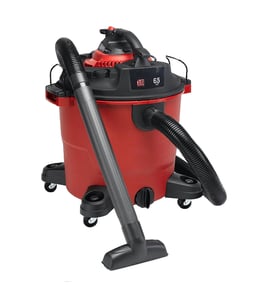
For the Craftsman model 113178770 16-gallon wet/dry vacuum, the parts list is organized by assemblies (motor head, tank, hose, and filtration) so you can match the exact component to what is broken or missing. Use the model number to ensure every replacement fits correctly.
Main assemblies you will see for Craftsman 113178770
- Motor head (lid) assembly: motor, fan/impeller, housing, and internal seals
- Power components: power cord, switch, cord strain relief, wiring terminals
- Filtration and wet pickup safety: cartridge or foam filter (by setup), filter cage/retainer, float and float cage
- Collection: tank (drum), latches, gaskets, drain cap (if equipped)
- Airflow and handling: hose, hose cuffs/adapters, inlet fitting, casters/wheels, handle
Common accessories (often listed separately)
- Extension wands
- Floor nozzle/squeegee tool
- Crevice tool
- Utility nozzle
Quick “parts-to-symptom” guide
| Symptom | Parts to check first | What usually fixes it |
|---|---|---|
| Weak suction | Filter, hose, lid gasket | Clean/replace filter, clear clog, replace cracked hose or seal |
| Won’t turn on | Cord, switch, motor | Replace damaged cord, replace switch, inspect motor connections |
| Water reaching motor head | Float/float cage, filter setup | Free stuck float, correct wet filter configuration |
| Dust blowing out | Filter, filter mount/seal | Reseat filter, replace torn filter, check gasket fit |
Why it matters
Wet/dry vacuums depend on airtight seals and correct filtration. A small air leak at the lid gasket or a clogged filter reduces performance quickly and can overheat the motor.
Helpful resource for getting the exact parts list
- Use how to find your appliance model number (and what it means for parts) to confirm you are using 113178770 before selecting diagrams and ordering parts.
Last updated: February 2026