Installation guide
 Owner’s manual
 Error Codes


How wide is a 24.6 cu ft refrigerator?
Most 24.6 cu ft side-by-side refrigerators are about 33 inches wide (typically 32 3/4 to 36 inches, depending on the brand and door design). For your Frigidaire FFHS2622MBC, confirm the exact cabinet and door-swing clearance requirements in the installation guide.
Typical width and what changes it
Even at the same capacity, width varies because of insulation thickness, door style, and dispenser hardware.
- Common width range: 32 3/4 to 36 inches
- Most common “standard” size: about 33 inches
- Door handles: can add noticeable overall width
- Door swing clearance: needs extra space beyond cabinet width
- Built-in look: requires side clearance for airflow and service
Installation clearances to plan for (FFHS2622MBC)
Your FFHS2622MBC installation guidance calls for clearances that affect the space you need around the refrigerator:
- Sides and top: 3/8 inch
- Rear: 1 inch
- Doors must fully open for full access to drawers and freezer baskets
- Leveling matters so doors close and seal correctly
Quick planning table
| What you are measuring | What to include | Why it matters |
|---|---|---|
| Cabinet opening width | Refrigerator width + side clearances | Prevents rubbing and improves airflow |
| “Overall” width | Cabinet width + handles (if applicable) | Ensures it fits through the final space |
| Usable access space | Door swing clearance | Lets bins and drawers slide out fully |
Why it matters
If the opening is too tight, doors may not open fully, gaskets may not seal well, and airflow can be restricted. That can lead to temperature swings, frost issues, and higher energy use.
Last updated: February 2026
Is Frigidaire Gallery high end?
Frigidaire Gallery is not a luxury, high-end line; it is a strong mid-range step up from basic Frigidaire models, with more features and a more premium look. If you are comparing options for a refrigerator like the Frigidaire FFHS2622MBC, Gallery typically sits below true premium lines.
How Frigidaire lines usually compare
We see Frigidaire positioned in tiers like this when shoppers compare features, finishes, and price:
- Frigidaire (base line): practical features, value-focused
- Frigidaire Gallery: upgraded styling and convenience features (mid-range)
- Frigidaire Professional: more premium design and performance (higher tier)
What “high end” means in real-world terms
“High end” usually refers to a combination of build materials, fit and finish, noise level, temperature stability, and specialty features.
- More precise temperature control and airflow management
- Quieter operation and better vibration control
- More robust interior components (bins, drawers, slides)
- Higher-end finishes and handles
- More advanced ice and water features
Quick comparison table
| Line | Typical market position | Best for |
|---|---|---|
| Frigidaire | Entry to value | Budget replacements, rentals, basics |
| Frigidaire Gallery | Mid-range | Feature upgrades without luxury pricing |
| Frigidaire Professional | Upper tier | Premium look and performance focus |
Why it matters
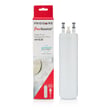
If you are deciding whether to repair or replace, knowing the tier helps set expectations for long-term value. For example, if your FFHS2622MBC needs ice or water system maintenance, replacing wear items like the refrigerator water filter WF3CB often restores performance at a much lower cost than upgrading to a higher-tier refrigerator.
Helpful next steps for your FFHS2622MBC
- Confirm your exact feature set and configuration in the FFHS2622MBC owner's manual
- Keep doors sealing well; worn gaskets can mimic “poor cooling” complaints
- Replace the water filter on schedule to protect flow and taste
- If ice production is weak, inspect the ice path and container for binding
Last updated: February 2026
What is the lifespan of a Frigidaire fridge?
Most Frigidaire refrigerators, including the FFHS2622MBC side-by-side, typically last 13 years with normal household use and basic maintenance (clean airflow areas, keep door seals tight, and use the correct water filter if equipped).
Typical lifespan and what affects it
A refrigerator’s life is mostly driven by compressor run time, airflow, and how well the doors seal.
- Heat and airflow: Dirty condenser areas and blocked toe grilles make the compressor work harder.
- Door seal condition: Leaky gaskets cause longer run times and moisture issues.
- Ice and water use: Heavy dispenser use and poor water quality can increase wear on valves and the ice maker.
- Temperature settings: Overly cold settings can increase run time and frost buildup.
- Maintenance habits: Regular cleaning and filter changes reduce strain on the cooling system.
Quick maintenance checklist for FFHS2622MBC
Use these habits to help your refrigerator reach its full service life:
- Keep the toe grille unblocked for proper air circulation.
- Confirm the refrigerator is level so doors close consistently.
- Replace the water filter on schedule using the correct part, such as the refrigerator water filter WF3CB.
- Inspect door sealing; if you see gaps, address the gasket (common cause of warm temps and sweating).
- If you have water connected, recheck for leaks at connections after installation and again about 24 hours later.
Lifespan expectations by component (typical)
These are common wear items that can shorten perceived “fridge life” even when the cabinet is still good.
| Component | Typical service life | What you notice when it’s failing |
|---|---|---|
| Compressor | 10 to 20 years | Warm fridge/freezer, long run times |
| Evaporator fan system | 8 to 15 years | Warm fresh food, noisy fan, uneven temps |
| Ice maker components | 5 to 10 years | No ice, small cubes, leaking or clumping |
| Door gaskets | 5 to 10 years | Frost, condensation, warm spots near doors |
Why it matters
Knowing the typical 13-year lifespan helps you decide whether to maintain, repair, or replace. Many “end of life” symptoms are actually fixable issues like airflow restrictions, a worn door gasket, or a clogged filter.
For operating and care details specific to your model, follow the FFHS2622MBC installation guide.
Last updated: February 2026
What is the most common problem with a Frigidaire refrigerator?
The most common problem we see on a Frigidaire side-by-side like model FFHS2622MBC is a cooling complaint (fresh food section too warm, freezer still cold). The usual causes are restricted airflow from a failed evaporator fan, dirty condenser area, or a defrost issue that lets frost build up and block air movement; check the FFHS2622MBC owner's manual for the normal operating checks and temperature guidance.
Most common symptoms and what they usually point to
- Refrigerator warm, freezer OK: evaporator fan not moving air, frost/ice blocking the evaporator, or an airflow damper issue
- Both sections warm: condenser airflow problem, sealed system/compressor issue, or control problem
- Frost buildup in freezer: defrost system problem (heater, thermostat, control) or door not sealing
- Ice maker or dispenser problems: water supply shutoff closed, filter not seated, air in the line, or ice maker component failure
- Temperature swings: sensor (thermistor) issue or control board issue
Quick checks we recommend first (no parts yet)
- Confirm the unit is level and the doors close and seal fully.
- Make sure the toe grille is not blocked; airflow is required for proper operation.
- If you have an ice maker/water dispenser, verify the household shutoff valve is fully open and check for leaks at connections (recheck again after 24 hours).
- Confirm the water filter is fully seated (many Frigidaire designs place it above the fresh food compartment).
- Listen for the evaporator fan; it should run when the compressor is running (door switch may need to be held closed to test).
Parts that commonly solve these problems on FFHS2622MBC
| Symptom | Common part to inspect/replace | Example part on this model page |
|---|---|---|
| Warm fresh food, freezer cold | Evaporator fan motor or fan blade | Refrigerator evaporator fan blade 5308000010 |
| Frost buildup, poor airflow | Defrost thermostat (bi-metal) | Refrigerator defrost bi-metal thermostat 5303918214 |
| Temperature not stable | Temperature sensor (thermistor) | Refrigerator temperature sensor 240597220 |
| Bad tasting/slow water, dispenser issues | Water filter | Refrigerator water filter WF3CB |
Why it matters
Cooling and airflow problems usually get worse over time; a warm fresh food section can lead to food spoilage, and frost buildup can strain the evaporator fan and reduce efficiency.
Last updated: February 2026