Installation guide
 Owner’s manual
 Error Codes



How to remove bottom grill from KitchenAid refrigerator?
On the KitchenAid KBRC36FMS02 bottom-mount built-in refrigerator, you remove the bottom grill (base grille) by taking out the screws at each end of the grille, then pulling the grille off the front of the cabinet. Reinstall by reversing the steps.
Steps to remove the base grille
- Turn the refrigerator OFF at the power switch or unplug it.
- Open the refrigerator door for easier access to the grille ends.
- Locate the screws at the left and right ends of the base grille.
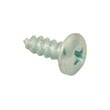
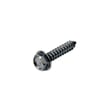
- Remove the end screws with a Phillips screwdriver.
- Pull the base grille straight off and set it on a soft surface.
- Reinstall the grille, then reinstall the end screws.
If your installation uses a two-piece base grille (grille + skirt)
The KBRC36FMS02 installation instructions describe a two-piece base grille setup for a custom fit: the base grille itself plus an optional skirt that extends to the floor.
- Measure the cabinet-to-floor distance before changing the skirt position.
- Note how the skirt overlaps the base grille so it goes back the same way.
- Refit the skirt to match your floor clearance, then reinstall the base grille.
| Part of the grille | Purpose | What you do |
|---|---|---|
| Base grille | Covers the lower opening and allows airflow | Remove end screws; pull straight off |
| Skirt (if used) | Extends coverage down to the floor | Adjust for height; reinstall with grille |
Why it matters
Removing the base grille gives you access for routine cleaning and service tasks, such as removing the defrost pan and keeping airflow paths clear for efficient cooling.
For the model-specific grille and skirt details, follow the KBRC36FMS02 installation guide. For cleaning steps that reference removing the base grille and defrost pan, use the KBRC36FMS02 owner’s manual.
Last updated: February 2026
What is the average lifespan of a KitchenAid refrigerator?
Most KitchenAid refrigerators last about 14 years on average; a typical overall range is 10 to 17 years with normal use and basic maintenance. For your KitchenAid KBRC36FMS02 built-in bottom-mount refrigerator, consistent cleaning, good airflow, and prompt repair of cooling or ice issues are what most often determine how long it runs reliably.
Typical lifespan ranges (what to expect)
Refrigerator life varies most by installation conditions (built-in airflow), door seal condition, and how hard the sealed system and fans have to work.
- Typical overall range: 10 to 17 years
- Common “good run” with maintenance: about 14 to 17 years
- Built-in units: often reach the higher end when ventilation and condenser cleaning are kept up
| Factor | Tends to shorten lifespan | Tends to extend lifespan |
|---|---|---|
| Airflow/venting | Tight enclosure, blocked grille | Clear vents, correct clearances |
| Condenser cleanliness | Dusty coils, pet hair buildup | Regular condenser cleaning |
| Door sealing | Torn/warped gaskets, doors not closing | Tight seal, doors aligned |
| Cooling system workload | Warm room, frequent door openings | Stable room temp, quick door use |
Maintenance that most improves longevity
These are the highest-impact steps we recommend for a KitchenAid built-in refrigerator like the KBRC36FMS02.
- Clean the condenser area and keep the machine compartment grille clear
- Keep doors closing fully; avoid overloading shelves and bins
- Replace the water filter on schedule if your model uses one (restricted flow can affect ice and water performance)
- Listen for fan noise changes; address them early to prevent overheating
- Keep freezer and fresh food temps in the recommended range (avoid “max cold” as a long-term setting)
Why it matters
A refrigerator usually fails early when heat cannot leave the cabinet efficiently (dirty condenser, poor airflow) or when air leaks force longer run times (door seal issues). Reducing run time and heat stress is the most reliable way to extend compressor and fan life.
Helpful model-specific resources
- Use the KBRC36FMS02 owner's manual for recommended temperature settings, cleaning guidance, and filter information.
- For built-in fit, airflow clearances, and installation checks, follow the KBRC36FMS02 installation guide.
Last updated: February 2026
What is the most common problem with KitchenAid refrigerators?
The most common issues we see with KitchenAid refrigerators like model KBRC36FMS02 are ice maker problems, cooling or temperature swings, and water leaks or frost buildup. These symptoms usually trace back to airflow problems (fans, baffles), water filtration or supply issues, or maintenance items like dirty condenser coils.
Most common symptoms and what they usually point to
- Ice maker not making ice: water supply issue, ice maker component failure, or temperature too warm
- Refrigerator not cooling evenly: evaporator airflow problem, sensor issue, or blocked vents
- Freezer too warm: poor airflow, door sealing issue, or condenser-side cooling problem
- Water leaking inside: clogged drain path, filter housing/cap issue, or water line connection problem
- Noisy operation: evaporator fan or condenser fan problems
Quick checks you can do first (before replacing parts)
- Confirm temperatures: set fresh food near 37°F and freezer near 0°F (typical targets).
- Check door closing and sealing: a small gap can cause frost and temperature swings.
- Clean condenser coils and grille area: restricted airflow commonly causes warm temps and long run times.
- Inspect the water line: during installation and service, make sure tubing is not kinked and the cord and lines are routed correctly (see the installation guide).
- Review model-specific operating details: use the owner's manual for control settings, filter guidance, and normal sounds.
Common parts that match these problems on KBRC36FMS02
| Symptom | Likely system | Example part for this model |
|---|---|---|
| Warm refrigerator, poor airflow | Evaporator airflow | Refrigerator evaporator fan motor W11671461 |
| Noisy inside, weak air movement | Evaporator fan | Refrigerator evaporator fan blade WP2169142 |
| Ice maker not working | Ice maker assembly | Refrigerator ice maker WPW10277450 |
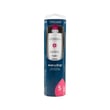
| Water taste/flow issues | Filtration | Refrigerator filter EDR5RXD1 |
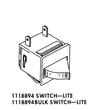
| Light stays off or acts up | Door switch | Refrigerator light switch W11384469 |
Why it matters
Ice production, stable temperatures, and leak-free operation all depend on steady airflow and correct water delivery. When a fan slows down, a sensor reads incorrectly, or a water line kinks, you can get multiple symptoms at once (warm temps, frost, noise, or leaks).
Last updated: February 2026
Why did my bottom freezer stop working?
If the freezer on your KitchenAid KBRC36FMS02 stopped working, the most common causes are loss of airflow (blocked vents or heavy frost), incorrect control settings, or a failed cooling component such as a fan motor or temperature sensor. Start with airflow and temperature checks before replacing parts; see the owner's manual.
Quick checks that fix many “not freezing” problems
- Confirm the freezer control is not set to OFF.
- Check for blocked air vents in the rear/top of the freezer and return vents; move packages away from vents.
- Set the freezer to the factory recommended 0°F (-18°C) and allow 24 hours to stabilize.
- Look for heavy frost on the freezer back wall (a defrost/airflow issue can stop cooling).
- Listen for fans: you should typically hear airflow from the evaporator area and air moving over the condenser.
What to check next (symptom-based)
| What you notice | Likely issue | What we recommend |
|---|---|---|
| Freezer warm, fridge also warming | Airflow blocked or fans not running | Clear vents; then inspect fan operation and wiring |
| Freezer warm, fridge seems closer to normal | Freezer airflow/evaporator issue | Check for frost buildup; verify evaporator fan is running |
| Unit seems to run but temps drift | Sensor/control problem | Test/replace the temperature sensor if out of range |
| No cooling and unusual silence | Power/control issue | Check breaker/fuse, outlet, and control settings |
Parts that commonly solve a “freezer stopped working” complaint
Only replace parts after basic checks (vents, settings, frost) point to a failure.
- If the freezer has poor airflow, the evaporator fan system is a common suspect; consider the refrigerator evaporator fan motor W11671461 and the refrigerator evaporator fan blade WP2169142.
- If temperatures are erratic or the unit runs too long, a failed sensor can misread compartment temperature; consider the refrigerator temperature sensor WP2188820.
- If the machine compartment is not moving warm air out, the condenser fan can be involved; consider the refrigerator condenser fan W10181323.
Why it matters
This model relies on air circulation between the refrigerator and freezer sections. When vents are blocked or a fan is not moving air, temperatures and moisture control suffer quickly, and the freezer can stop freezing even if the compressor is still running.
Last updated: February 2026