 Installation guide
 Owner’s manual
 Error Codes



What is the average lifespan of a Frigidaire dishwasher?
A Frigidaire dishwasher typically lasts 10 years on average. For your Frigidaire FGHD2433KW1, consistent cleaning, correct loading, and fixing small leaks or drain issues early are the biggest factors that help you reach (and often exceed) that 10-year mark. See the FGHD2433KW1 owner's manual for model-specific care and operating guidance.
What affects dishwasher lifespan most
- Water quality: hard water speeds up mineral buildup on the heater and inside the pump.
- How often you run it: multiple loads daily adds wear to the motor, pump, and door seals.
- Cleaning and maintenance: a clogged filter or spray arm forces longer run times and strains the wash system.
- Heat and drying performance: poor drying can point to heater or venting issues that also affect overall wear.
- Leaks: even small door or hose leaks can damage components over time.
Maintenance habits that add years
- Clean the filter regularly; replace it if it is damaged or won’t come clean (example part: dishwasher filter 5304532206).
- Keep the spray arms clear of debris and hard-water scale.
- Use the right detergent amount; too much can cause residue, too little can reduce cleaning.
- Run hot water at the sink before starting a cycle so the dishwasher fills with hotter water.
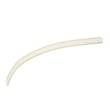
- Watch for early leak signs at the door and bottom edge; a worn seal is a common cause (example part: door gasket 809006501).
Quick “wear item” guide
| Item | What you’ll notice | Typical action |
|---|---|---|
| Filter | Grit, odor, poor cleaning | Clean; replace if damaged |
| Door gasket | Drips at the door corners or bottom | Inspect; replace if deformed |
| Drain hose | Standing water, slow drain | Check for kinks/clogs; replace if split |
| Heater | Poor drying, cooler wash | Check heating performance; replace if failed |
Why it matters
Most dishwasher “end of life” problems start as simple performance issues (not draining, not cleaning, leaking). Addressing those early protects high-cost components like the motor and pump, and helps your FGHD2433KW1 deliver reliable cycles longer.
Last updated: February 2026
Can I replace dishwasher parts myself?
Yes, for the Frigidaire FGHD2433KW1 dishwasher, we can replace many common parts ourselves if we shut off power and water first and follow the step-by-step procedures in the FGHD2433KW1 installation guide. For electrical wiring, door-spring adjustments, or leak-related repairs, plan extra time and use safe handling.
Good DIY repairs vs. better left to a pro
Usually DIY-friendly (basic tools, low risk):
- Cleaning or replacing a dishwasher filter (wash performance issues)
- Replacing a door seal such as the door gasket 809006501 (minor door-edge leaks)
- Replacing a spray arm (poor cleaning, low spray)
- Replacing a drain hose (slow drain, small leaks)
More advanced (higher risk, more disassembly):
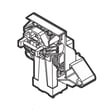
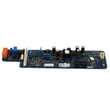
- Replacing the electronic control 5304514670 (no-start, dead keypad symptoms)
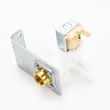
- Replacing the dishwasher water inlet valve 154637401 (not filling, weak fill)
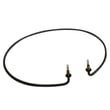
- Replacing the heater 154825001 (not drying, poor water heating)
Safety steps we follow first
- Turn off power at the breaker (not just the dishwasher controls).
- Shut off the water supply valve.
- Protect hands from sharp metal edges; wear gloves.
- Keep wiring, water, and drain lines routed away from the motor area.
- Confirm the dishwasher is secured so it cannot tip when the door opens.
Quick decision table
| What you’re doing | Skill level | Typical tools |
|---|---|---|
| Door gasket or filter | Beginner | Phillips screwdriver, towel |
| Drain hose | Intermediate | Pliers, clamp tool, bucket |
| Inlet valve or heater | Intermediate-advanced | Nut driver, pliers, multimeter |
| Control replacement | Advanced | Nut driver, labeling tape, multimeter |
Why it matters
Dishwashers combine electricity and water. Following the correct shutoff steps, routing rules, and anchoring requirements helps prevent shocks, leaks, and a dishwasher that tips forward when the door is opened.
Last updated: February 2026
What are the commonly replaced parts in a dishwasher?
In a Frigidaire FGHD2433KW1 dishwasher, the most commonly replaced parts are the wash and drain components (pump, drain hose), leak-prevention seals (door gasket), and heat and airflow parts (heater, vent). These items wear from normal use, clogs, and heat cycles.
Common parts that fail first
These are the parts we see replaced most often when a dishwasher won’t drain, leaks, won’t dry, or cleans poorly:
- Pump (circulation or drain function), especially if debris damages the impeller or the motor gets noisy
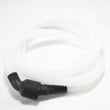
- Drain hose, when it kinks, cracks, or plugs with grease and food soil
- Door gasket and other seals, when they flatten, tear, or stop sealing evenly
- Water inlet valve, when the unit won’t fill or fills slowly
- Heater, when drying performance drops or water is not heating properly
- Filter and spray arm, when wash pressure is weak or dishes come out gritty
- Electronic control, when the dishwasher has power but won’t run or behaves erratically
Model-matched examples for FGHD2433KW1 include the pump A00126401, door gasket 809006501, and heater 154825001.
Quick symptom-to-part guide
| Symptom | Most likely parts to check | What to do first |
|---|---|---|
| Leaks at the door | Door gasket, splash shield gasket | Inspect for tears, gaps, and debris on the sealing surfaces |
| Not draining | Drain hose, pump | Check for kinks and clogs; confirm the hose routing is correct |
| Not cleaning well | Filter, spray arm, pump | Clean filter and spray arm holes; verify strong spray action |
| Not drying | Heater, vent assembly | Use heated dry options; confirm vent opens and closes freely |
| Won’t fill | Water inlet valve | Confirm water supply is on and inlet screen is not blocked |
Why it matters
Replacing the right part early prevents secondary damage. For example, a restricted drain hose can strain the pump, and a leaking door gasket can lead to water reaching wiring or the junction box area.
Installation and safety notes that affect “repeat failures”
A lot of repeat issues come from routing and securing problems during installation. The installation instructions for this model emphasize keeping drain, water, and electrical lines in the correct routed areas, avoiding crossing lines in front of the motor/frame, and securing the dishwasher so it does not tilt when the door opens. Use the FGHD2433KW1 installation guide for the correct connection locations and anchoring method.
Last updated: February 2026
What is the most common problem with a Frigidaire dishwasher?
The most common Frigidaire dishwasher problem is poor wash performance caused by restricted water flow inside the tub, usually from a dirty filter, a blocked spray arm, or a fill issue. On the FGHD2433KW1, drainage restrictions and door sealing issues are also frequent causes of complaints.
What to check first (fast, no-tools)
- Clean the filter area and remove any debris that can recirculate onto dishes.
- Spin the spray arm by hand and clear clogged holes (seeds, labels, glass).
- Confirm hot water is available at the sink before starting a cycle.
- Verify the door closes and latches firmly; a weak close can stop or interrupt cycles.
- Make sure the drain hose is not kinked or crushed behind the unit.
Common symptoms and the most likely causes
| Symptom | Most likely cause | Related part to consider |
|---|---|---|
| Dishes still dirty or gritty | Clogged filter or restricted spray | Dishwasher filter 5304532206 |
| Water left in bottom | Kinked/blocked drain path or drain hose routing | Drain hose 807117001 |
| Leaks at the bottom/front of door | Worn or mis-seated door seal | Door gasket 809006501 |
| Not drying well | Heater circuit issue or venting problem | Heater 154825001 |
Why these issues happen often
Dishwashers depend on steady fill pressure, unobstructed circulation, and a clear drain path. The installation instructions for this style of dishwasher call out that kinked water or drain hoses can cause problems, and that the unit performs best when properly leveled. Use the FGHD2433KW1 installation guide to confirm hose routing, leveling, and utility line placement.
When a part is the right next step
Replace parts after you have ruled out clogs, kinks, and loading issues. These parts commonly solve repeat problems:
- Dishwasher water inlet valve 154637401 if the tub is underfilling
- Pump A00126401 if circulation is weak or noisy after cleaning
- Vent assembly 5304523304 if moisture is trapped and drying is consistently poor
Last updated: February 2026





