 Installation guide
 Owner’s manual
 Error Codes


What is the most common problem with a GE dryer?
For the GE GTDP490ED2WS electric dryer, the most common problems we see are no heat or long dry times, and they are usually caused by restricted airflow (lint buildup or a clogged vent) or a failed heating circuit component such as the heating element or thermostats. Use the GTDP490ED2WS owner’s manual for cycle and care guidance.
Quick checks first (fastest fixes)
- Clean the lint screen before every load; also wash it with mild soap if you use dryer sheets.
- Confirm strong airflow at the outside vent hood while the dryer runs.
- Check the vent hose for kinks, crushing, or long runs with too many elbows.
- Avoid overloading; packed loads dry slowly even when the dryer is working correctly.
- Try a timed dry cycle to compare performance versus sensor/auto cycles.
Most common symptom-to-cause map
| Symptom | Most likely cause | What we recommend |
|---|---|---|
| Runs but no heat | Failed heating element or safety thermostat; sometimes a wiring/connection issue | Inspect the heater circuit; replace the failed component if testing confirms it |
| Takes too long to dry | Vent restriction or blower/airflow issue | Clean the entire vent path and confirm strong exhaust airflow |
| Won’t start | Door switch or start switch issue; power supply problem | Verify door latch engagement and test the start/door switch circuit |
Parts that commonly solve these issues on this model
Because GTDP490ED2WS is an electric dryer, heat complaints often lead to checking the heating element and thermostats. If the dryer will not start, the door and start switches are common suspects.
- Mica unit WE11M10001 (dryer heating element)
- Dryer high-limit thermostat WE4M137 (opens if the heater area overheats)
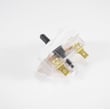
- Dryer door switch WE4M415 (prevents starting with the door open)
- Dryer push-to-start switch WE4M416 (start circuit switch)
Why it matters
Airflow problems do more than slow drying; they can overheat the heater housing and trip safety devices. Keeping the lint screen and venting clean helps the GTDP490ED2WS dry faster, run safer, and reduce repeat failures of heat-related parts.
Last updated: January 2026
How much does it cost to replace a heating element in a GE dryer?
For a GE GTDP490ED2WS electric dryer, the cost to replace the heating element is usually the price of the element plus labor; total repair cost commonly lands in the $200 to $400 range depending on service rates and whether other heat-safety parts also need replacement. Use the GTDP490ED2WS installation guide for access and wiring details.
What makes up the total cost
Typical heating repairs include more than just the element itself:
- Heating element part cost (model-specific)
- Service call or diagnostic fee
- Labor time (disassembly, testing, reassembly)
- Any additional heat-related parts found failed during testing
- Vent cleaning or airflow corrections (if overheating caused the failure)
Model-specific parts to consider for GTDP490ED2WS
This model’s compatible heating element options can vary by production run, so we recommend matching by model and diagram before ordering. These are heating-element related parts listed for GTDP490ED2WS:
- Mica unit WE11M10001 (heating element)
- Mica heater WE11X20397 (heating element)
- Dryer heating element bracket WE1M780 (mounting support)
Quick cost comparison table
| Scenario | What you pay for | Typical total |
|---|---|---|
| DIY element replacement | Part only (plus basic tools) | Lower cost |
| Pro replaces element | Part + labor + service call | Higher cost |
| “No heat” but not the element | Diagnosis + different part | Varies |
Before you buy an element: check the most common “no heat” causes
On electric dryers like the GE GTDP490ED2WS, a failed heating element is possible, but we often see these issues first:
- House power problem (dryer runs on 120V but won’t heat without full 240V)
- Blown thermal fuse or open safety thermostat
- Failed high-limit thermostat
- Restricted venting causing overheating and shutdown
A good next step is our electric dryer wont heat troubleshooting video.
Why it matters
Replacing the element without fixing an airflow restriction or a failed safety device can lead to repeat failures, longer dry times, and overheating. Verifying power and airflow first helps keep the repair cost under control.
Last updated: January 2026
What is the life expectancy of a GE dryer?
A GE electric dryer like model GTDP490ED2WS typically lasts about 10 years with normal household use. Regular airflow maintenance (lint screen and venting) and fixing wear items early can often push real-world service life into the low-to-mid teens.
What affects lifespan the most
- Vent restriction (long duct runs, crushed flex vent, clogged wall cap) increases heat and run time.
- Lint buildup inside the cabinet or blower housing stresses the motor and heater.
- Overloading accelerates wear on the drum support system and belt.
- High-heat cycles used constantly can shorten heater and thermostat life.
- Leveling and installation issues can increase vibration and bearing wear.
Maintenance that helps you reach (or beat) 10 years
Use the care and cleaning guidance in the GTDP490ED2WS use & care manual.
- Clean the lint screen every load.
- Check airflow at the outside vent hood; it should be strong and steady.
- Clean the full vent path periodically (more often with pets or heavy use).
- Do not run with a blocked lint screen; wash and dry the screen if fabric softener residue builds up.
- Keep the dryer level to reduce drum and bearing wear.
Common wear items vs. typical timing
These are normal service parts on many GE dryers; replacing them can be more cost-effective than replacing the whole dryer.
| What you notice | Likely wear area | Example compatible part for GTDP490ED2WS |
|---|---|---|
| Squealing, scraping, thumping | Drum support and friction surfaces | Dryer drum front glide pad WE03X37317 |
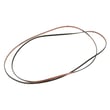
| Drum not turning, burning rubber smell | Belt or idler system | Dryer drum belt WE03X29897 |
| Long dry times, overheating symptoms | Airflow system (not always a part failure) | Use vent cleaning and airflow checks |
Why it matters
A dryer that is forced to run hot or run long to dry loads wears out faster and can also trip safety devices. Keeping airflow strong is the simplest way to protect major components like the drive motor, heating element, and thermostats.
Last updated: January 2026





