Owner’s manual
 View engine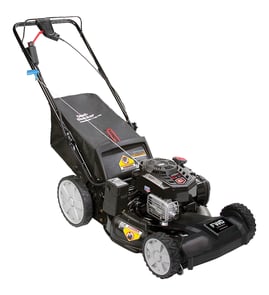


How many HP is a 200cc lawn mower?
A 200cc walk-behind mower engine typically produces about 5 to 7 HP (peak), depending on the engine design and RPM. For Husqvarna model 917384519, the manual focuses on operating specs (fuel, oil, torque) rather than listing horsepower; use the 917384519 owner’s manual to confirm the engine model and ratings.
What “200cc” means (and why HP varies)
Engine size (200cc) is displacement, not horsepower. Two 200cc engines can have different HP because of governor settings, compression, carburetion, and rated RPM.
- cc (displacement): cylinder volume; relates to torque potential
- HP: power output at a given RPM (varies by test method)
- Torque: often a better real-world indicator for mowing load
- Governor/RPM limit: many mower engines are tuned for durability and noise limits
Quick estimate table for walk-behind mower engines
These are typical ranges we see for 4-cycle walk-behind mower engines.
| Engine size | Typical HP range | Typical use |
|---|---|---|
| 140 to 160cc | 3.5 to 5.0 HP | small to medium lawns |
| 190 to 200cc | 5.0 to 7.0 HP | thicker grass, bagging |
| 210 to 223cc | 6.0 to 8.0 HP | heavy cutting, hills |
How to identify the engine and get the most accurate rating
We recommend matching by engine model and spec number (not just cc).
- Check the engine shroud for the engine model/spec label
- Use the mower’s model/serial decal location described in the 917384519 owner’s manual
- Compare the engine model to the manufacturer’s published rating (HP or torque)
- If you are troubleshooting performance, start with maintenance basics (fresh fuel, clean air filter, correct oil)
Why it matters
Horsepower is useful for comparison, but mowing performance depends just as much on blade condition, deck airflow, and keeping the engine at governed speed. A sharp blade and clean deck often improve cut quality more than chasing a higher HP number.
Last updated: January 2026
How much does a 21 inch gas lawn mower weigh?
Most 21-inch gas walk-behind mowers weigh about 60 to 90 lb. For the Husqvarna 917384519 specifically, the weight varies by configuration (self-propelled drive components, bagger, and deck style), so we use the typical 21-inch gas-mower range and confirm details in the 917384519 owner's manual.
Typical weight ranges (what to expect)
- Push (non self-propelled): 55 to 75 lb
- Self-propelled: 70 to 95 lb
- With bagger installed: add about 2 to 6 lb
- Steel deck vs. lighter decks: steel decks usually land toward the higher end
Quick estimate table
| Mower type | Typical 21-inch gas mower weight | Best use case |
|---|---|---|
| Push | 55 to 75 lb | Flat, smaller lawns |
| Self-propelled | 70 to 95 lb | Slopes, larger lawns |
| Self-propelled + bagging | 72 to 100 lb | Frequent bagging and cleanup |
How to confirm the weight for Husqvarna 917384519
We recommend checking the specification section and any carton or assembly notes in the manual, then verifying your mower’s setup.
- Look for Product specifications in the 917384519 owner's manual
- Note whether your mower is self-propelled (drive system adds weight)
- Check if you have accessories installed (grass bag, mulch door, side discharge parts)
- If you are moving or lifting it, drain fuel and remove the bag first
Why it matters
Weight affects how easy the mower is to maneuver, load into a vehicle, and store. It also helps when choosing ramps, lift-assist devices, and replacement wheels.
Last updated: January 2026
What gas do I put in my lawn mower?
For the Husqvarna 917384519 gas walk-behind mower, use unleaded regular gasoline; fuel with up to 10% ethanol (E10) is acceptable, and gasoline with more than 10% ethanol should not be used. For exact operating and fuel guidance, follow the 917384519 owner's manual.
Fuel recommendations we use for this mower
- Use fresh, clean unleaded regular fuel.
- Use E10 or less (up to 10% ethanol).
- Avoid E15/E85 and other higher-ethanol blends.
- Buy fuel in small quantities so it stays fresh.
- If the mower will sit 30 days or longer, plan for storage steps (below).
Storage and stale-fuel prevention (important for small engines)
Old fuel can cause hard starting and carburetor issues. For storage of 30 days or longer, we follow the manual’s approach:
- Empty the gas tank.
- Start the engine and let it run until the fuel lines and carburetor are empty.
- Refill with fresh gasoline next season.
- Do not add engine or carburetor cleaner products to the fuel tank.
Quick guide: what to use vs. avoid
| Fuel type | Use it? | Why |
|---|---|---|
| Unleaded regular (fresh) | Yes | Correct fuel type for normal operation |
| Up to 10% ethanol (E10) | Yes | Acceptable per the manual |
| More than 10% ethanol (E15/E85) | No | Can cause running problems and is not recommended |
| Old/stale gas | No | Common cause of no-start and rough running |
Why it matters
Using the right gasoline helps the mower start easier, run smoother, and reduces fuel-system problems caused by stale fuel, water contamination, or higher-ethanol blends.
Last updated: January 2026