Owner’s manual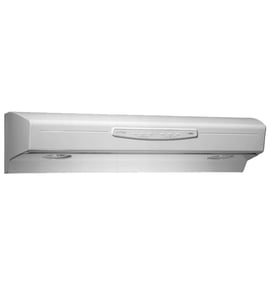

Is 36 inches too high for a range hood?
For Kenmore range hood model 23352303200, 36 inches is too high. Our installation guidance for this hood calls for mounting the bottom of the hood 24 to 30 inches above the cooking surface for best capture of smoke, steam, and grease.
Recommended mounting height for model 23352303200
We use the hood height range below when installing this specific model:
- Minimum: 24 inches above the cooking surface
- Maximum: 30 inches above the cooking surface
- Staying within this range improves capture and helps keep grease from building up on the blower and filters
- If the hood is mounted higher than 30 inches, performance drops because the fan has to pull air from farther away
For the exact mounting steps and diagrams, follow the owner's manual.
Quick height comparison
| Hood bottom height above cooktop | What to expect | What we recommend |
|---|---|---|
| 24 to 30 inches | Best capture and normal operation | Yes (target range) |
| 31 to 36 inches | Noticeably weaker capture, more smoke and grease escapes | No |
| Below 24 inches | Can interfere with cooking space and increase heat exposure | No |
If your hood is already at 36 inches
If cabinet or ceiling constraints pushed the hood higher, these steps help you get better results:
- Run the fan a few minutes before cooking and leave it on after cooking to clear lingering smoke
- Keep the grease filter clean; a clogged filter reduces airflow quickly
- Confirm the damper opens freely and the duct path is not restricted (tight bends and long runs reduce airflow)
- Use the correct ducting; this hood is intended to vent ducted air outdoors using steel ductwork
- If airflow is still poor, inspect the blower wheel and blower for grease buildup or damage
If you’re troubleshooting weak airflow or a fan problem, use our DIY guide: range hood fan not pulling much air.
Why it matters
Mounting height directly affects how well the hood captures cooking impurities. When the hood sits too high, smoke and grease spread into the kitchen before the blower can pull them into the filter and ducting, which increases odors, residue, and cleanup.
Last updated: February 2026
What is the life expectancy of a range hood?
Most range hoods last 15 years (typical range: 10 to 20 years). For the Kenmore 23352303200 range hood, regular grease-filter cleaning and correct bulb and fuse replacement practices help the blower motor run cooler and extend overall service life; see the 23352303200 owner's manual.
What affects how long a range hood lasts
- Grease filter maintenance: clogged filters restrict airflow and load the blower.
- Cooking frequency: daily frying and high-heat cooking shortens lifespan.
- Ducting and damper condition: poor venting increases heat and moisture exposure.
- Electrical health: loose connections, heat-damaged wiring, or repeated fuse blows reduce reliability.
- Cleaning habits: harsh chemicals left on finishes can damage surfaces over time.
Maintenance schedule we recommend
| Item | What to do | How often |
|---|---|---|
| Grease filters | Wash with warm detergent solution (dishwasher-safe) | Monthly (or more with heavy cooking) |
| Charcoal filter (recirculating setups) | Replace | Every 6 months |
| Halogen bulbs | Replace with Type T4, 12V, 20W (power off first) | As needed |
| Fuse | Replace with same type (5x20 mm, 4A, 125V) | Only if blown |
Signs it is near end-of-life (repair vs. replace)
- Fan runs but does not move much air even with clean filters
- Noisy blower that persists after cleaning and tightening
- Intermittent power (fan or lights cut in and out)
- Repeated fuse blowing after correct replacement
- Visible heat damage or heavy corrosion inside the hood
Parts that commonly restore performance
If the hood is otherwise in good shape, replacing a worn airflow or electrical component often adds years of use:
- Range hood grease filter SB08087294
- Range hood blower wheel assembly SB03295076
- Range hood blower assembly SB06001991
- Range hood power cord SB02300249
Why it matters
A range hood that is maintained and venting properly removes smoke, grease, and moisture more effectively. That protects cabinets and indoor air quality, and it reduces strain on the blower motor so the hood reaches its full expected lifespan.
You can order replacement parts from the parts list for model 23352303200, or search by model number on Sears PartsDirect.
Last updated: February 2026
What is the code for venting a range hood?
For the Kenmore 23352303200 range hood, the key code-driven requirement is that ducted fans must vent to the outdoors and, to reduce fire risk, you should use steel ductwork. Local building and mechanical codes set the final rules, but these two points are consistent safety requirements (see the owner's manual).
Core venting requirements (what inspectors look for)
Most jurisdictions base requirements on mechanical code plus fire safety standards. For a typical ducted range hood installation, expect these common requirements:
- Vent to the outdoors (not into an attic, crawl space, or wall cavity).
- Use smooth metal duct (steel is the safest standard for grease-laden air).
- Keep duct runs as short and straight as possible to maintain airflow.
- Seal duct joints with appropriate metal duct sealing methods (to prevent leaks and grease buildup).
- Provide makeup air when required by local code (often triggered by higher CFM systems).
- Follow electrical grounding and wiring rules for permanently installed appliances.
Clearances and placement (typical code range)
Your Kenmore 23352303200 installation guidance places the hood 24 to 30 inches above the cooking surface, which aligns with common clearance expectations.
| Item | Typical requirement | What to use for this model |
|---|---|---|
| Vent termination | Outdoors | Outdoors only (ducted) |
| Duct material | Smooth metal | Steel ductwork recommended for fire safety |
| Hood height above cooktop | 24 to 30 in (common) | 24 to 30 in per model guidance |
Why it matters
Proper venting controls grease, smoke, and moisture; it also reduces fire risk by keeping grease-laden air moving through safe duct material and out of the home instead of into concealed spaces.
Practical tips for passing inspection
- Match the duct size to the hood outlet and avoid reducing duct diameter.
- Minimize elbows; each turn reduces airflow and can increase noise.
- If you are switching between ducted and recirculating setups, follow the configuration steps and maintenance intervals in the owner's manual.
You can also order common replacement items that affect performance, such as the range hood grease filter SB08087294 or the range hood round damper, 6-in SB08088378, from the parts list for this model or search by model number on Sears PartsDirect.
Last updated: February 2026
What are common hood kitchen problems?
Common problems with the Kenmore 23352303200 range hood include a noisy fan, weak airflow, lights not working, a hood that will not turn on, and grease filters that are clogged or overdue for cleaning. Our 23352303200 owner's manual also highlights safe venting, proper mounting height, and routine filter maintenance.
Most common problems and what usually causes them
- Fan is loud or rattles: loose blower wheel, grease buildup, or a worn blower assembly
- Fan runs but airflow is weak: dirty grease filter, blocked duct, stuck damper, or incorrect venting
- Fan and lights do not work: power issue, wiring connection problem, or control failure
- Fan shuts off and restarts: motor thermal overload tripping from overheating (often from restricted airflow)
- Grease dripping or odors: filters not cleaned frequently enough; recirculation charcoal filter overdue
Quick checks we recommend first
- Confirm venting is correct: ducted hoods must vent outdoors; do not vent into walls, ceilings, attics, crawl spaces, or garages.
- Check mounting height: for best capture, the bottom of the hood should be 24 to 30 inches above the cooking surface.
- Clean the grease filter: wash with warm detergent solution; many grease filters are dishwasher safe.
- Inspect the damper: a stuck or missing damper can reduce airflow; see range hood round damper, 6-in SB08088378 if you need a replacement.
- Listen for blower issues: scraping, wobble, or vibration often points to a damaged wheel or blower; see range hood blower wheel assembly SB03295076 or range hood blower assembly SB06001991.
Symptoms, likely causes, and typical fixes
| Symptom | Likely cause | Typical fix |
|---|---|---|
| Loud fan | Loose wheel, grease buildup | Clean, tighten, replace wheel/blower |
| Weak suction | Clogged filter, blocked duct, damper stuck | Clean filter, clear duct, replace damper |
| Won’t turn on | No power, wiring issue | Check breaker, cord, connections |
| Shuts off then restarts | Motor overheating | Clean filters, improve venting |
Why it matters
A range hood that is dirty, poorly vented, or mounted too high will move less air, run hotter, and get noisier over time. Keeping filters clean and airflow unrestricted helps performance and reduces overheating shutdowns.
Parts and help for this model
You can order replacement parts for Kenmore 23352303200 from the parts list for this model, or search by model number on Sears PartsDirect.
Last updated: February 2026
What are the parts of a range hood called?
A range hood is typically made up of the hood body (canopy), a blower (fan and motor), controls, lights, filters, and the venting pieces that direct air out or recirculate it. For Kenmore model 23352303200, the included documentation also calls out the decorative flue and mounting hardware; see the 23352303200 owner's manual.
Common range hood part names (and what they do)
- Hood canopy (hood body): the main shell that captures smoke and grease
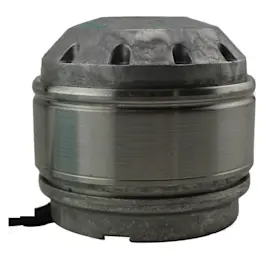
- Blower assembly: the fan and motor that move air (often includes a wheel)
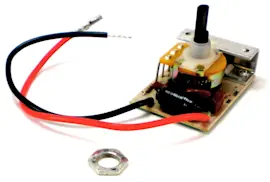
- Controls: switches or electronic controls for fan speed and lights
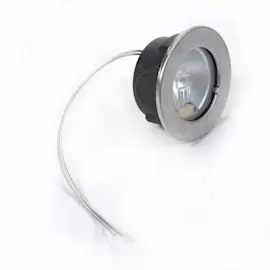
- Lights and sockets: illuminate the cooktop (this model uses halogen bulbs)
- Grease filter: traps grease before air reaches the blower and duct
- Damper and duct connection: helps prevent backdraft and connects to ductwork
Parts you will commonly see for model 23352303200
Here are examples of part names used for this Kenmore range hood model:
| Part name (common term) | What it affects | Example from this model’s parts list |
|---|---|---|
| Blower (fan/motor assembly) | Airflow, noise, fan not working | Range hood blower assembly SB06001991 |
| Grease filter | Grease capture, airflow restriction | Range hood grease filter SB08087294 |
| Damper (vent damper) | Backdraft, rattling, airflow | Range hood round damper, 6-in SB08088378 |
| Decorative flue (chimney cover) | Appearance, covers duct area | (listed in the manual as “decorative flue assembly”) |
Why the names matter when ordering parts
Using the correct part name helps match the symptom to the right component. For example, weak suction often points to a clogged grease filter or a stuck damper, while grinding or vibration often points to the blower wheel or blower assembly.
Quick tips before you shop or disassemble
- Shut off power at the breaker before servicing the hood.
- Confirm whether your hood is ducted or recirculating.
- Check for grease buildup on the filter and inside the canopy.
- If the fan is noisy, inspect the blower wheel area for rubbing or looseness.
- Use the model number 23352303200 when searching to avoid look-alike parts.
You can order replacement parts from the parts list for this model, or search by model number on Sears PartsDirect.
Last updated: February 2026