Owner’s manual
 Error Codes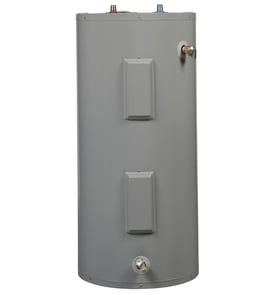



What is the average lifespan of an electric hot water heater?
Most electric tank water heaters last 10 to 15 years. For your American E1F6US015V electric water heater, lifespan depends most on water quality, sediment buildup, and maintenance such as periodic draining and anode-rod inspection (see the owner's manual).
Typical lifespan by type
| Water heater type | Typical lifespan | What usually ends it |
|---|---|---|
| Electric tank (standard) | 10 to 15 years | Tank corrosion, leaks, heavy sediment |
| Electric tankless | 20+ years | Scale damage, electronics failure |
What shortens (or extends) life the most
- Hard water and scale: accelerates element wear and sediment buildup.
- Sediment in the tank: causes popping/rumbling and can lead to premature tank failure.
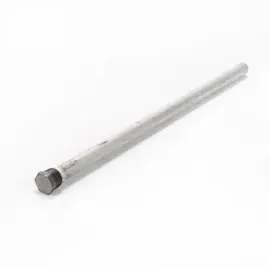
- Anode rod condition: the manual guidance is to inspect about every 3 years and replace if heavily depleted.
- Water softeners: softened water can be more corrosive to the tank.
- Thermostat settings and cycling: excessive heat and frequent recovery cycles add stress.
Signs it is near end of life
- Water around the base of the tank (active leak)
- Rusty or discolored hot water
- Hot water runs out faster than it used to
- Rumbling/crackling noises during heat-up (often sediment)
- Repeated trips of the high-limit reset or inconsistent temperatures
Maintenance that helps you reach the high end of the range
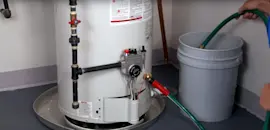
- Drain and flush the tank periodically to reduce sediment
- Inspect the anode rod on schedule and replace when needed
- Keep access panels closed and insulation in place after service
- If you see temperature problems, test/replace controls such as the top t-stat 100108424 when appropriate
Why it matters
Once an electric tank heater starts leaking, replacement is the practical fix. Staying ahead of sediment and anode-rod wear helps protect the tank itself, which is the part you cannot economically repair.
Last updated: February 2026
What is the average cost of a new electric hot water heater?
A new electric water heater typically costs about $600 to $3,500 for the unit; a common installed total for a standard tank model is about $1,100 to $2,500. For an American E1F6US015V electric water heater, the final price depends most on tank size, efficiency level, and installation labor.
What changes the price the most
- Tank size (small point-of-use vs. 40 to 80 gallon tanks)
- Type (standard electric tank vs. heat pump water heater)
- Electrical work (new breaker, wiring, 240V circuit, disconnect)
- Plumbing updates (shutoff valve, piping changes, expansion tank)
- Code and safety items (drain pan, seismic strapping where required)
- Disposal and access (tight closets, attic installs, haul-away)
Typical cost ranges (U.S.)
| What you’re buying | Typical unit cost | Typical installed total |
|---|---|---|
| Standard electric tank | $600 to $1,800 | $1,100 to $2,500 |
| Heat pump water heater | $1,500 to $3,500+ | $2,500 to $6,000+ |
How to estimate your installed total quickly
- Start with the unit price for the size and efficiency you want.
- Add labor (higher if the heater is hard to access or needs replumbing).
- Add electrical upgrades if the circuit, breaker, or wiring must be changed.
- Add required safety parts (for example, a working T&P relief valve).
Why it matters
Electric water heater pricing swings widely because installation conditions vary. Even when the tank price is similar, electrical and plumbing updates can add a large share of the total, especially when bringing an older setup up to current code.
For model-specific installation and safety guidance, follow the owner's manual.
Last updated: February 2026
What is usually the most common water heater problem?
The most common water heater problem is no hot water or not enough hot water, usually caused by a failed heating element, a thermostat issue, or power supply problems. On the American E1F6US015V electric water heater, start with basic electrical checks, then test the thermostats and elements per the owner's manual.
Quick checks first (fastest to rule out)
- Confirm the breaker is on and the water heater has power.
- Press the red reset button (high-limit) if it has tripped.
- Make sure the tank is completely full of water before energizing the heater.
- Check for fluctuating temperatures after short hot-water draws (stacking can make outlet water hotter).
- Listen for popping or rumbling; sediment buildup can reduce heating and cause noise.
Most common causes and what they look like
| Symptom | Most likely cause | What to check next |
|---|---|---|
| No hot water | Tripped high-limit, failed thermostat, failed element | Reset button, thermostat continuity, element continuity |
| Not enough hot water | One element out (on dual-element units), thermostat out of calibration, sediment | Test both elements, verify thermostat setting, flush tank |
| Water too hot | Thermostat stuck or set too high, stacking | Lower setting, test thermostat operation |
| Dripping from discharge pipe | Temperature/pressure relief valve opening | Verify discharge line routing; inspect valve |
Parts that commonly fix “no hot water”
If testing points to a failed control or heater, these model-specific parts are common replacements:
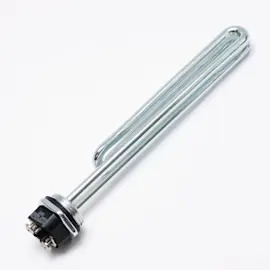
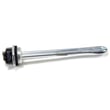
- Element 100110052 (heating element)
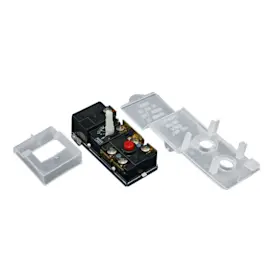
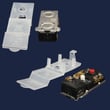
- Top t-stat 100108424 (upper thermostat)
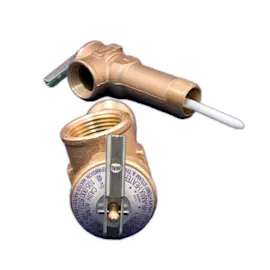
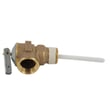
- T&p valve 100108279 (temperature and pressure relief valve)
Why it matters
Loss of hot water is usually a repairable issue, but ignoring it can lead to overheating trips, heavy sediment that shortens tank life, or nuisance relief-valve discharge. The manual also notes that sediment buildup can cause noise and premature tank failure, so routine draining and flushing helps prevent repeat problems.
Helpful troubleshooting resource
For models that display diagnostics, we use the American electric water heater error codes guide to match the code to the most likely failed part or condition.
Last updated: February 2026
Are water heater parts interchangeable?
Some water heater parts are interchangeable, but only when the replacement matches your exact American E1F6US015V specifications (voltage, wattage, mounting style, and safety ratings). For this model, we recommend matching by model number and using the parts list and wiring/temperature guidance in the owner's manual.
What is usually interchangeable (and what is not)
Many electric water heater parts look similar across brands and tank sizes, but small differences can cause poor performance or unsafe operation.
- Sometimes interchangeable (when specs match): heating elements, thermostats, wiring covers, and some fittings
- Often not interchangeable: temperature and pressure relief valves (T&P), thermostats with different high-limit designs, and elements with different wattage or thread style
- Never “universal” in practice: any safety control or electrical component that does not match the original ratings
Model-specific examples for E1F6US015V
These parts are listed for your American E1F6US015V; using the exact match avoids wiring and temperature-control issues.
- Top t-stat 100108424 (upper thermostat/high-limit control function)
- Element 100110052 (heating element)
- T&p valve 100108279 (temperature and pressure relief valve)
Quick compatibility checklist
| Part type | Must match | Why it matters |
|---|---|---|
| Heating element | Voltage and wattage; thread/mount style | Wrong rating can overheat wiring or underheat water |
| Thermostat | Control type; high-limit reset style | Incorrect control can cause temperature swings or nuisance trips |
| T&P relief valve | Pressure/temperature rating; approved type | It is a primary safety device |
Why it matters
Your manual warns not to tamper with thermostats, heating elements, electrical connections, or the T&P relief valve; these are safety-critical parts. It also notes that applying power before the tank is full can destroy elements, so correct parts and correct installation steps both protect the heater.
Best practice when choosing a replacement part
- Match parts by model number E1F6US015V first
- Confirm electrical ratings (volts/watts) before buying an element
- Confirm safety ratings before replacing a T&P valve
- Follow the wiring and temperature-setting guidance in the owner's manual
Last updated: February 2026
What is the cost to replace a 50 gallon electric water heater?
Replacing a 50-gallon electric water heater typically costs $800 to $2,500 installed (tank plus professional labor). Your American E1F6US015V is a smaller point-of-use style unit, so use this range only for true 50-gallon replacements; confirm your current heater’s size and electrical specs in the owner's manual.
Typical installed cost ranges
Costs vary most by access, code upgrades, and whether it is a like-for-like swap.
- Basic 50-gallon tank vs. higher-efficiency model
- Labor time (tight closet, attic, crawlspace)
- Electrical updates (breaker, wiring, disconnect)
- Plumbing updates (shutoff valve, connectors, piping)
- Code items (drain pan, expansion tank, strapping where required)
- Permit and haul-away/disposal fees
| Scenario | Typical installed range | What’s usually included |
|---|---|---|
| Like-for-like swap, easy access | $800 to $1,500 | Remove old unit, set new tank, reconnect water and power |
| Standard replacement with minor updates | $1,200 to $2,300 | New fittings, small plumbing or electrical corrections |
| Complex replacement or upgrades | $2,000 to $2,500+ | Significant code updates, difficult access, added components |
If you are replacing due to “no hot water” or slow recovery
On many electric water heaters, repair is often cheaper than replacement when the tank is not leaking. Common fixes include a failed thermostat, a burned-out heating element, or a leaking relief valve.
- Thermostat issues: consider the top t-stat 100108424
- Heating problems: consider the element 100110052
- Relief valve leaking or not reseating: consider the t&p valve 100108279
Why it matters
A correct like-for-like replacement (proper voltage, wattage, and connections) prevents repeat labor costs and avoids damage. For example, energizing elements before the tank is full can destroy a new heating element.
Last updated: February 2026