Installation guide
 Owner’s manual
 Error Codes




How to replace KitchenAid oven temperature sensor?
To replace the oven temperature sensor in your KitchenAid KODE900HSS00 electric wall oven, we shut off power, remove the sensor mounting screws inside the oven cavity, pull the sensor forward to access the connector, swap in the new sensor, then reinstall and restore power. Use the KODE900HSS00 owner’s manual for safety and access guidance.
Before you start (safety and prep)
- Turn off the breaker to the wall oven (do not rely on the control panel OFF).
- Let the oven cool completely.
- Protect the oven cavity floor with a towel to prevent scratches.
- Use a #2 Phillips or Torx driver (fastener type varies by revision).
- If the oven is installed in a cabinet, follow the KODE900HSS00 installation guide for safe handling and removal practices.
Step-by-step: replacing the temperature sensor
- Disconnect power at the breaker.
- Locate the sensor inside the oven cavity (typically on the rear wall, upper area).
- Remove the mounting screws holding the sensor to the liner.
- Gently pull the sensor toward you a few inches to expose the wire connector.
- Disconnect the plug (do not pull on the wires).
- Connect the new sensor, tuck excess wire back through the opening, and re-seat the sensor.
- Reinstall screws, restore power, and test Bake.
Quick troubleshooting if the oven still heats wrong
- If the display shows an error after replacement, power-cycle at the breaker for 1 minute.
- Check the connector is fully seated and not pinched.
- Inspect wiring for heat damage; a harness issue can mimic a bad sensor.
- If the oven overheats, a control or safety device can be involved (not just the sensor).
| Symptom | Most common cause | What we do next |
|---|---|---|
| Oven too hot or too cool | Sensor out of range or loose connection | Reseat connector; replace sensor |
| No heat and error code | Wiring/connector issue | Inspect wiring; test continuity |
| Overheats then shuts down | Safety device opening | Check airflow and related safety components |
Why it matters
A failing temperature sensor can make the KODE900HSS00 bake unevenly, overcook food, or trigger error codes. Replacing it restores accurate temperature feedback to the electronic control.
Last updated: February 2026
How to reset a KitchenAid wall oven?
To reset your KitchenAid KODE900HSS00 electric wall oven, restore power by turning the breaker OFF, then back ON; the display will go blank and reboot. If you need a deeper reset, use the on-screen option to reset to factory defaults (the Welcome Guide will reappear).
Quick reset (power cycle)
- Turn the oven off.
- Switch the circuit breaker for the oven to OFF.
- Wait 1 minute.
- Switch the breaker back to ON.
- Confirm the display restarts and the control responds.
Factory-default reset (when settings or Wi-Fi need a full restart)
A factory reset is useful when the control is acting glitchy, the clock settings are corrupted, or you want to restart app setup.
- Open the oven’s settings menu on the touchscreen.
- Choose the option to reset to factory defaults.
- Follow the on-screen Welcome Guide prompts (language, Wi-Fi, time/date, display preferences).
For the exact menu path and prompts, follow the steps in the KODE900HSS00 owner’s manual.
If the oven still will not respond after a reset
These checks solve most “frozen display” or “won’t start” complaints after power is restored:
- Make sure Control Lock is not enabled (it disables keypads).
- Touch CANCEL/OFF to exit any active mode.
- If a timer is running, cancel it from the Kitchen Timer screen.
- Verify the breaker is fully seated (some breakers look ON when they are tripped).
- If the oven overheated recently, allow it to cool; a safety device can interrupt heating until temperatures drop.
What to expect after each reset
| Reset type | What it changes | What you will see |
|---|---|---|
| Power cycle | Reboots the control | Display goes blank, then restarts |
| Factory defaults | Clears customized settings and restarts setup | Welcome Guide appears; time/date and Wi-Fi setup prompts |
Why it matters
A reset clears temporary control glitches and restores normal keypad response without replacing parts. If resets do not help and heating is still inconsistent, testing components such as the range high-limit thermostat WP4449751 becomes the next logical step.
Last updated: February 2026
What are the parts of an electric oven?
An electric oven like the KitchenAid KODE900HSS00 is built around heating elements, controls, airflow, and safety parts that work together to bake and broil evenly. Your model’s key features include an electronic oven control, hidden bake element, broil elements, convection element and fan, oven vent, lights, gasket, and door lock system (see the KODE900HSS00 owner’s manual).
Main parts you’ll find in an electric wall oven
Common components (including those called out for KODE900HSS00) include:
- Bake system: hidden bake element under the oven floor panel
- Broil system: broil elements at the top of the cavity
- Convection system: convection element and fan in the back panel
- Controls: electronic oven control (touch panel/control board interface)
- Door and sealing: door, gasket, and door lock latch (self-clean safety)
- Airflow: oven vent to exhaust heat and moisture
- Lighting: oven lights and an automatic oven light switch
Parts you may replace most often
These are frequent service items for electric ovens, and they match common symptoms like “not heating,” “uneven baking,” or “fan not running”:
- Range bake element W11545804 (no/weak baking heat)
- Wall oven convection element W11678579 (convection bake issues)
- Convection f W10860984 (fan noise, no convection airflow)
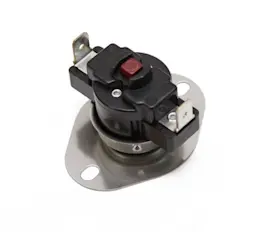
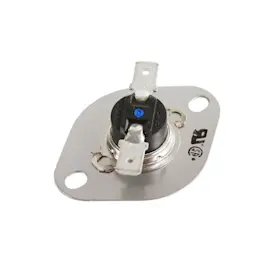
- Range high-limit thermostat WP4449751 (overheat protection trips, heat cuts out)
- Range oven rack WPW10554526 (bent rack, poor fit, hard sliding)
Quick “part to symptom” guide
| Symptom | Most likely area | What to check first |
|---|---|---|
| Oven will not bake | Bake heating circuit | Bake element for visible damage; wiring connections |
| Broil works, bake doesn’t | Bake element | Element continuity with a meter |
| Uneven baking in convection | Convection fan/element | Fan operation; convection element heating |
| Oven shuts off or overheats | Safety/temperature control | High-limit thermostat; airflow at vent |
Why it matters
Knowing the major oven parts helps you troubleshoot faster, order the correct KitchenAid replacement part, and avoid replacing the control when the real issue is a heating element, fan, or safety thermostat.
Last updated: February 2026
What is the life expectancy of a KitchenAid wall oven?
A KitchenAid electric wall oven like model KODE900HSS00 lasts 15 years with normal household use. Consistent cleaning, good airflow around the cabinet cutout, and avoiding unnecessary high-heat cycles help the heating elements and electronic controls reach that full service life.
Typical lifespan and what affects it
Most electric wall ovens land in a predictable range; the biggest variables are heat exposure and how hard the oven is worked.
- Normal home use: about 15 years
- Heavy use (daily high-heat cooking): often shorter due to faster wear on elements and controls
- Light use: can run longer if seals, cooling airflow, and wiring stay in good shape
- Self-clean frequency: frequent self-cleaning adds extreme heat stress to wiring and control components
- Maintenance habits: prompt spill cleanup reduces corrosion and odor issues
What usually fails first (and what it means)
These are common wear items in electric wall ovens and the symptoms you will notice.
| Component area | Common symptom | Typical fix type |
|---|---|---|
| Bake heating circuit | Slow preheat, uneven baking | Replace bake element or repair wiring |
| Convection system | No fan, poor roasting results | Replace convection fan or element |
| Temperature safety | Oven shuts down or overheats | Test/replace thermostat or sensor |
| Door sealing | Heat leaks, longer cook times | Replace gasket or adjust door |
For KODE900HSS00, the manual also outlines warranty coverage periods for certain components (including electric elements and solid state touch control system parts); see the KODE900HSS00 owner’s manual.
Quick checks that help you decide repair vs. replace
We use these checkpoints because they tie directly to cost, safety, and performance.
- If preheat is weak or baking is uneven, inspect the bake element; consider the range bake element W11545804.
- If the oven trips off after heating, check for overheating and airflow restrictions; a failed range high-limit thermostat WP4449751 is a common cause.
- If the convection mode is poor, verify the fan runs and is not noisy; the convection f W10860984 is a common replacement.
- If the door does not close tightly, check hinges and seals before assuming a control problem.
- If you see heat damage or brittle wiring, follow safe electrical testing practices before replacing parts.
Why it matters
Knowing the 15-year life expectancy helps set a practical repair budget. A single part replacement (element, thermostat, rack) often restores performance, while repeated control or wiring issues near end-of-life usually signal it is time to plan for replacement.
Last updated: February 2026