Owner’s manual
 Error Codes



Do all Samsung refrigerators take the same filter?
No. Samsung refrigerators do not all use the same water filter; filter style and fit depend on the exact refrigerator model and the filter mounting design. For your Samsung RF28K9380SG, we recommend confirming the correct filter type and replacement steps in the RF28K9380SG owner's manual.
Use these quick checks to match the correct Samsung filter:
- Match by model number (use the full model RF28K9380SG from the rating label inside the fresh food section)
- Check the part number printed on the current filter (if one is installed)
- Confirm the filter location (inside the fresh food compartment, in the base grille, or an external inline filter)
- Compare the locking style (twist-in, push-in, or quarter-turn)
- If a new filter will not seat fully, recheck alignment and remove any protective caps or seals
Samsung uses multiple filter families across French door, side-by-side, and bottom-mount designs. Even when two filters look similar, the tabs, O-ring position, and bypass valve engagement can differ.
| What to compare | Why it matters | What you’ll notice |
|---|---|---|
| Mounting style | Prevents leaks and bypass | Filter will not lock or will pop out |
| Length and diameter | Ensures full seating | Filter stops short or won’t turn |
| O-ring placement | Prevents drips | Slow leak at the filter head |
| Flow path/bypass | Protects dispenser/ice maker flow | Low water flow or no dispense |
Using the correct filter helps protect water taste, dispenser flow, and ice maker performance. A mismatched filter can cause leaks, low flow, or a filter that will not lock into the housing.
If you are also troubleshooting water dispensing or ice production, our guide how to replace the water filter in a Samsung refrigerator covers common filter locations, replacement tips, and what to do when flow is slow after a filter change.
Last updated: February 2026
Why does my Samsung refrigerator keep freezing up?
On the Samsung RF28K9380SG, repeated frost or ice buildup usually happens when warm, humid air keeps getting into the refrigerator or when airflow and defrost performance are reduced. Fixing door sealing, airflow, and temperature settings stops most “freezing up” problems.
- Door not sealing: food packages, bins, or a misaligned door can prevent a tight close.
- Dirty or warped door gasket: gaps pull in humid air that turns into frost.
- Air vents blocked: items pushed against vents restrict circulation and create cold spots.
- Temperature set too cold: can cause items to freeze and increase frost risk.
- Fan or sensor issue: weak airflow or incorrect temperature feedback can lead to icing.
- Inspect and clean the door gasket with warm water and mild dish soap; dry it fully.
- Confirm the doors close on their own and sit flush; remove anything that interferes.
- Clear airflow paths: keep items a few inches away from interior vents and the back wall.
- Set temperatures to typical targets:
- Fresh food: 37°F to 40°F
- Freezer: 0°F to 5°F
- If you hear unusual fan noise or cooling is uneven, follow the checks in the RF28K9380SG manual.
If the basics above do not solve it, these model-matched parts are often involved:
| Symptom you see | Likely system | Example part for RF28K9380SG |
|---|---|---|
| Frost on back wall, weak airflow | Evaporator airflow | Refrigerator evaporator fan motor (DA31-00287B) |
| Temps swing, icing comes and goes | Temperature sensing | Refrigerator temperature sensor (DA32-10104N) |
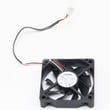
| Warm cabinet, heavy run time, odd noises | Condenser airflow | Refrigerator condenser fan motor assembly (DA97-15765A) |
Frost buildup acts like insulation on coils and air passages; that reduces cooling efficiency, causes temperature swings, and can lead to food freezing in the fresh-food section.
Last updated: February 2026
What is the most common problem with Samsung refrigerators?
The most common problem we see with Samsung refrigerators (including the Samsung RF28K9380SG) is a cooling complaint caused by airflow restrictions, often from frost or ice buildup around the evaporator area. Ice maker performance issues and water dispensing problems are also frequent, especially when temperatures or water supply are not ideal.
- Fresh food section is warm but the freezer seems OK
- Frost or ice buildup on the back wall inside the refrigerator
- Fan noise, rattling, or a “whooshing” sound that comes and goes
- Ice maker stops producing ice or makes small, hollow cubes
- Water dispenser flow is slow or intermittent
Many “not cooling” calls come down to a few systems that work together: defrost, airflow, and temperature sensing.
| Symptom | Most likely area to check | Example parts for RF28K9380SG |
|---|---|---|
| Warm refrigerator, freezer OK | Evaporator fan and frost buildup | Refrigerator evaporator fan motor DA31-00287B, refrigerator temperature sensor DA32-10104N |
| Poor ice production | Ice maker compartment airflow and ice path | Refrigerator ice container DA97-14474A |
| No water or slow water | Household supply, valve, filter housing | Refrigerator water inlet valve DA62-04027A, refrigerator water filter housing assembly DA97-16166B |
- Confirm the temperature settings and give the unit 24 hours to stabilize after any change.
- Make sure vents inside the refrigerator are not blocked by food packages.
- Look for heavy frost on the rear interior panel (a strong clue of a defrost or airflow issue).
- Verify the water supply valve to the refrigerator is fully open and the water line is not kinked.
- If the ice maker is the issue, follow the step-by-step checks in why your Samsung fridge stopped making ice and how to fix it.
When airflow is restricted, the refrigerator compartment warms up even though the compressor and sealed system may be running normally. Catching frost buildup, a weak fan, or a bad sensor early helps prevent food spoilage and reduces strain on the compressor.
For model-specific operating tips, error displays, and care guidance, use the RF28K9380SG owner's manual.
Last updated: February 2026
What is the difference between force defrost RD and FD?
On Samsung refrigerator model RF28K9380SG, RD and FD are forced-defrost selections shown in service/diagnostic mode; RD runs a defrost focused on the refrigerator (fresh food) cooling section, while FD runs a full forced defrost that targets both cooling sections to clear broader frost and restore airflow.
| Display option | What it defrosts | Best used for |
|---|---|---|
| RD | Fresh food (refrigerator) evaporator area | Fresh food warming from frost blocking airflow behind the rear panel |
| FD | Full forced defrost (refrigerator plus freezer) | Heavy frost affecting multiple sections, repeated icing, or after service work |
- Pick RD when the freezer is holding temperature but the fresh food section is warming.
- Pick FD when both sections show airflow problems (weak vent flow, widespread frost, temperature swings).
- If ice production is poor and you see frost around the ice room or fan cover, FD is the better first step.
- If frost returns quickly after either mode, treat it as a root-cause issue (door sealing, airflow blockage, or a defrost-system problem).
Use the exact button sequence and exit procedure listed in the RF28K9380SG manual. After the cycle:
- Confirm the evaporator fan sound returns and air is moving at the vents.
- Check for water under drawers and wipe up meltwater.
- Verify doors seal tightly and gaskets are clean.
- Watch temperatures for the next 6 to 12 hours for a steady pull-down.
RD helps you correct fresh-food icing without unnecessarily warming the freezer; FD clears system-wide frost so you can restore normal airflow and cooling faster when icing is widespread.
For ice-maker symptoms that often go with frost and airflow issues, use why your Samsung fridge stopped making ice and how to fix it.
Last updated: February 2026