
Does KitchenAid sell replacement parts?
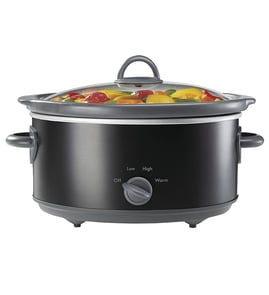
Yes. KitchenAid replacement parts are sold for appliances like the KitchenAid KSC700SS0 slow cooker; the key is matching the part to your exact model number so it fits and functions correctly. We use your model number to help you find compatible parts and diagrams on Sears PartsDirect.
What you can replace on a slow cooker
Common replaceable items for slow cookers like the KSC700SS0 include:
- Glass lid (or lid handle/knob, if it is a separate piece)
- Ceramic crock/insert
- Power cord (on some designs)
- Control knob or switch components (model-dependent)
- Feet or base components
- Fasteners and small hardware (model-dependent)
How to make sure you get the right part
Because slow cooker parts vary by revision, color, and electrical design, we recommend confirming these details before ordering:
- Exact model number: KSC700SS0
- Part description: lid vs. crock vs. base component
- Finish/color: stainless vs. black vs. other
- Electrical rating match: voltage and wattage should match the original (when applicable)
Quick compatibility checklist
| What to check | Why it matters | What to match |
|---|---|---|
| Model number | Prevents fit issues | KSC700SS0 exactly |
| Part type | Avoids ordering the wrong assembly | Lid, crock, cord, control |
| Color/finish | Keeps appearance consistent | Same finish as original |
| Electrical specs | Prevents overheating or no-heat issues | Same rating as original |
Why it matters
Using the correct KitchenAid-compatible part helps your slow cooker heat properly, maintain safe temperatures, and keep the lid and crock fitting tightly for consistent cooking results.
Last updated: February 2026
Is 4 hours on high the same as 8 hours on low in a slow cooker?
Yes. For a KitchenAid slow cooker like model KSC700SS0, 4 hours on HIGH is typically equivalent to about 8 hours on LOW because both settings are designed to reach a safe simmering temperature; HIGH simply gets there faster.
What “equivalent” really means
Both settings aim for a similar final cooking temperature; the difference is how quickly the food heats up and how long it stays at a gentle simmer.
- HIGH: faster heat-up, shorter total cook time
- LOW: slower heat-up, longer time at a gentle simmer
- Texture impact: LOW usually breaks down collagen longer, so tough cuts get more tender
- Moisture impact: HIGH can dry lean meats sooner if the lid is opened often
- Recipe reliability: LOW is more forgiving if timing is flexible
Best conversion guide (practical)
Use this as your baseline when converting recipes for KSC700SS0-STYLE slow cookers.
| If a recipe says | Cook about this long instead | Best for |
|---|---|---|
| 8 hours LOW | 4 hours HIGH | Weeknight timing, soups, chili |
| 6 hours LOW | 3 to 4 hours HIGH | Chicken thighs, stews |
| 4 hours LOW | 2 hours HIGH | Hot dips, softer vegetables |
When you should not swap HIGH for LOW
Even if the time conversion is close, results can change depending on ingredients.
- Large roasts (more even results on LOW)
- Very lean meats (HIGH can overcook the edges)
- Dairy-heavy recipes (add dairy near the end on either setting)
- Delicate vegetables (they can turn mushy on long LOW cooks)
Why it matters (food quality and safety)
The goal is steady, covered simmering so food heats through safely and cooks evenly. LOW gives more time for connective tissue to soften and flavors to blend; HIGH is best when you need dinner sooner and the recipe is built for it.
Parts and care tip
If your cook times suddenly seem “off” (too hot, not hot enough, or inconsistent), check for simple issues first: a warped lid, damaged cord, or a loose temperature control can change performance. For model-specific replacement options, search by model number on Sears PartsDirect.
Last updated: February 2026
What are the parts of a slow cooker?
A KitchenAid slow cooker like model KSC700SS0 is built around three core pieces: the base (housing the heater and controls), the removable cooking vessel (crock/insert), and the lid. Many units also include a temperature knob or control panel, handles, and feet for stability.
Main slow cooker components (what each part does)
- Base housing: Holds the heating system and supports the crock.
- Heating element or heater band: Provides steady, low heat around the crock.
- Temperature control (dial or electronic board): Sets Low, High, Warm, or timed modes.
- Cooking vessel (ceramic stoneware or metal insert): Holds food and transfers heat evenly.
- Lid (glass or metal): Traps heat and moisture to maintain a stable cooking temperature.
- Power cord and internal wiring: Delivers power to the heater and controls.
Quick reference table
| Part | Common names | What you notice when it fails |
|---|---|---|
| Base housing | base, body | unit will not power on, unstable, cracked housing |
| Heating system | heating element, heater band | heats too slowly, no heat, uneven heating |
| Control system | temperature knob, switch, control board | wrong temperature, won’t change settings |
| Cooking vessel | crock, insert, pot | cracks, chips, leaks, poor heat transfer |
| Lid | cover | excessive evaporation, longer cook times |
Why it matters
Knowing the major parts helps you troubleshoot faster. For example, “no heat” usually points to the heating system, wiring, or control; “food drying out” often points to lid fit or frequent lifting.
Parts lookup tips for KSC700SS0
- Match the model number KSC700SS0 exactly when searching.
- Identify whether you need a base/control part or a crock/lid accessory.
- If the unit is dead, check the outlet first, then inspect the cord for damage.
- For electrical checks, use safe testing practices and the right tools.
For the best match, start with the model parts list and diagrams, or search by model on Sears PartsDirect.
Last updated: February 2026
What to avoid when using a slow cooker?
For your KitchenAid KSC700SS0 slow cooker, avoid common slow-cooker mistakes that cause unsafe temperatures, overcooked texture, or poor results: don’t start with frozen meat, don’t overfill or underfill the crock, and don’t lift the lid repeatedly during cooking.
Biggest things to avoid (food safety and performance)
- Starting with frozen meat or poultry: it can sit too long in the temperature danger zone before heating through.
- Opening the lid often: each peek drops heat and extends cook time.
- Overfilling: most slow cookers work best around 1/2 to 2/3 full.
- Underfilling: very small loads can overcook or scorch.
- Using too much liquid: slow cookers trap moisture; many recipes need less liquid than stovetop versions.
Ingredients that usually don’t do well all day
- Dairy (milk, cream, sour cream, many cheeses): can curdle; stir in near the end.
- Lean meats (skinless chicken breast, very lean pork): can dry out; use more sauce or shorter time.
- Quick-cooking vegetables (peas, zucchini, spinach): turn mushy; add late.
- Pasta and most rice: can get gummy; cook separately or add only at the end if the recipe is designed for it.
Quick “avoid vs do instead” guide
| Avoid | Do instead | Why it matters |
|---|---|---|
| Frozen meat | Thaw first in the refrigerator | Safer heat-up and more even cooking |
| Frequent lid lifting | Check only near the end | Keeps temperature stable |
| Too much liquid | Reduce broth/water | Prevents watery flavor and texture |
| Adding dairy early | Add in last 15 to 30 minutes | Prevents curdling |
Why it matters
Slow cookers like the KitchenAid KSC700SS0 rely on steady, trapped heat. When the temperature drops (lid lifting) or the load is wrong (too full or too empty), cooking becomes uneven and results suffer.
Parts and help for your model
If your slow cooker is not heating consistently, inspect the cord, controls, and crock fit; you can look up model-specific replacement parts by searching KSC700SS0 on Sears PartsDirect. For DIY electrical checks, use how to use a multimeter to test electrical parts video.
Last updated: February 2026
Why has my slow cooker stopped working?
If your KitchenAid KSC700SS0 slow cooker stopped working, the most common causes are a bad outlet, a damaged power cord/plug, a failed switch or control, or an internal thermal cutoff opening and shutting the unit down. Start with power checks before suspecting internal electrical parts.
Quick checks (no disassembly)
- Plug the slow cooker directly into a known-good wall outlet (skip power strips).
- Test the outlet with a lamp or phone charger.
- Inspect the cord and plug for cuts, melted spots, loose prongs, or kinks.
- If the unit has a dial or buttons, cycle settings from OFF to HIGH and back.
- Let it cool completely (30 to 60 minutes) and try again; an overheat condition can trigger a safety cutoff.
Common internal causes
| Symptom | Likely cause | Best next step |
|---|---|---|
| No lights, no heat | Thermal cutoff open, broken cord conductor, failed switch | Continuity testing with a meter |
| Works only when cord is moved | Cord break or loose internal connector | Stop using; inspect/repair wiring |
| Lights on but no heat | Heater circuit issue, control issue | Test heater circuit and connections |
Safe DIY testing (unplugged)
- Use a multimeter continuity test on the cord from plug blades to internal terminals.
- Check for heat-darkened connectors or brittle insulation near the heater area.
- If a thermal cutoff is open, replace it with the exact temperature and current rating.
For technique, use our how to use a multimeter to test electrical parts video.
Why it matters
A dead or intermittent slow cooker often points to heat-damaged wiring or a safety device doing its job. Correcting the root cause helps prevent repeat shutdowns and reduces overheating risk.
If you need diagrams or replacement parts for KSC700SS0, search by model number on Sears PartsDirect.
Last updated: February 2026