Owner’s manual
 Error Codes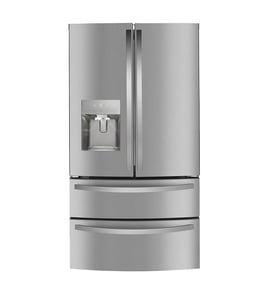



What is the most common problem with a Whirlpool refrigerator?
The most common Whirlpool refrigerator problem is a cooling complaint: the unit runs a lot, temperatures drift warm, or it will not cool evenly. On the Whirlpool WSR57R18DM03, the first things we check are airflow and heat removal (fans and condenser cleanliness) before replacing controls or sealed-system parts; see the WSR57R18DM03 owner's manual for model-specific operating and care guidance.
Most common causes (and what they look like)
- Dirty condenser area: cabinet feels hot on the outside, compressor runs often, cooling is weak.
- Evaporator airflow problem: freezer section ices up, weak air movement, warm spots.
- Condenser fan issue: little or no airflow near the condenser, higher-than-normal cabinet heat.
- Temperature sensing/control issue: temperatures swing, unit cycles oddly, inconsistent cooling.
- Defrost system problem: frost buildup on the evaporator cover, reduced airflow over time.
Quick checks we recommend before replacing parts
- Confirm the control settings are at the recommended range (avoid the warmest setting).
- Make sure vents are not blocked by food packages.
- Clean dust from the condenser area and ensure good clearance around the cabinet.
- Listen for fan operation (evaporator fan inside, condenser fan near the condenser).
- If frost is heavy behind the rear panel, suspect a defrost issue.
Parts that commonly solve cooling problems on this model
| Symptom | Likely area | Example part for WSR57R18DM03 |
|---|---|---|
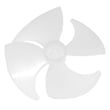
| Warm temps, weak airflow inside | Evaporator air movement | Refrigerator evaporator fan blade WP2169142 |
| Runs hot, poor heat removal | Condenser airflow | Refrigerator condenser fan W11578915 |
| Temps fluctuate or read wrong | Temperature sensing | Refrigerator thermistor WPW10383615 |
| Frost buildup, airflow drops | Defrost heat | Refrigerator defrost heater WPW10316428 |
Why it matters
Cooling problems usually start as an airflow or heat-transfer issue. Fixing those early helps protect the compressor and keeps food at safe temperatures, often avoiding more expensive repairs.
Last updated: January 2026
What's the average lifespan of a Whirlpool refrigerator?
Whirlpool refrigerators typically last 10 to 20 years. For a Whirlpool WSR57R18DM03, lifespan depends most on basic care (clean airflow, stable power, correct temperatures) and avoiding conditions that accelerate wear on the sealed system and fans.
Typical lifespan ranges (what to expect)
- Average range: 10 to 20 years
- Most common real-world range: 10 to 15 years
- Often lasts longer when: it is a simpler design, kept clean, and runs in a climate-controlled space
| Refrigerator type | Typical lifespan | Notes |
|---|---|---|
| Basic top-freezer or single-door styles | 15 to 20 years | Fewer features means fewer failure points |
| Feature-heavy models (ice maker, dispenser, electronics) | 10 to 15 years | More components can wear out sooner |
| Garage-ready or harsh-environment use | 8 to 12 years | Heat, dust, and humidity shorten life |
What shortens lifespan fastest
- Dirty condenser area that traps heat and forces longer run times
- Poor airflow around the cabinet (tight enclosure, blocked vents)
- Frequent door openings or overpacking that restricts internal airflow
- Power issues (loose outlet, extension cords, repeated outages)
- High humidity or corrosive environments that promote rust and oxidation
Maintenance that helps it reach the high end of the range
- Keep the condenser area clean and unobstructed
- Confirm the unit is plugged into a grounded 3-prong outlet (no adapter, no extension cord)
- Set stable temperatures and avoid frequent large adjustments
- Check door sealing and closing so the compressor does not run excessively
- Use the care and operating guidance in the WSR57R18DM03 owner’s manual
Why it matters
A refrigerator that runs hot or runs constantly wears the compressor and fan system faster. Simple airflow and power-supply checks reduce stress on major components and help you get closer to a 15 to 20 year service life.
Last updated: January 2026
What are the signs of a failing refrigerator?
A failing Whirlpool refrigerator like model WSR57R18DM03 typically shows up as unstable temperatures, constant running, unusual noises, water leaks, or heavy frost buildup. These symptoms often point to problems in the cooling system, airflow, temperature sensing, or the defrost circuit.
Common warning signs to watch for
- Food spoils faster than normal or items partially thaw and refreeze
- The unit runs almost nonstop or the cabinet feels unusually warm around the compressor area
- New or louder noises (buzzing, clicking, rattling, grinding)
- Water pooling inside or on the floor near the cabinet
- Excess frost or ice buildup that reduces airflow
- Interior light issues (some models use sealed LED modules that are not user-replaceable)
What the symptoms usually mean
| Symptom | Most common cause | What we recommend first |
|---|---|---|
| Warm temps, weak cooling | Sealed system or compressor issue | Check airflow and condenser cleanliness; then evaluate compressor performance |
| Clicking or repeated start attempts | Start device/relay issue | Inspect and test the start components |
| Frost blanket on interior panel | Defrost system problem | Check for blocked vents; inspect defrost heater and defrost pattern |
| Temps swing up and down | Sensor/control issue | Test the thermistor and verify control settings |
| Noisy airflow or poor circulation | Fan/blade issue | Inspect evaporator fan area for ice or obstruction |
Parts that commonly relate to these problems
If troubleshooting points to a specific failure, these model-matched parts are often involved:
- Refrigerator thermistor WPW10383615 (temperature sensing)
- Refrigerator compressor W10233960 (cooling system)
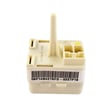
- Combination W10873801 (compressor start components)
- Refrigerator defrost heater WPW10316428 (defrost circuit)
- Refrigerator condenser fan W11578915 (heat removal and airflow)
Quick checks we recommend before replacing parts
- Verify the temperature control setting and allow 24 hours after changes
- Make sure vents are not blocked by food packages
- Clean dust from the condenser area and confirm the condenser fan runs (if equipped)
- Listen for the evaporator fan running when the door switch is pressed
- Unplug the appliance before any inspection or electrical testing; follow safety guidance in the WSR57R18DM03 owner's manual
Why it matters
Catching these signs early helps prevent food loss and can limit secondary damage, such as a compressor overheating due to poor airflow or a defrost failure causing ice to choke off circulation.
Last updated: January 2026